Finding Your Sustainable Senior-Integrated Project

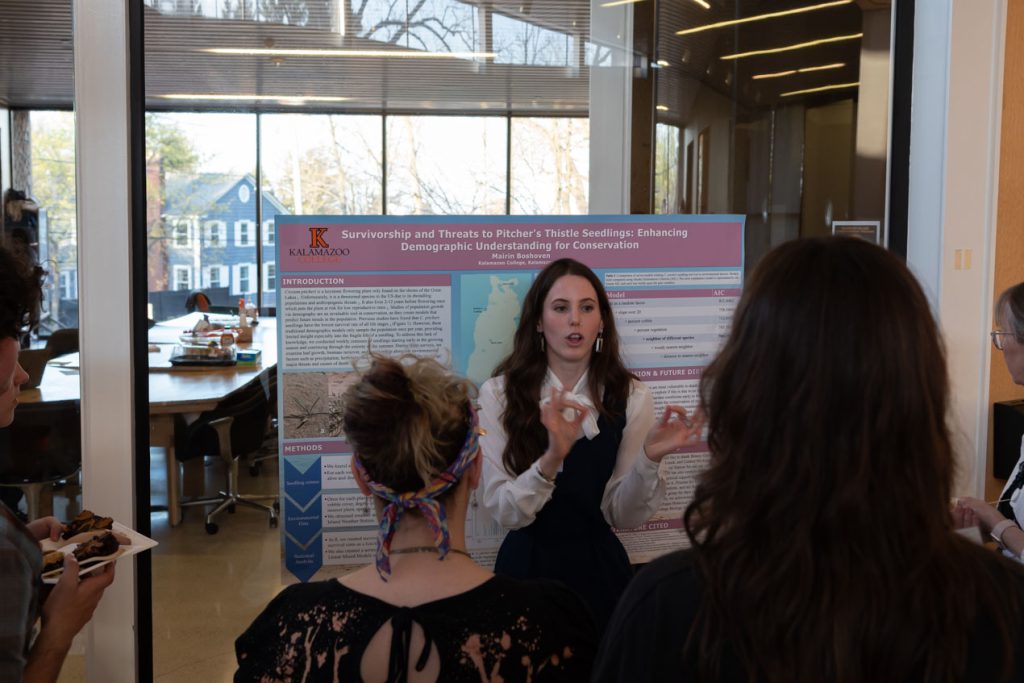
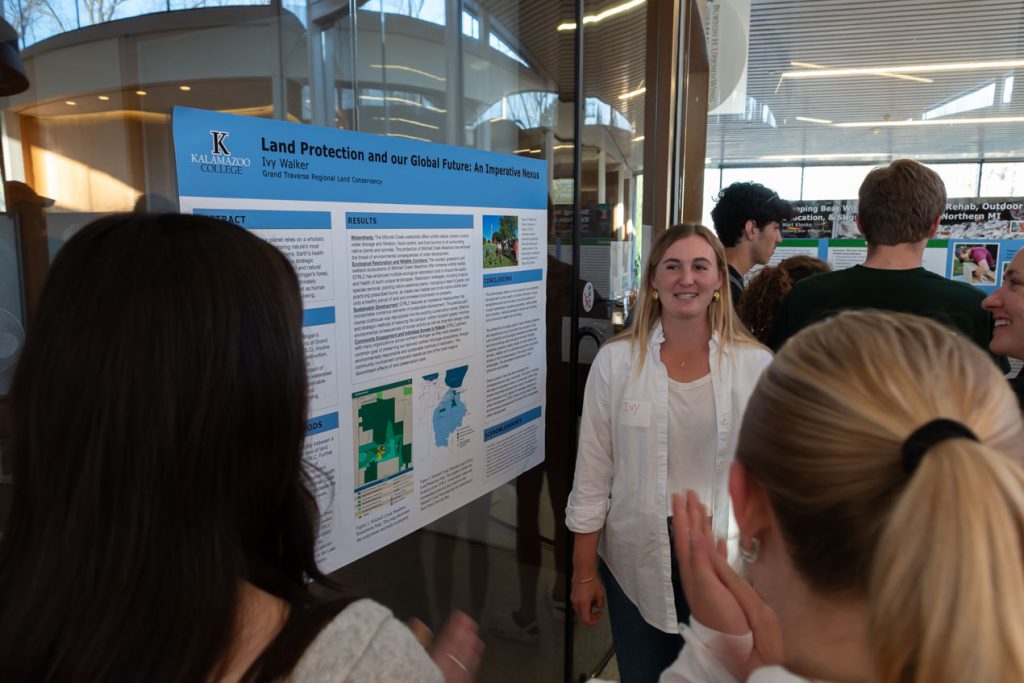
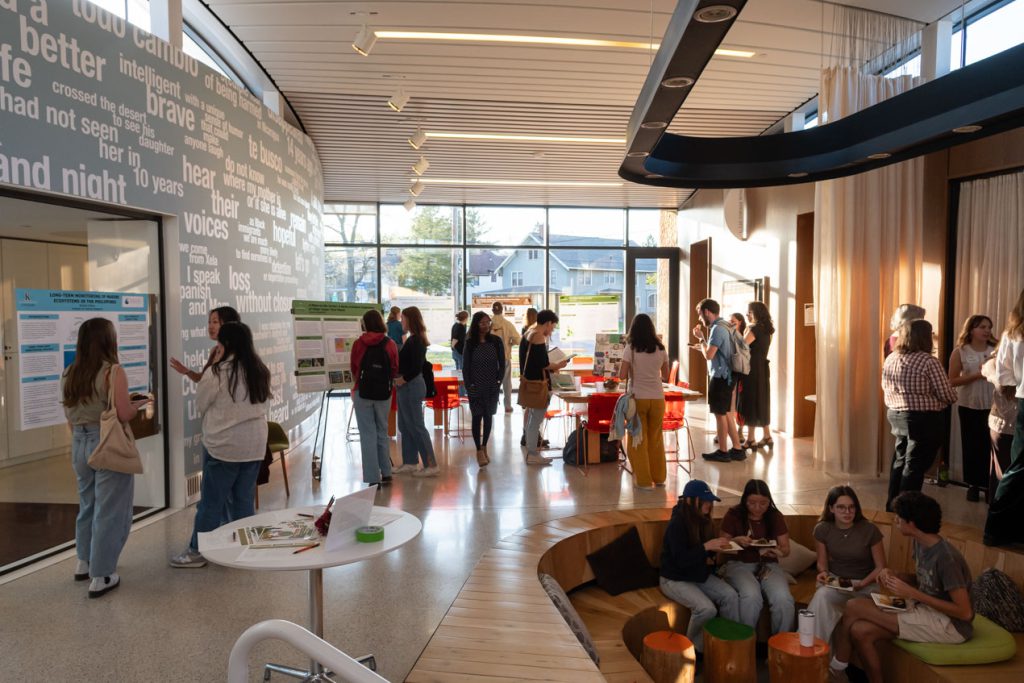
Third week is coming to a close and Earth Week is upon us, bringing with it the 2026 Sustainability SIP Symposium. The Symposium, hosted at the Arcus Center for Social Justice Leadership this Wednesday, April 22nd, will showcase 17 seniors with sustainable Senior-Integrated Projects across their respective departments. The keynote speaker, Reese Dillard, will speak about relationship building and environmental political movements beginning at 6:30 pm, followed by two rounds of senior presenters starting at 7:30 pm. All are welcome, and we hope to see you there!

Now that it’s the spring trimester and summer is in sight, current juniors may be investigating their options for SIPs. The Symposium is put on by the Larry J. Bell ’80 Environmental Stewardship Center and the Environmental Studies department, but the presenters aren’t limited to seniors with the Environmental Studies concentration. Drawing from this year’s graduating seniors, Madeline Moss (English major) reported on Southwest Michigan food systems, while Ryan Neihsl (History major) compared the effect of beavers and pigs on European-Indigenous relations. Also featured are a Studio Art and Critical Ethnic Studies double major, Sophia Sprick, who will present sculptures reflecting material memory and embodied knowledge, and Nora Parks-Church, who will present on the ethics of invasion and restoration ecology as part of her Philosophy and Psychology double major.

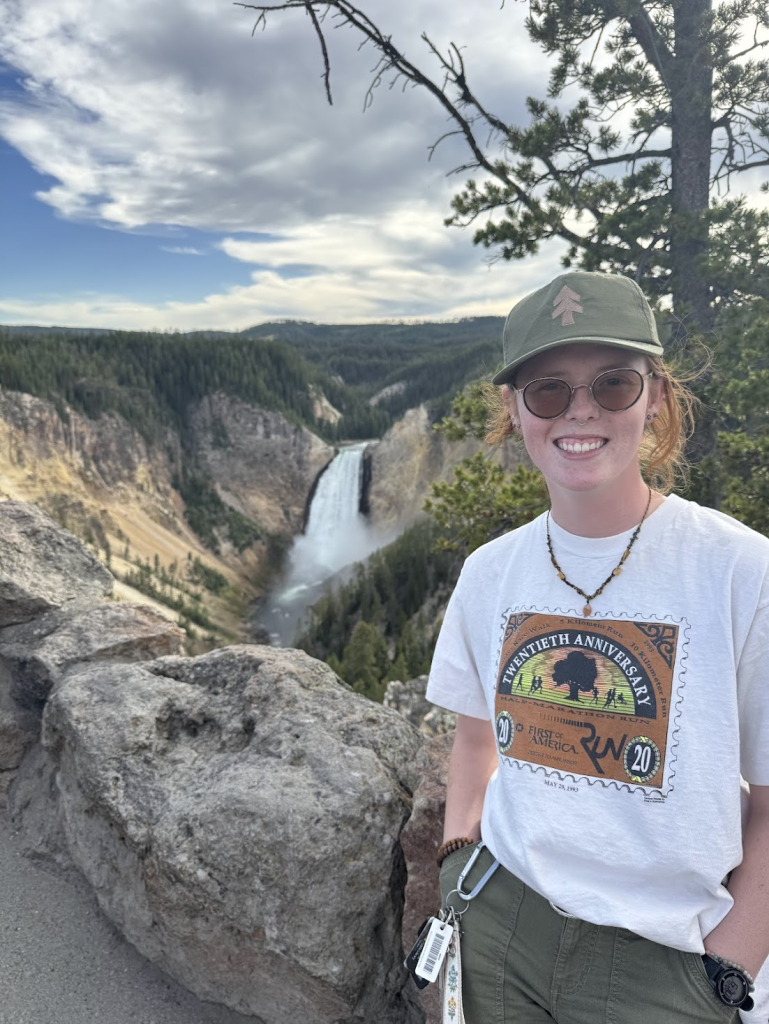
Nearly every year, a few seniors choose to complete their SIP at Kalamazoo College’s Lillian Anderson Arboretum, our 140-acre off-campus green space. This year, Madi Magda K’26, is showing how tread management can combat trail erosion. In past years, seniors have focused on land cover area classifications or invasive species in the Arb. If you want more examples of past research, check out our past Symposiums! Similarly, seniors have chosen to conduct their SIP through an internship, such as Tending Tilth, where Lauren Stallman K’26 studied prescribed grazing for ecosystem management, or with the Kalamazoo Nature Center, where seniors can study regenerative agriculture practices or youth outdoor education. Some students took their focus out of state, such as Nat Ward K’26, who studied the bison in Yellowstone National Park, or Sofia Fleming K’25, who researched invasive squirrel diets in Washington state.

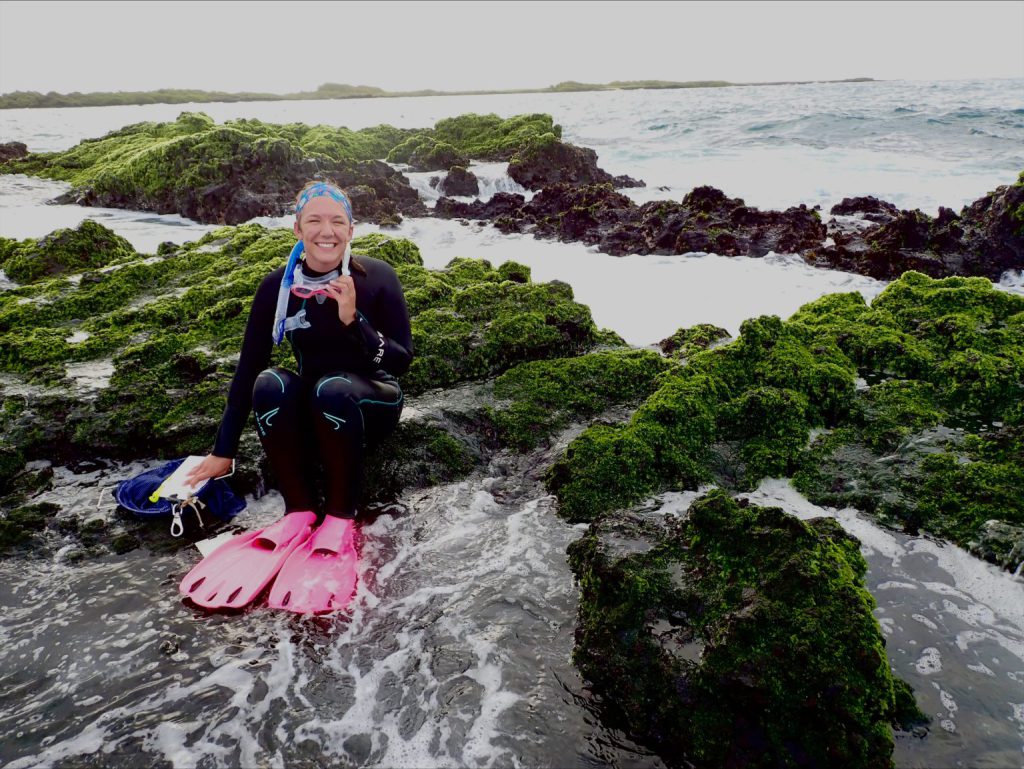
As rising seniors, some juniors may be interested in bridging their SIP with their experiences abroad, like Brooke Dolhay K’25, who studied marine ecosystems at the Institute for Marine Research in the Philippines, or Hailey Yoder K’26, who observed the effects of reef restoration in the Galapagos.

Hailey Yoder K’26 waiting near her coral sites in the Galápagos

The key takeaway is to network! There are many ways to get involved in research or community engagement, and the easiest way to find them is to ask around. The ESC can suggest ideas from their wishlist of sustainable projects that a rising senior can embrace, and Environmental Studies professors often hear about research and internship opportunities in the area that they can connect students to. As summer approaches, consider experiential education opportunities near you over the break, and reach out to the ESC if you want to discuss ideas or are looking for project funding! There is no one-size-fits-all approach to completing a SIP, and this Symposium showcases seniors’ creativity and intersecting interests in their capstone projects.

Want to be inspired in person? Come to the Sustainability SIP Symposium this Earth Day to celebrate our seniors and learn about how they’re integrating sustainability into their studies.

Subscribe to receive posts about the ESC, academics, student projects, and events directly to your inbox!

Happy Spring 2026!

The Environmental Stewardship Center (ESC) is excited to welcome back all of our students, staff, and faculty back to campus for the spring trimester! We hope everyone had a relaxing break because we’re ready to hit the ground running with a host of exciting events this term. Our interns are located in Dewing Commons Monday through Thursday, and you can always stop by to ask questions and learn more about what we do! Below are all the ways the ESC is actively working to make a greener, more sustainable campus this spring:

#aab_accordion_3043eeb4_0 { }
#aab_accordion_c07063b6_1 { }
#aab_accordion_89c592d8_2 { }
#aab_accordion_09753638_3 { }
#aab_accordion_41adffcf_4 { }
#aab_accordion_cfebe3a3_5 { }
#aab_accordion_a1148765_6 { }
#aab_accordion_12c9682b_7 { }
#aab_accordion_007b6a24_8 { }

Subscribe to receive posts about the ESC, academics, student projects and events directly to your inbox!
Highlighting the ESC Team!

Applications for Student Positions through the Environmental Stewardship Center open on Monday, March 9th, so we’re highlighting the experiences of our amazing ESC team! The ESC currently has five student positions, two of which are opening next week. If you’re interested in learning more about applying, check out our Student Positions page.

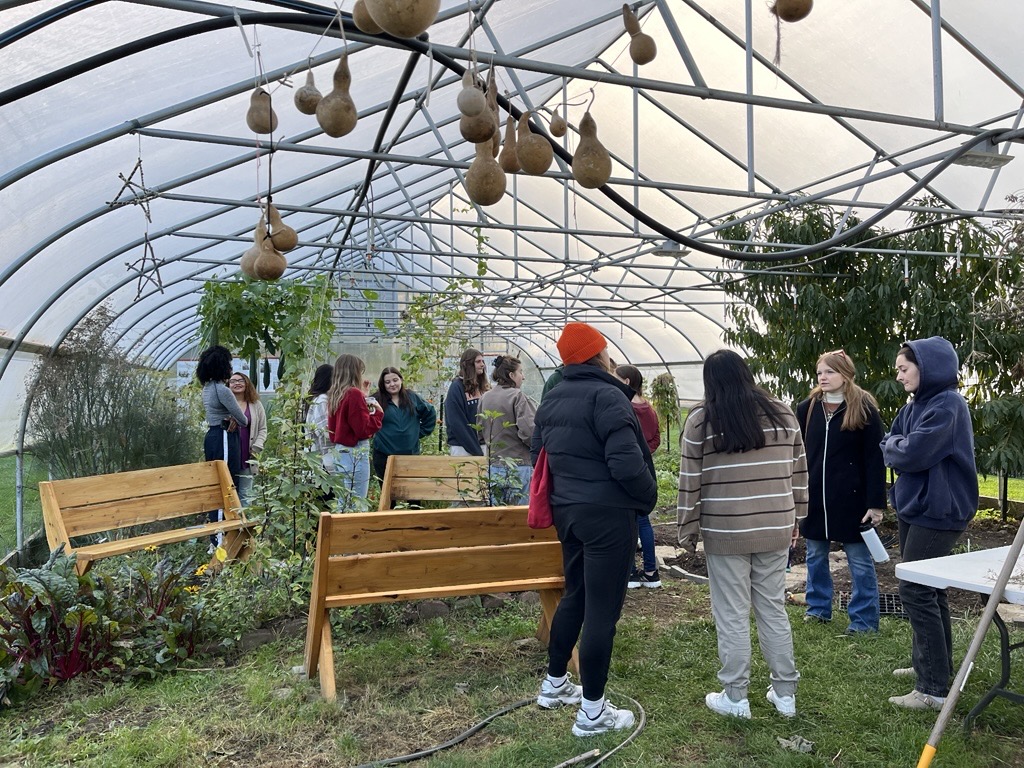
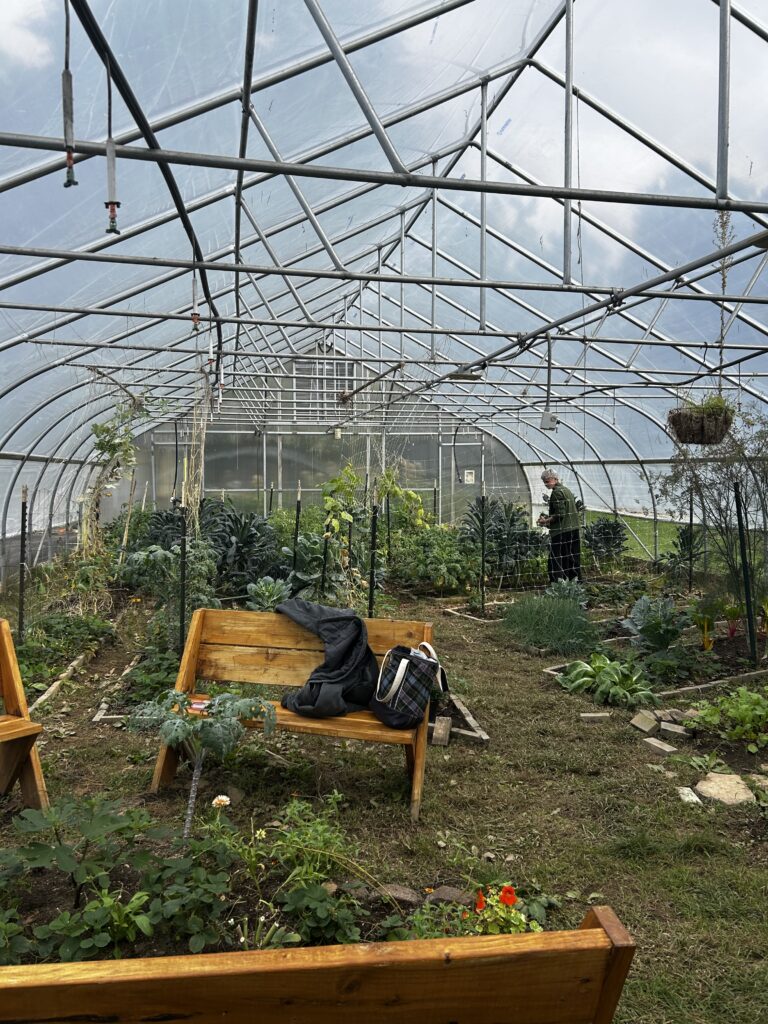
There are the beloved Hoop House interns, who tend to the Hoop House, organize open hours and activities, and host cultural events. Veda Shukla ’28 just joined the Hoop House in the fall and states “I have learned so much since working at the Hoop, from gardening practices and sustainability to the importance of community and reciprocity with the Earth. I carry the knowledge I have learned from my internship into all other areas of my life, and I am eternally grateful that I’ve had the opportunity to work with such an amazing group of people.” Zoe Wilson ’26, who has been a steward of the Hoop House for three years now, explains what she’s gained: “Whether I am tending to the beds, organizing an event, or enjoying a deliciously ripe strawberry, the Hoop House continues to teach me. Not only do I gain firsthand knowledge about how to care for the land, but I have also acquired knowledge in how to listen, be patient, and care for my community, humans and more-than-humans alike.”

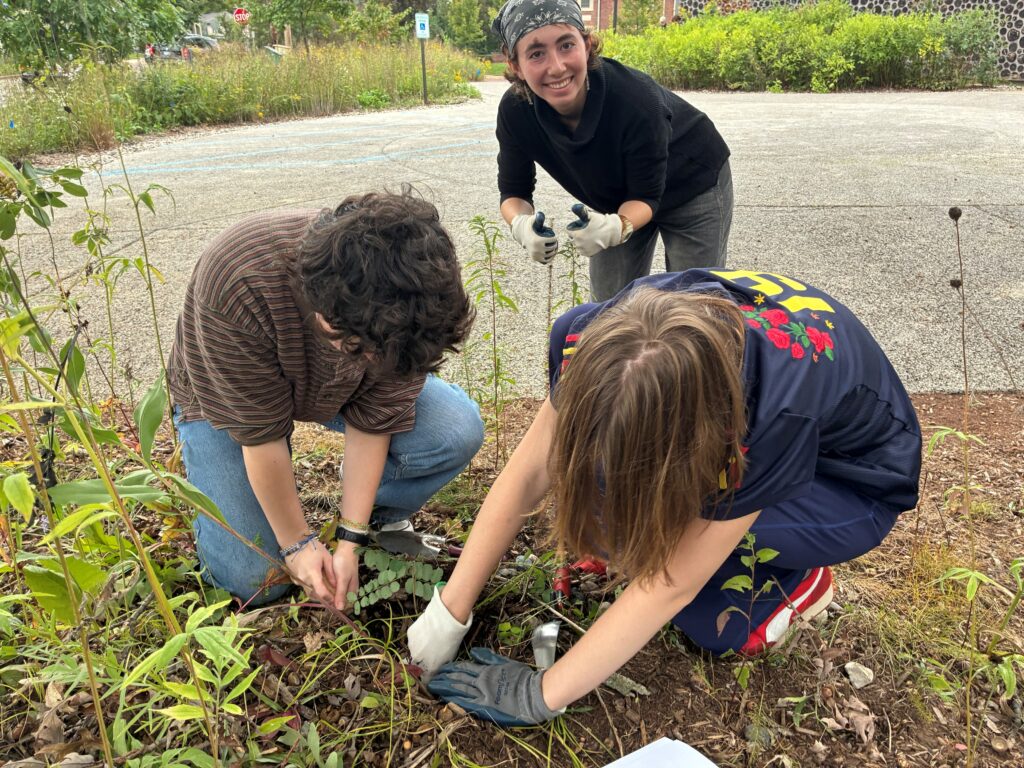
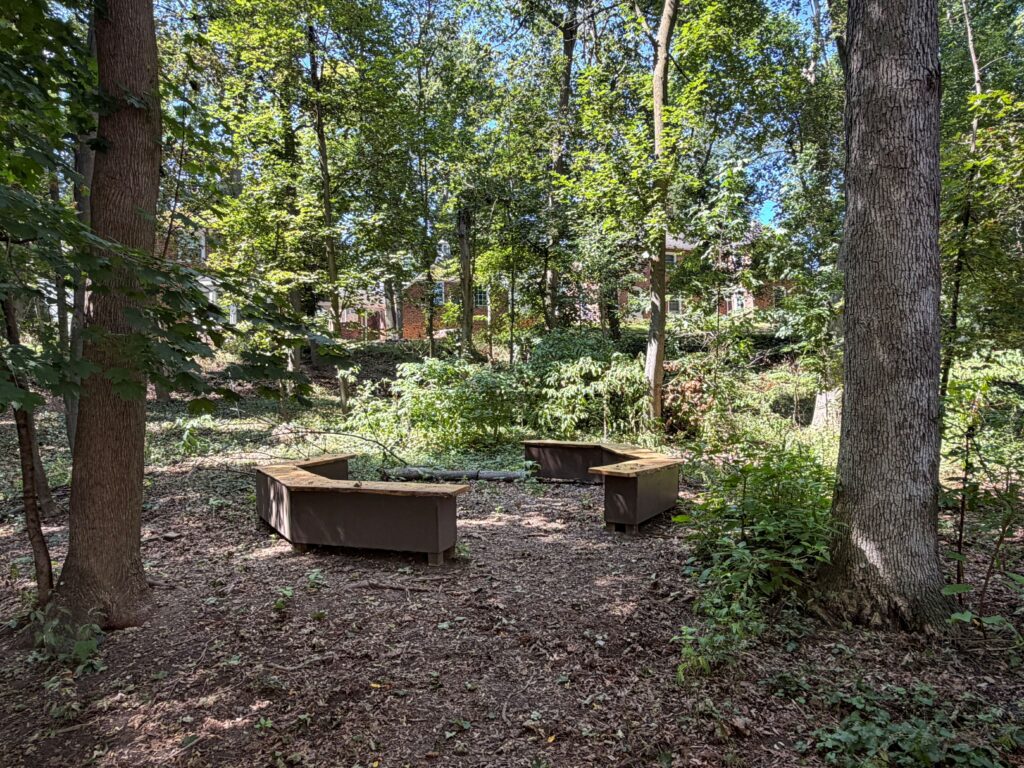
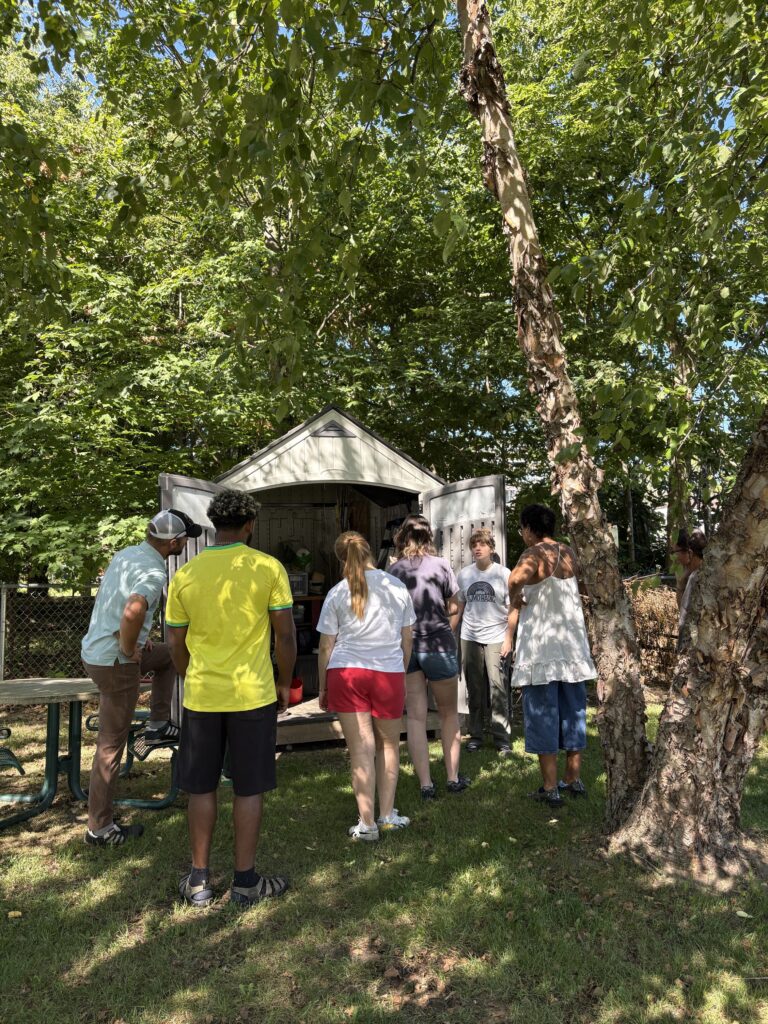
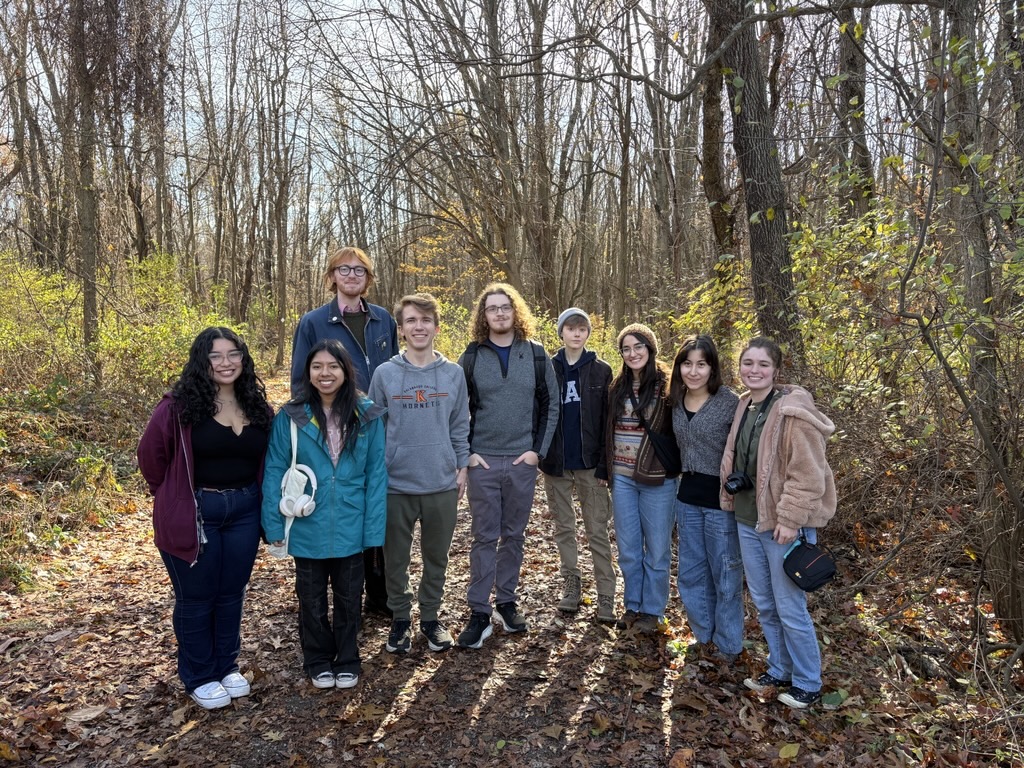
Next, we have the adventurous Arb Trail Crew, who serve as stewards of the Lillian Anderson Arboretum and do trail maintenance and invasive species management. Six miles away from campus, the five miles of trails at the Arb keep the crew busy as they help remove fallen trees and branches, keep the Wetland Boardwalk clear, and interact with neighbors enjoying the calls of the sandhill cranes. Students like Nat Ward ’26 also help run the Arb Stewardship Practicum, which is one of the ESC’s free PE class offerings.

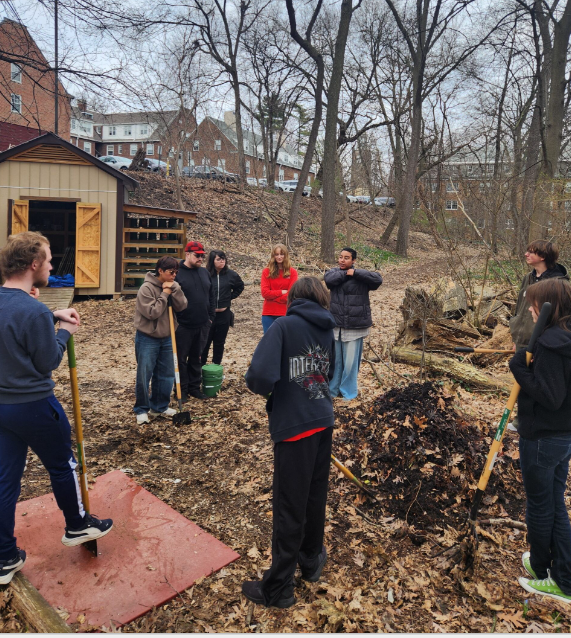
Arb PE class

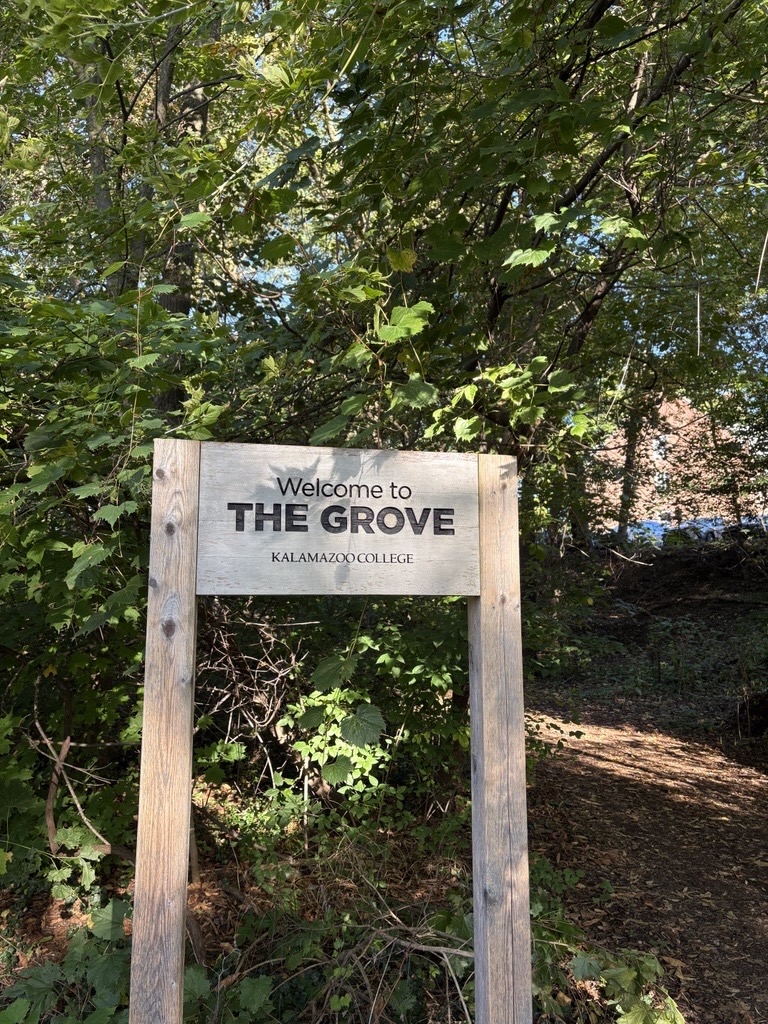
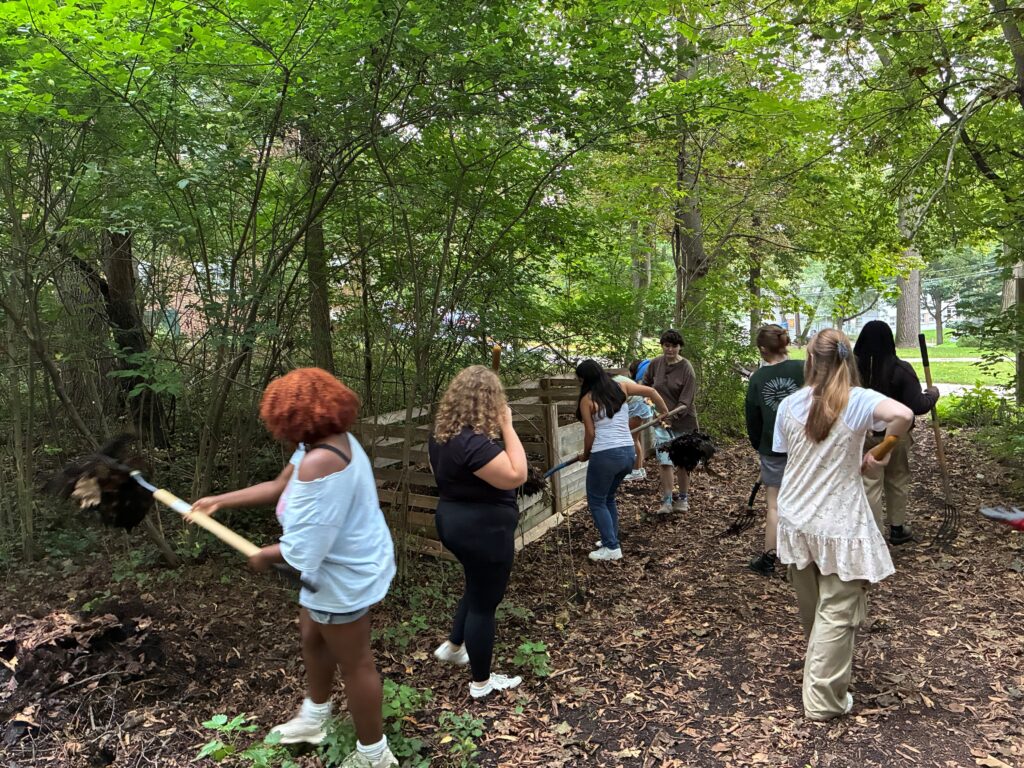
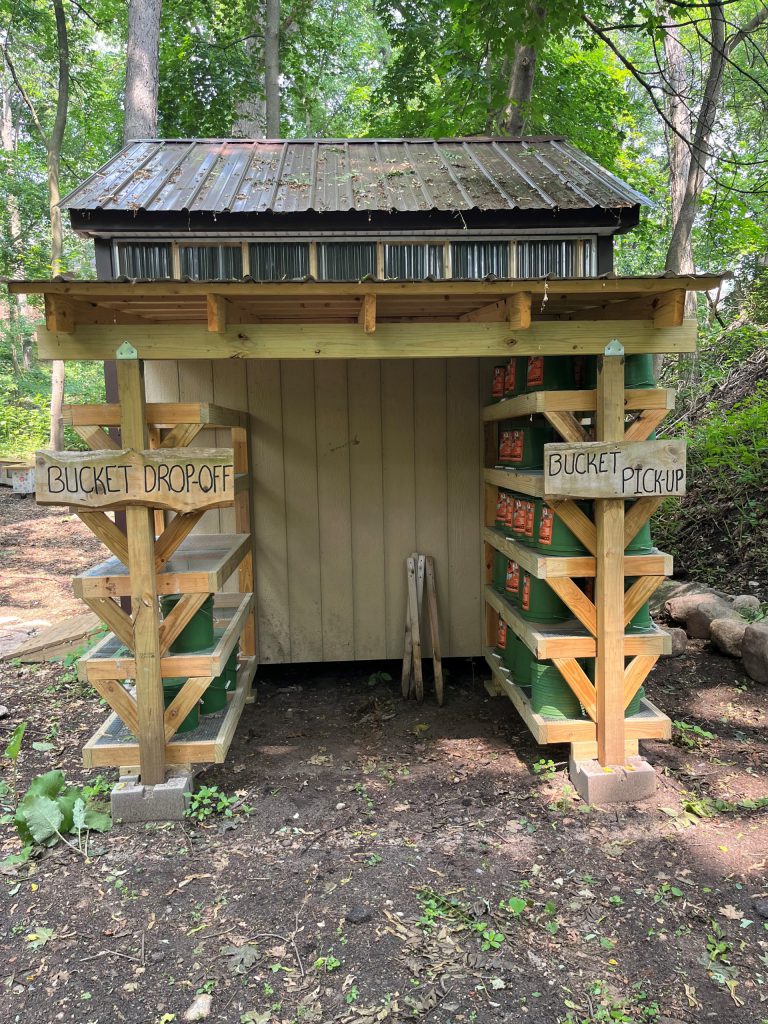
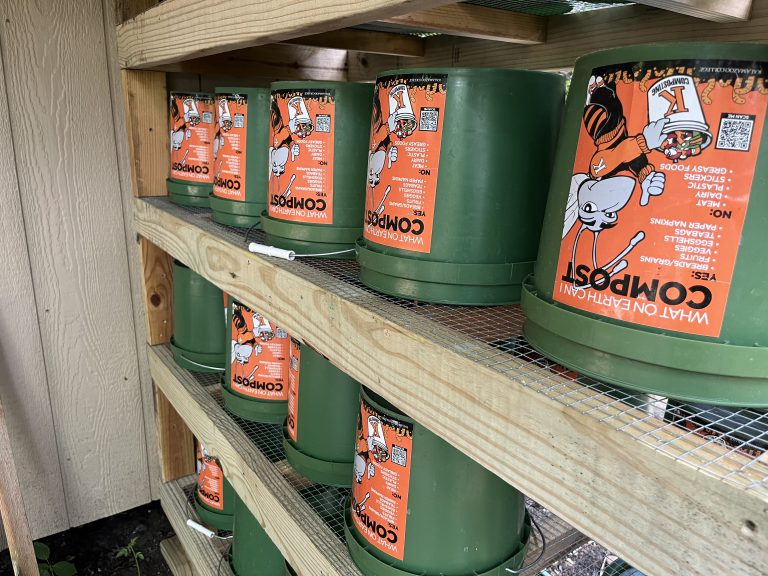
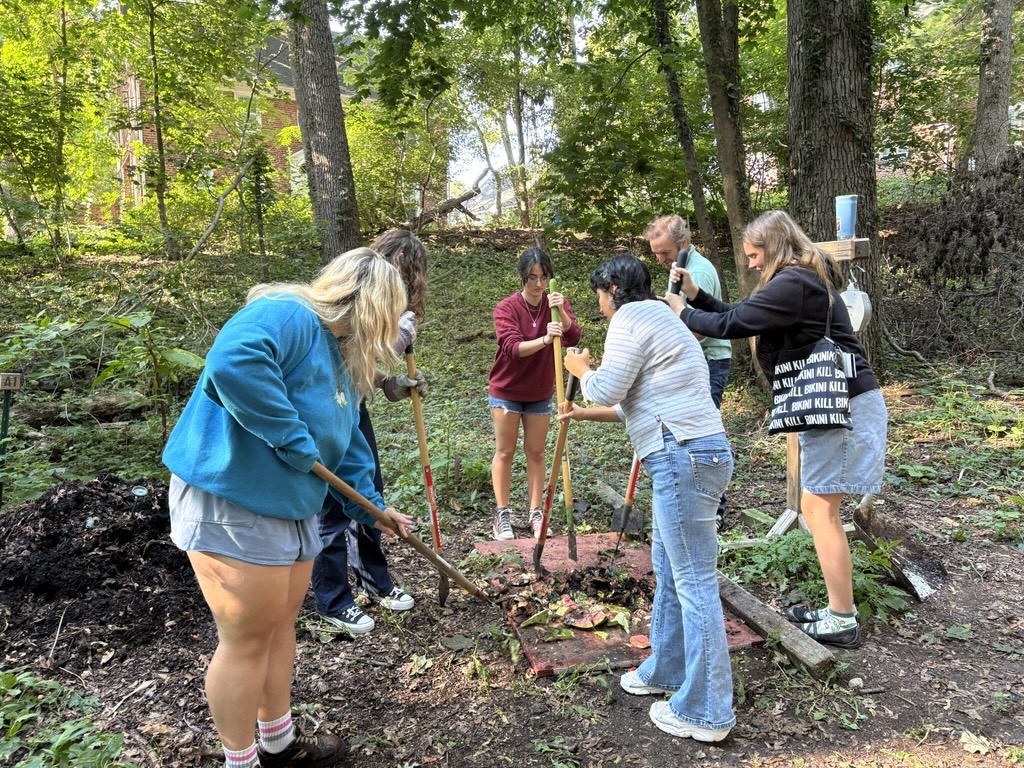
There is also the hard-working Composting Crew, who manage the composting on campus, teach the composting PE class, steward the Grove, and encourage sustainable waste management from students, staff, and faculty around Kalamazoo College. Mo Silcott ’27 is returning to Composting Crew after their study abroad and they spoke about their experience, saying: “In my time working on the Crew, I’ve gained a wealth of wisdom when it comes to an aspect of the nature cycle that is often avoided: death. In many ways, as composters, we give organic material such as fruits and vegetables new life by turning them into cured compost to use as nutrients for future produce, plants, and other types of gardens. Teaching composting has also been a journey, allowing another layer of understanding. I not only have to apply what I know but understand it at a deeper level in order for others to learn.” Miyani Sonera ’27 just joined the Composting Crew last spring and remarked, “Composting in the grove has given me the chance to not only interact with our environment here at K, but to learn from it! The grove is truly such a special place that has given me so much and has been amazing to work in!”

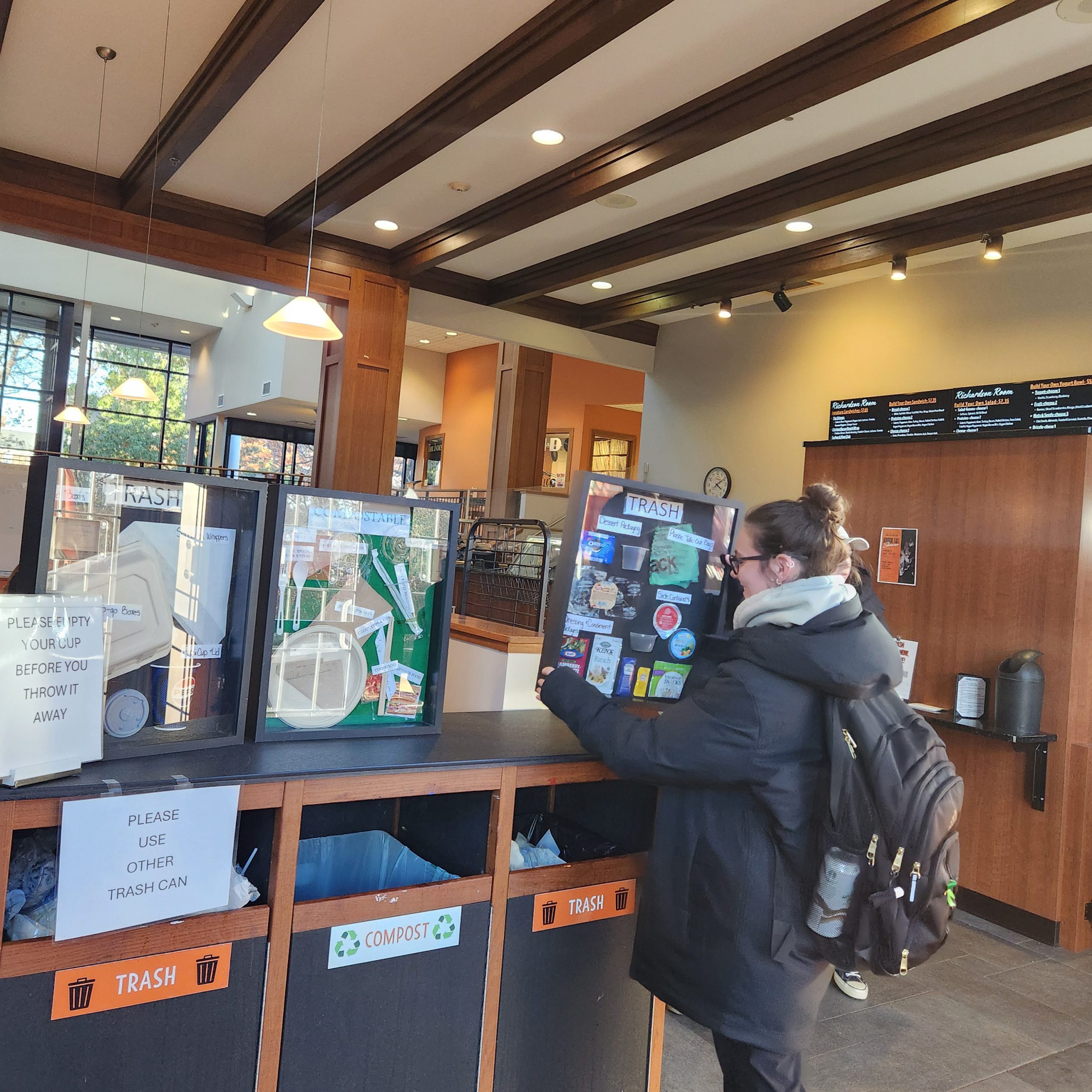
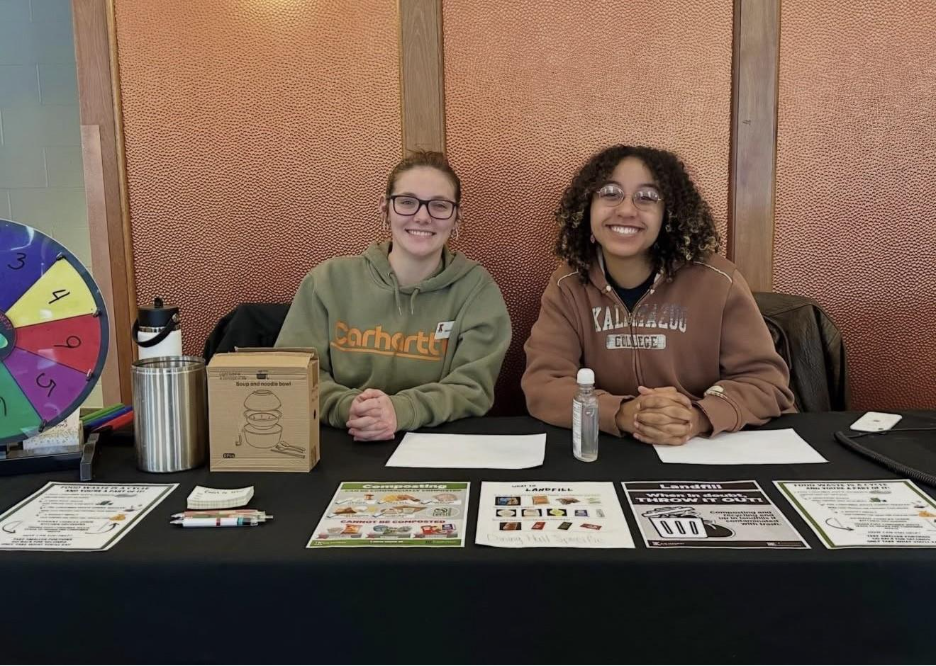
A new position at the ESC is the remarkable Dining Sustainability Intern, who works with the K’s dining partner, Parkhurst, to promote sustainability in dining locations. Madi Magda ’26 has helped to improve waste stream education, like recycling and composting, for staff and students alike through clear signage, hosting tabling events, and intercepting compostable items that would otherwise hit the landfill. One way she has encouraged our campus to take sustainable practices into their own hands is the Double Punch program at the Book Club – bring your own mug, get two punches towards a free drink!

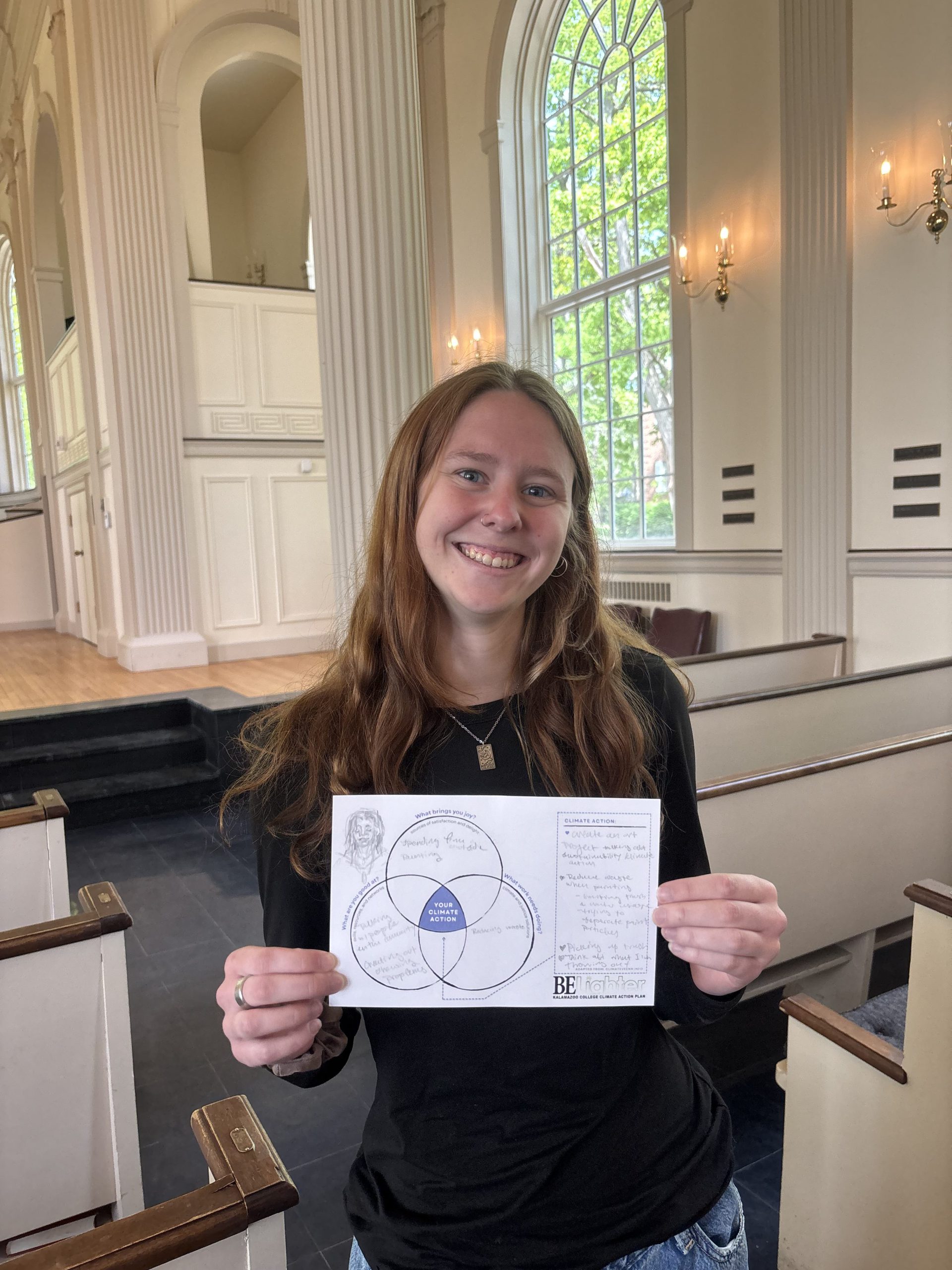
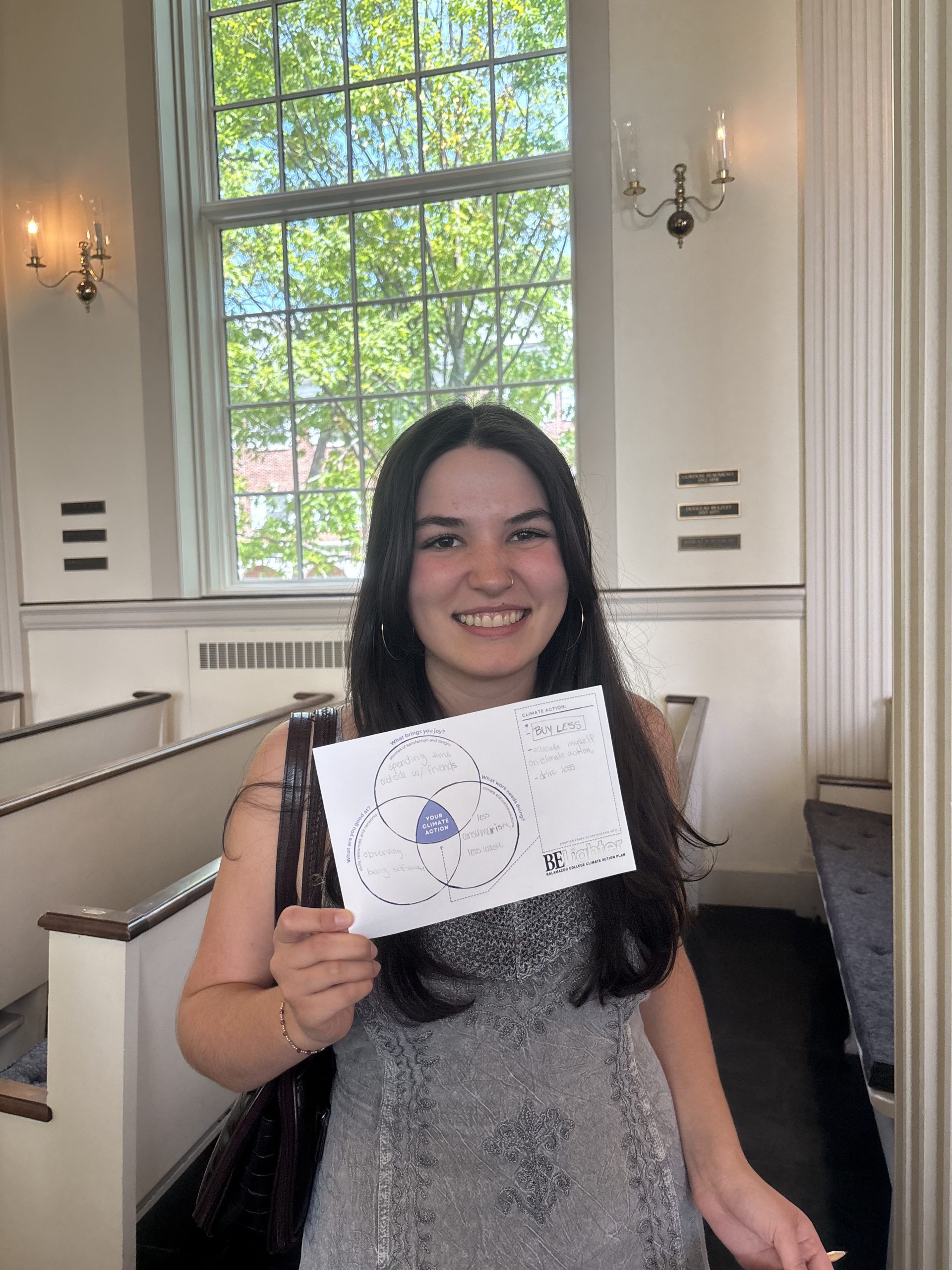
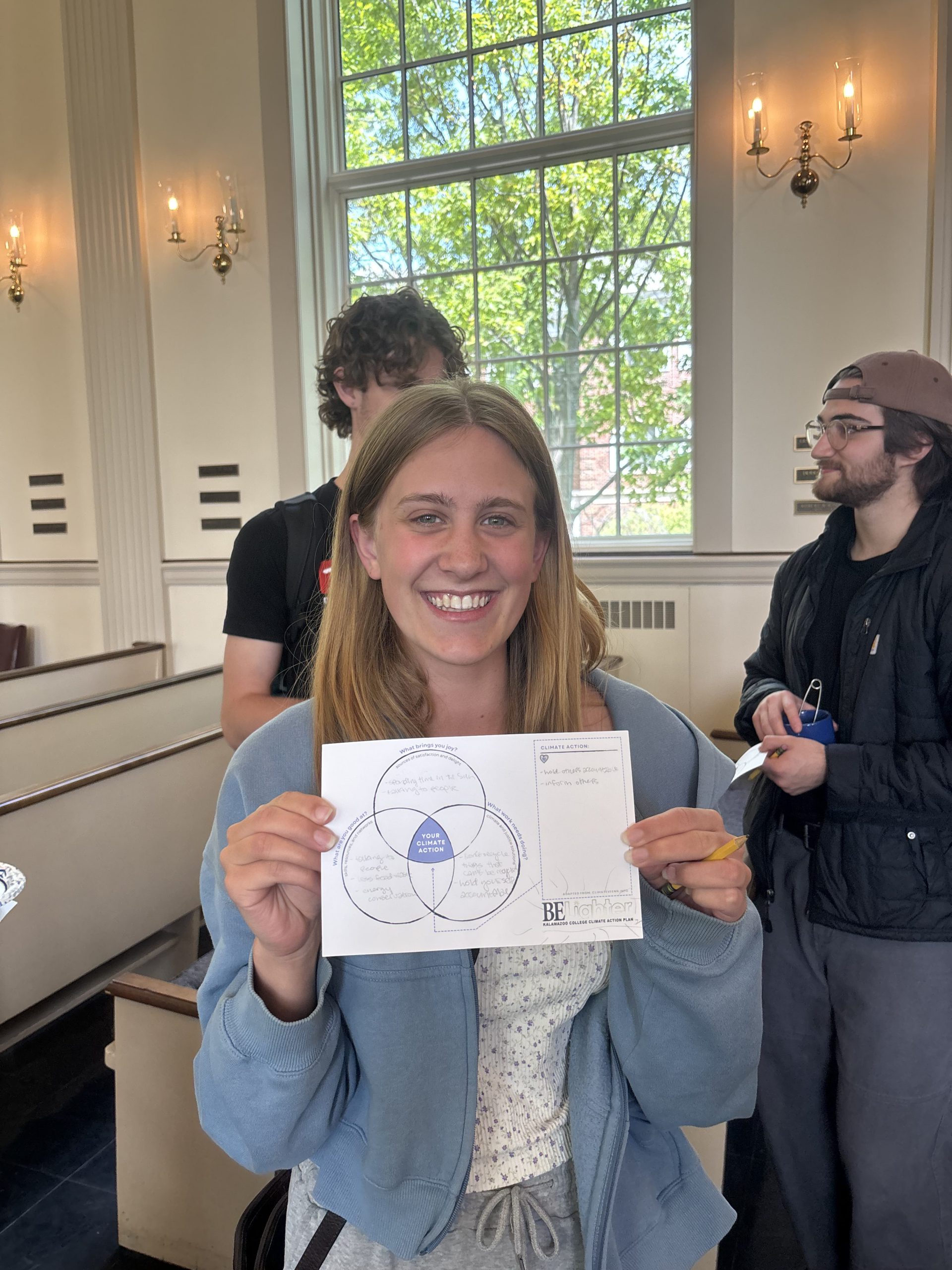
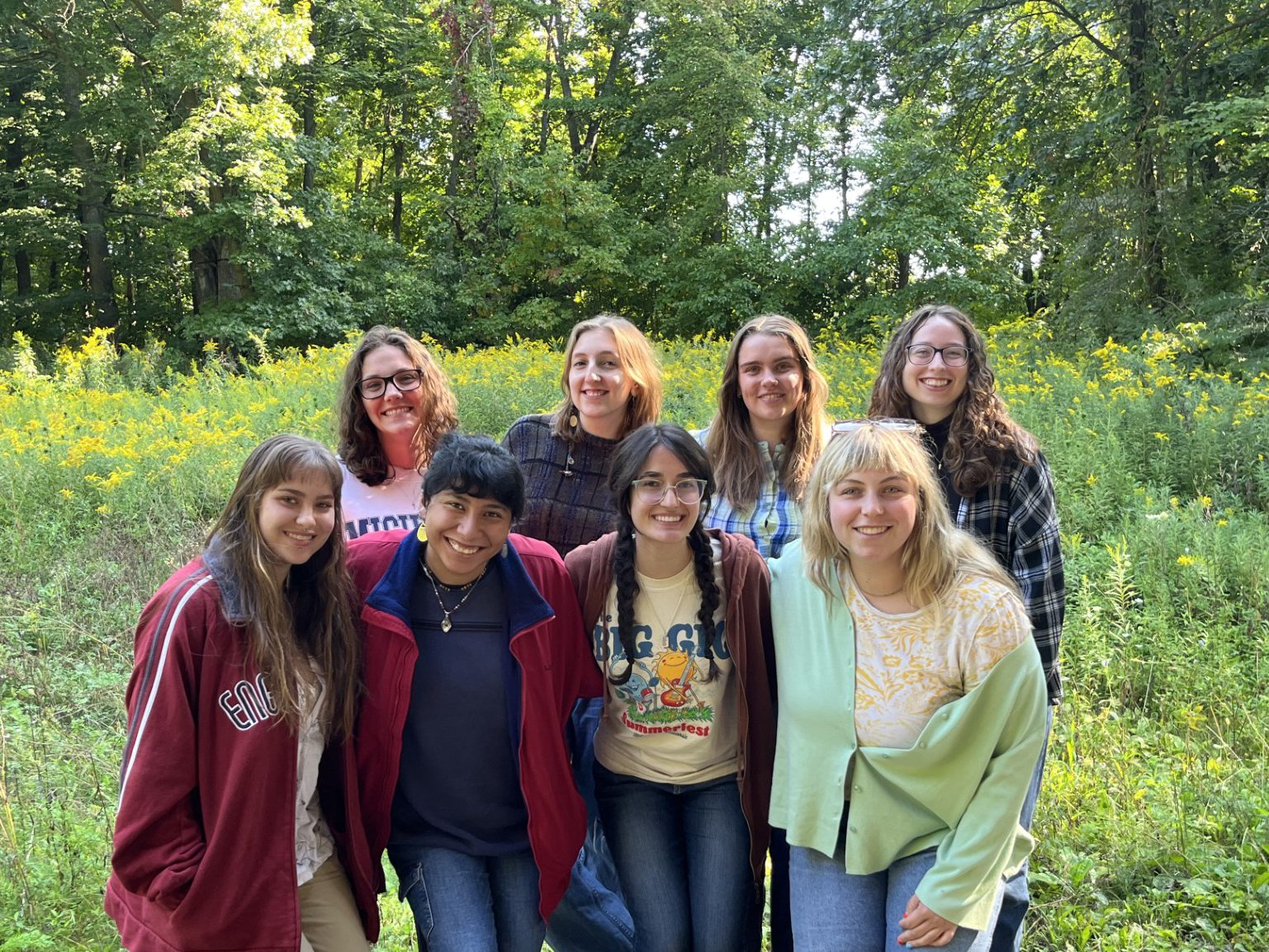
Lastly, there are the ESC Interns. They help put on every ESC event such as the Sustainability SIP Symposium, biweekly Sustainability Chats, and the Climate Connection Series, the last of which is informed by their representation on the Climate Action Plan Committee. They work to increase students’ involvement with campus sustainability and the Climate Action Plan through the First-Year Forums, ESC’s social media, and these blog posts you’re reading! Crucial to the ESC function, they help connect all the different intern roles and help the different teams collaborate throughout the year. Mia Pierce ’26 has been an ESC Intern for three years now and states, “I’ve loved working at the ESC because it’s forced me out of my comfort zone and given a lot of opportunities to develop professional skills. For example, I used to be really anxious about public speaking, but working at the ESC has given the space to work on that. Now, I regularly present to my peers at the Climate Connections Series and also lead the FYE sustainability tour. Additionally, I’ve gained experience in working in a large group to plan a major event, the Sustainability SIP Symposium, which requires constant communication and coordination to make happen.” Josie Belsky ’28 began her role as an ESC intern last spring and comments, “I’ve learned so much about how things run behind the scenes through the ESC, and the most rewarding part is realizing that I’m capable of doing things I’ve never tried before and learning skills through that process. Working as the ESC intern has taught me better communication skills with students and staff, organizational skills and flexibility when working with lots of dynamic tasks simultaneously, and creative skills for engaging with the K community.”

You can meet our entire 2025-2026 ESC team on our About Us page! If you’re interested in applying to be the next Hoop House or ESC intern, keep an eye out for applications on March 9th!

Subscribe to receive posts about the ESC, academics, student projects and events directly to your inbox!
Weigh the Waste Day and Winter Composting Updates

This event has been run by Parkhurst at other schools in the past, and Kalamazoo College decided to join in on the fun this year! Weigh the Waste is an event where sustainability initiatives are held on campuses to raise awareness about the food that is wasted on a daily basis. There is a visual aspect to demonstrating the food waste as well: food that would normally be thrown away is put into a clear bin that is on a scale to be weighed. To promote education on compost, students who threw their waste away got to play trivia and were able to win prizes if they got the answers right. 

Not only did this event help students visualize the compounding effects of wastefulness that is usually hidden, but it actively educated students about composting and encouraged them to be more conscious of their food waste and carbon footprint. “The best part about this event was seeing them become interested in wanting to be better about food waste and composting,” says Magda K’26. To learn more about composting, you can visit the Composting page on the Sustainability at K website.  

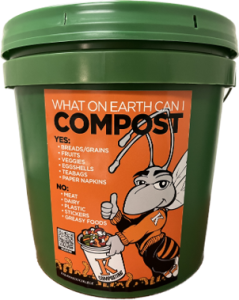
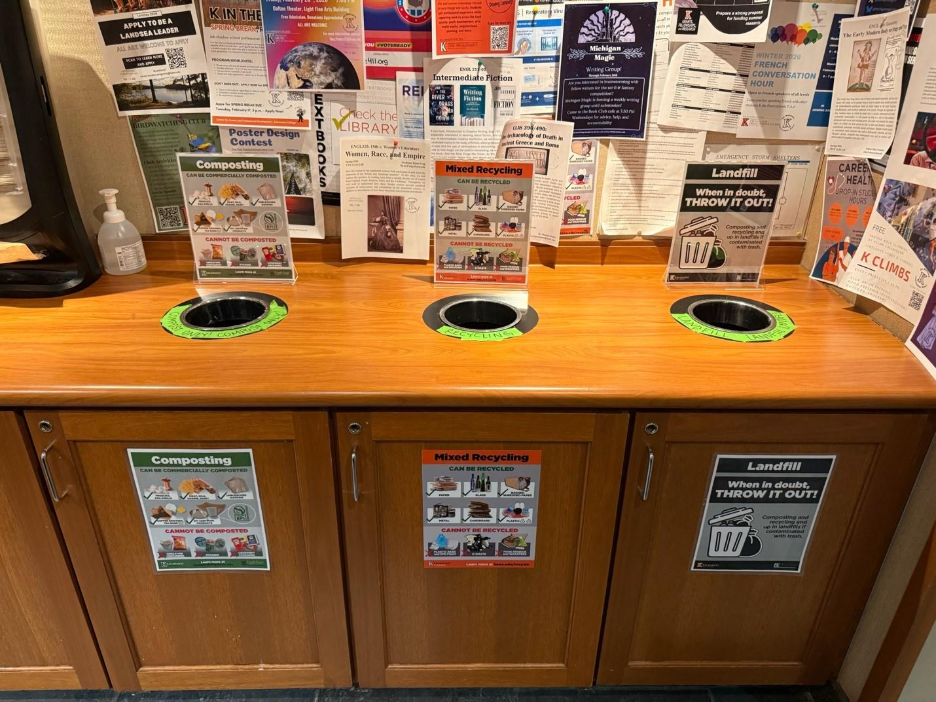
This project, along with many others, was brought to life by the new Dining Sustainability Intern, Madi Magda ‘26, who has been coordinating sustainable development between the ESC and K’s dining partner, Parkhurst. For example, her efforts have resulted in a new commercial composting bin being added to the Book Club Cafe in addition to the recycling and landfill containers. This new addition to K’s eco-infrastructure is a step towards responsible waste management on our campus. Magda designed new composting stickers similar to the recycling stickers to educate students and staff on the correct ways to recycle and compost their waste, facilitating a transition to a more environmentally-friendly culture on campus. Another collaboration struck by the Dining Sustainability Intern was a promotion of reusable cups at the Book Club; there are now punch cards in the book club that get two punches towards a free drink if you bring your own mug or cup from home!

Subscribe to receive posts about the ESC, academics, student projects and events directly to your inbox!
Paid Summer Position Tending Sheep!

Interested in animal care? Looking for a paid summer position right here in Kalamazoo? Want a cool SIP? Then you might want to check out our upcoming info session to hear about an exciting opportunity through the Environmental Stewardship Center (ESC)!

On Monday, February 9th during common time (11am), come join us in Dewing Commons to hear about a fun summer position unlike anything else – you get take care of cute sheep and help promote sustainable grazing of Kalamazoo College’s own Lillian Anderson Arboretum! This position is made possible through Tending Tilth, a woman-owned sheep grazing business focused on reducing the carbon emissions associated with commercial mowing. Over the course of the summer, you can look forward to working with the grazing sheep as well as little lambs, learning about sustainable agriculture and landscaping, and connecting with environmentally-minded people! Not to mention, this is a great experience for a SIP!

Past participants have loved their time with Tending Tilth! In a blog post about her experience, Grace Lounds K’27 details her summer spent working with Tending Tilth in 2025. Grace says she is now considering going into a large animal vet school after graduation because of this experience!

Below, you can find a gallery of photos from Tending Tilth and past participants to get a glimpse of what you can expect your summer to look like. We hope to see you at the info session!

Subscribe to receive posts about the ESC, academics, student projects and events directly to your inbox!
Welcome Back for Winter 2026!

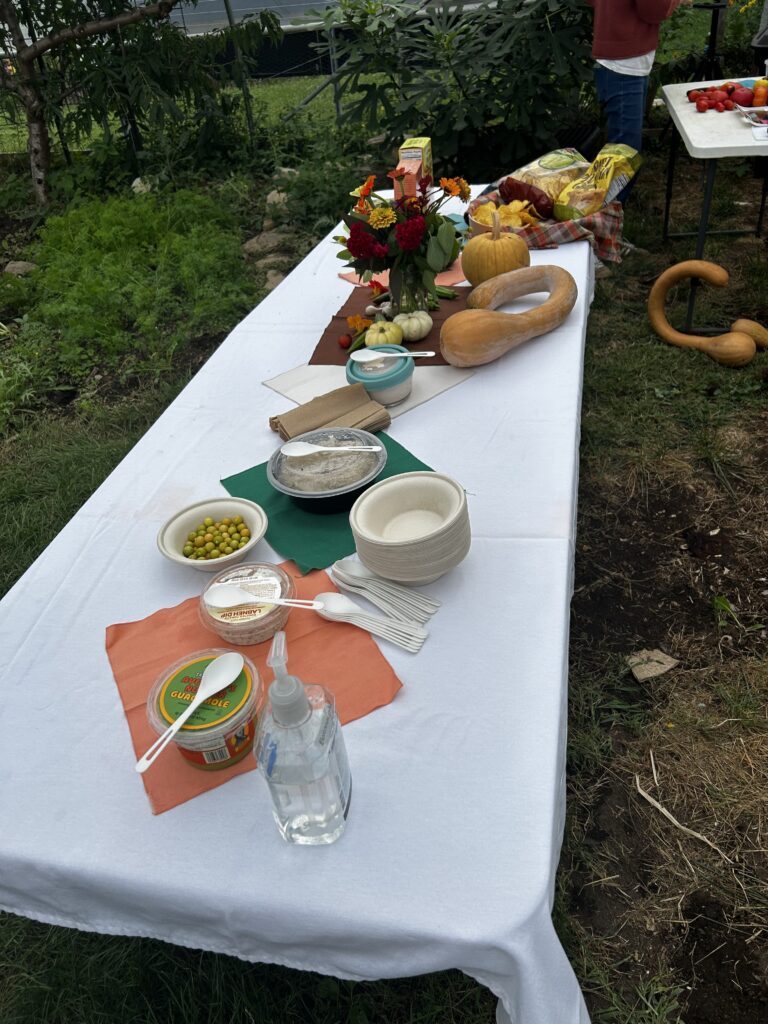
Welcome back to campus everyone! We hope you had a wonderful winter break, and we can’t wait to see familiar faces and old friends back on campus.

While not as active as Fall or Spring, the Winter trimester is still full of opportunities to get involved with the Environmental Stewardship Center (ESC) and sustainability on campus as a whole. Our interns are located in Dewing Commons on Mondays and Thursdays, and you can always stop by to ask questions and learn more about what we do! Below are all the ways the ESC is actively working to make a greener, more sustainable campus this term:

#aab_accordion_5519a3b2_0 { }
#aab_accordion_eeaf612d_1 { }
#aab_accordion_d13f291c_2 { }
#aab_accordion_565d3553_3 { }

Pumpkins: A Smashing Success

This past Friday, students and staff gathered on the quad to blow off some steam by smashing pumpkins and eating s’mores. With the help of Kalamazoo College’s Office of Student Activities and the Environmental Stewardship Center’s Composting Crew, cartloads of pumpkins were successfully smashed into smithereens!  

Dozens of students, as well as some family of faculty members, came to throw, stomp, chop, and ultimately demolish a batch of pumpkins last week. Students cheered each other on as they chucked pumpkins at the ground, healthily venting the stress from the impended finals season. In between slamming pumpkins with shovels, students shared cozy cups of hot chocolate and gooey s’mores and chatted amidst the fitting tune of alternative rock band, Smashing Pumpkins.  

 The pumpkins were donated by students and community members, most of which were left over from Halloween decorations and fall harvests. Every year, millions of pounds of pumpkins end up in landfills where they contribute to the significant methane emissions of landfills, rather than successfully decomposing and returning nutrients to the soil. Rather than throwing out these festive vegetables, the Composting Crew collected them in the Grove and returned over a quarter of a ton of pumpkins back to the earth.  

That’s right! After a significant amount of transporting and chopping and weighing, 517 pounds of pumpkins were composted just from this year’s Smashing Pumpkins event, not including other pumpkins received in community bucket drop-offs. The compost pile has doubled in size and has been steaming away as it rapidly breaks down the load of pumpkins. The nutrient-dense soil will be given to the Hoop House and the Jolly Garden once it’s cured in the spring to feed next year’s gardens!  We hope to see you all at the Smashing Pumpkins event next fall! 

Subscribe to receive posts about the ESC, academics, student projects and events directly to your inbox!
Summer Fellowships 2025: Sustainable Development Academy at the University of Potsdam

This blog post is part of the ESC Summer Fellowship 2025 series. These fellowships provided funding for research projects related to the environment, sustainability and/or the Climate Action Plan. This post was written by Ava King, one the fellows of this past summer cycle.


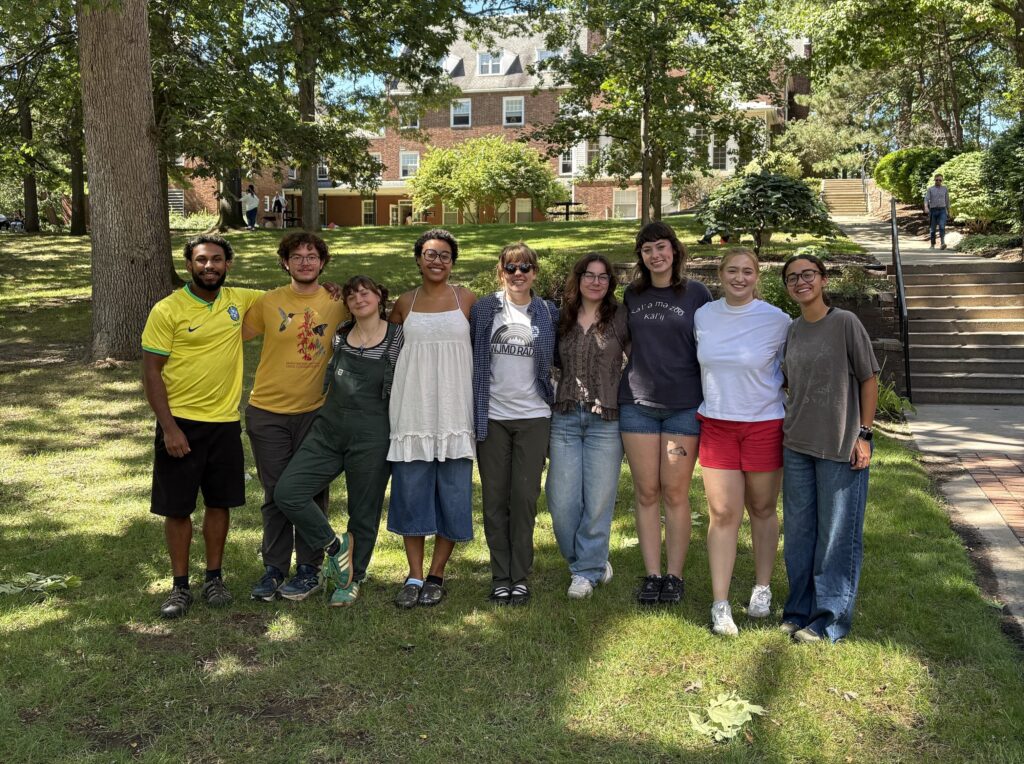
Hello! My name is Ava King, and I am a rising sophomore at K looking to study biology, as well as a mixture of philosophy and German. This summer I was granted the opportunity to spend two weeks at the University of Potsdam, participating in the Sustainable Development Academy. This academy brought together undergraduate, graduate, and postgraduate students from over ten countries in the context of global sustainability and mindsets surrounding these topics. Throughout this program we learned from experts in various fields, listening to lectures and participating in field trips to tour significant areas around Potsdam and Berlin. The history of Potsdam was enticing to learn, as we were able to study at Neue Palais, a former palace now utilized as a university.

This opportunity has been enlightening in more ways than I could have expected. The friends I made through this program allowed me to glimpse perspectives I have never understood before, from varying cultural norms to driving on the left side of the road. I truly believe and hope these people will stay in my life for the long run, which is the greatest gift I could have been granted from this experience. The beauty of Potsdam and Berlin was immense, and I hope to return one day for graduate work or other opportunities spoken of at this conference.

Another experience I would like to speak of in regards to this experience may seem generic, which is growing a deeper sense of self. I have always valued my time alone, pondering ideas or simply taking a social break as I am an introvert. There is something so solidifying in traveling abroad for the first time alone (minus Canada, living in Michigan I don’t count it). There’s a certain openness with the world and with yourself you must come by to succeed in this type of adventure, and this method of visualization is one I hope to always hold onto. The anxiety of new items awakens something in me. My host parents for example, only spoke German (with a limited English vocabulary I found later in the weeks). This was terrifying, but I can now say that my German improved significantly during my time with them, and I am lucky to have another set of grandparents in my life.


I would like to thank the German department, Center for International Programs, and Environmental Stewardship Center at Kalamazoo College for making this opportunity possible, as well as the SDA and International Programs Center at the University of Potsdam for hosting this conference. I would also like to send a special thank you to Professor Sederberg, as the kind and significant amount of support provided permitted this experience to flow smoothly. I was able to stay with the original host parents of Professor Sederberg from when she first arrived in Germany. This was a gift I am so grateful to receive as this couple has changed my life, and so has Professor Sederberg. Thank you to all who have lent their support to me over the past weeks and months preparing for this trip, and to those at U.P. who have made that campus feel as a second home.

Subscribe to receive posts about the ESC, academics, student projects and events directly to your inbox!
Summer Fellowships 2025: A Radiant Summer of Dirt, Bugs, and Sweat!

This blog post is part of the ESC Summer Fellowship 2025 series. These fellowships provided funding for research projects related to the environment, sustainability and/or the Climate Action Plan. This post was written by Zoe Wilson, one the fellows of this past summer cycle.


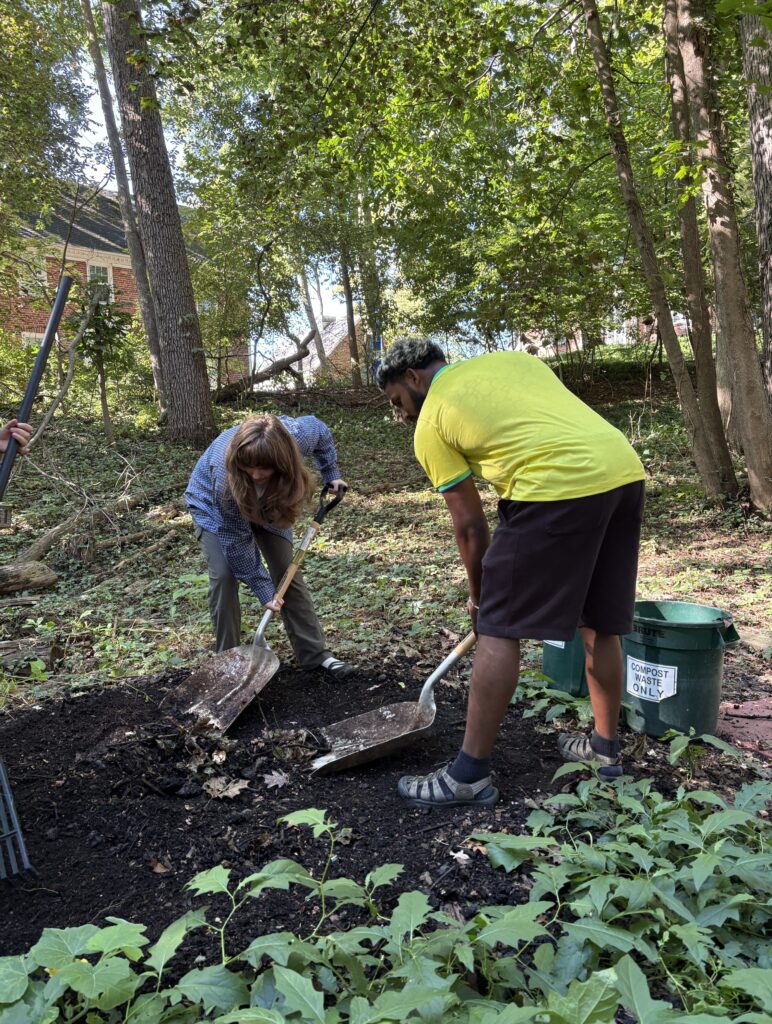
Hello everyone! My name is Zoe Wilson and I am here to tell you about my summer in the wonderful company of the Hoop House (HH). I was granted a fellowship with the Environmental Stewardship Center to work at the Hoop House and complete my SIP about community gardening. My days began early, slowly waking up during the joyride on my bike to the HH, quickly followed by a duel with the bugs that eagerly greet me when I enter the garden. My work often involved rehoming weeds to the ever-inviting compost piles, planting new life in the form of vegetable seeds, and living out my interior decorator dreams as I organized the garden and shed in a way that maximized floor space and highlighted my color scheme of dirt brown and lush green. The summer got off to a rocky start with the sweltering heat that triggered my survival instincts as the amount of sweat that erupted from my skin led me to believe I was under water. Nevertheless, as sure as the dirt under my fingernails, I too was ever-present and hard to get rid of.

Alongside my gardening work, I was working on my SIP, titled “Sowing sovereignty: Decolonial approaches to community gardening and environmental justice.” Through scholarly review, personal reflections, and practical application, I explored how gardens can be powerful spaces for healing, care, resistance, and liberation within communities. I drew from works in decolonial theory, Indigenous studies, feminist theory, and environmental justice scholarship to analyze how land-based practices resist settler colonial paradigms and create space for community self-determination. Being immersed in the garden allowed to observe firsthand how theoretical frameworks are embodied in physical labor and community interactions. Working in this space, I learned accountability, knowing that not just people but the plants were relying on me, as well as the importance of forming a relationship to the land and acknowledging nature, not as a resource, but as the basis of all life. The simple act of sharing the bounty of the Hoop House with my friends and community taught me of the subtle yet vital ways people take care of one another and how a cucumber is more than a cucumber; it is a symbol of life, resilience, and love.

Zoe Wilson holding a cucumber grown in the Hoop House

The garden taught me that resistance does not have to be loud. Sometimes, it looks like growing food where concrete once stood or eating a tomato that you held as a seed. Sometimes, it looks like showing up, again and again, to tend to something fragile.

This fellowship was more than just a summer job or reserach opportunity—it was a reminder that change can start small, in a seed, in a patch of earth, in community.

I want to thank everyone who helped me this summer: my friends, my family, my work-family—Lee, Greta, Sara, and Chloe, the Larry Bell ’80 Environmental Stewardship Center, and of course, the land that allowed me to build this wonderful relationship and create this beautiful life.

Subscribe to receive posts about the ESC, academics, student projects and events directly to your inbox!
Summer Fellowships 2025: Using Tread Management to Combat Against Trail Erosion

This blog post is part of the ESC Summer Fellowship 2025 series. These fellowships provided funding for research projects related to the environment, sustainability and/or the Climate Action Plan. This post was written by Madi Magda, one the fellows of this past summer cycle.


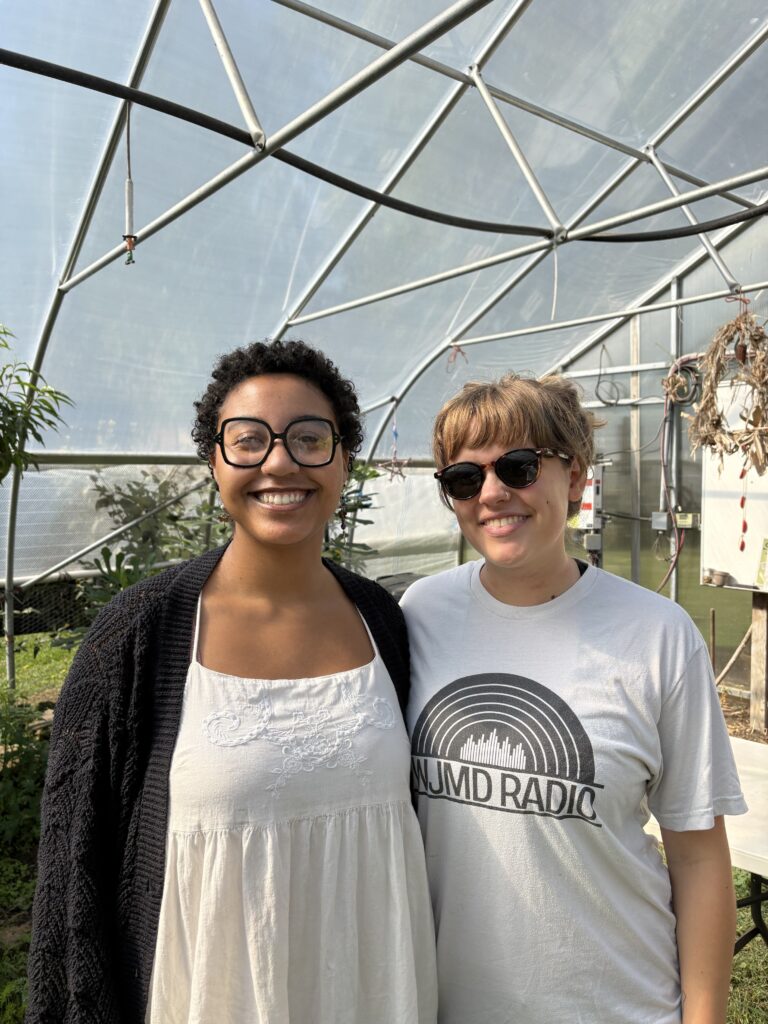
Hey everyone, I’m Madi Magda! Since June, I have been working at the Lillian Anderson Arboretum, completing a variety of different tasks, including general trail maintenance, determining a potential reroute of Not So Magnificent Pines, replacing and putting in steps along the trails, and much more. Everything I did throughout the summer at the Arboretum only increased my interest in working in the ecology field post-graduation.
I had a lot of fun working with the rest of the Arb Crew this summer. One of my favorite shifts was with Tara and Tilly, where we were assigned to move bridge materials. It was a hilarious time moving these materials, but it was also a very rewarding shift at the end of the day because we managed to complete it despite facing issues along the way. One of my favorite parts of this job was telling people my job was to hug trees all day and see the pretty plants and animals. This was a great experience that I recommend to everyone, even if they are not in the biology field. It is a rewarding job that also allows you to be outside and work in nature.

Not only did I learn a lot and have a lot of fun with my fellow Arb Crew, but I also learned a lot about trail management that I had not known previously. This was very beneficial for me, as I am a senior and my Senior Integrated Project consists of using tread management to combat against trail erosion. There are a lot of different aspects of trails that I had not realized were used for erosion reasons or for structural reasons, and it allowed me to do my own research on this topic as well as teach people about it when they asked me.

When telling people what I do at the Arb and why I do it, seeing their reactions was rewarding on its own. They may not have understood what I do or why, but they knew that I was passionate about my job and that was what mattered to me.

Subscribe to receive posts about the ESC, academics, student projects and events directly to your inbox!