Written by: Romina Viramontes-Vargas K’28, Environmental Stewardship Intern
You finish an apple, eat the last bite, and now you’re left holding the core. Trash? Not necessarily.
At K, that apple core has another place it can go: The Grove.
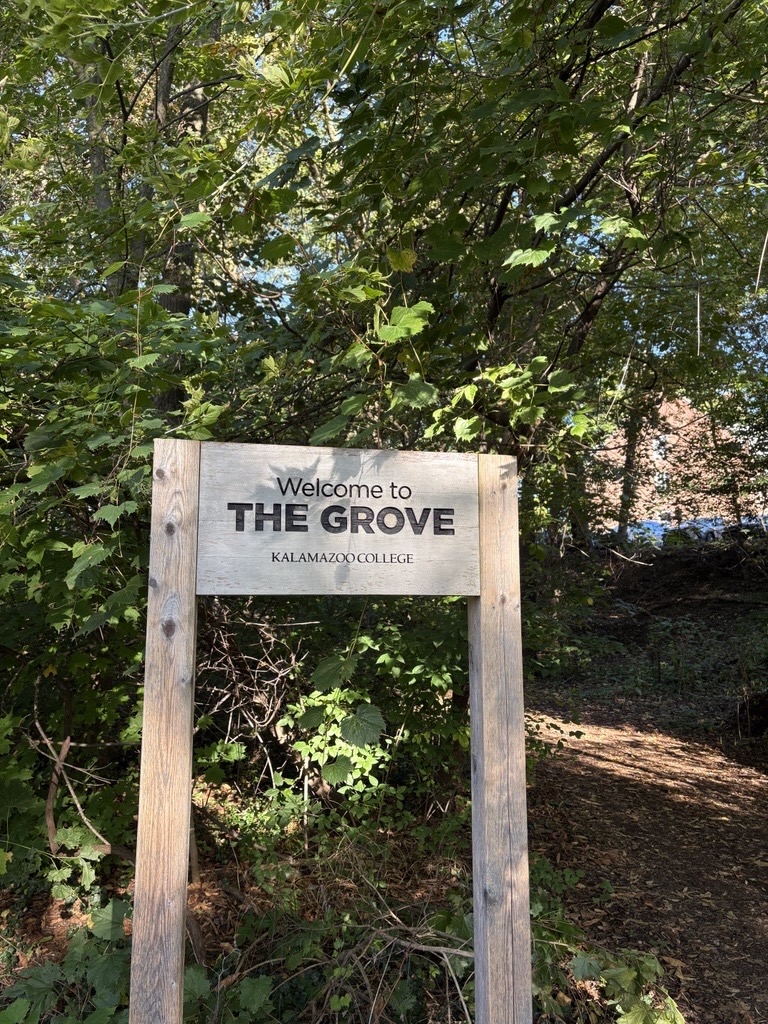
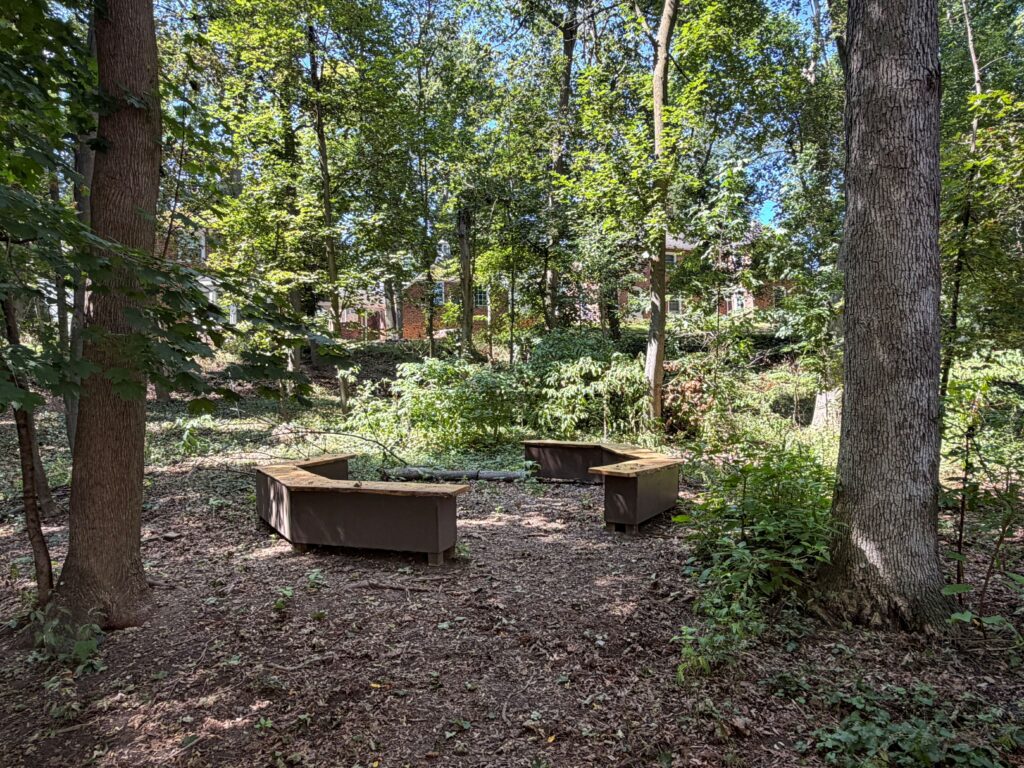
If you’ve never been there before or have absolutely no idea what we’re talking about, the Grove is the forested area between the Living Learning Houses, the Arcus Center for Social Justice Leadership and the Trowbridge parking lot. The entrance is near the stairs next to DeWaters Hall.
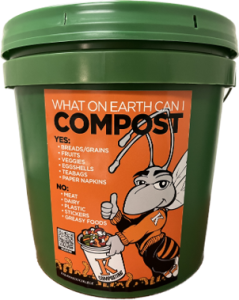
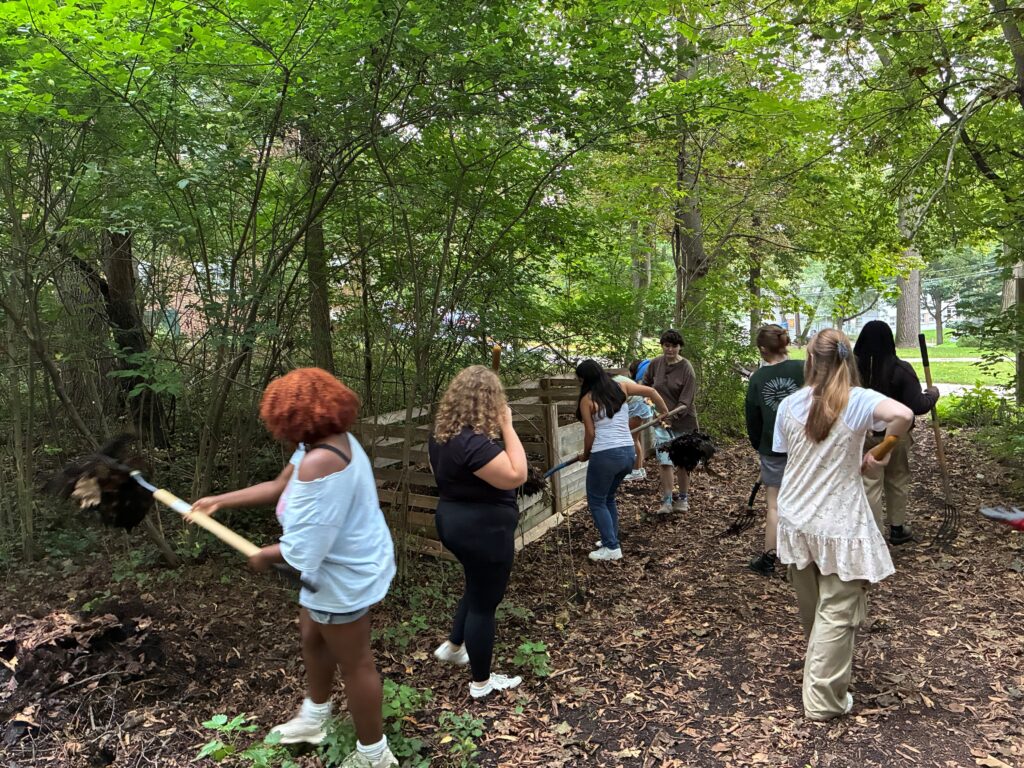
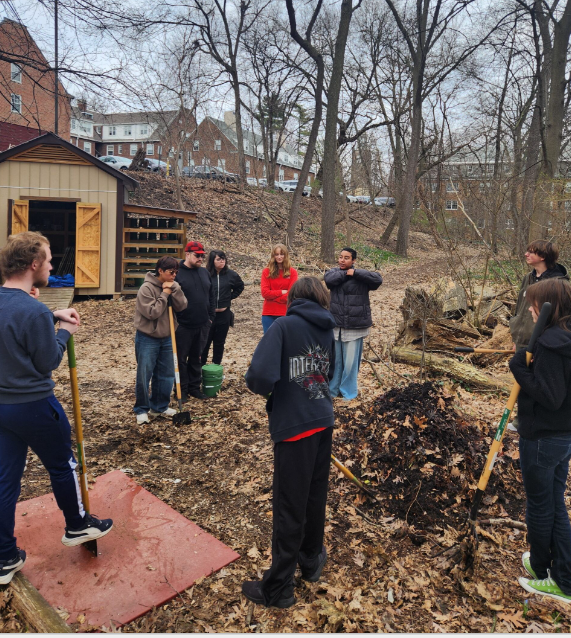
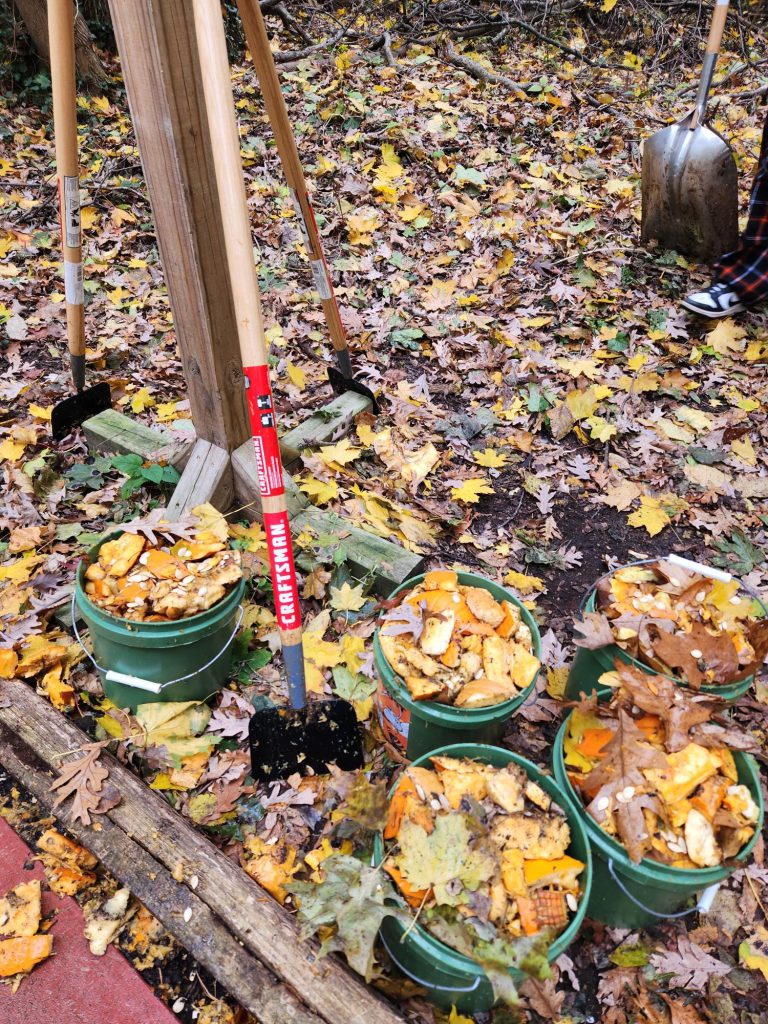
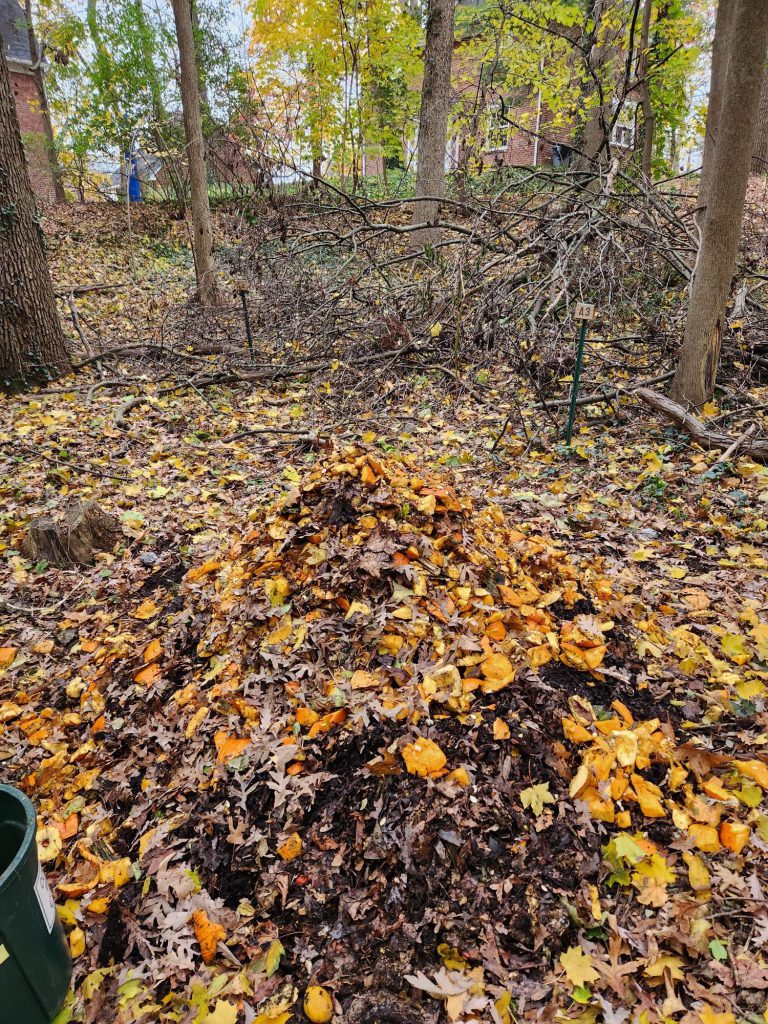
It might look like a small patch of woods from the outside, but there’s quite a bit happening back there. The Grove has been home to K’s on-campus Composting Program since 2009. It’s where you’ll find the composting shed, tools, compost piles, plenty of tiny organisms doing their part and, perhaps most importantly for students, green buckets.
We’ll come back to those.
First, what exactly is composting? Basically, composting gives food scraps and other organic material another purpose instead of simply sending them to the trash. Over time, that material breaks down and becomes nutrient-rich compost that can be returned to the soil.
And apparently, K has quite a bit to compost.
During the 2025–2026 academic year, 5,712 pounds were composted right here on campus. Another 39,126 pounds went through K’s commercial composting program. That’s 44,838 pounds altogether!
K uses two different systems because on-campus and commercial composting don’t work exactly the same way. The compost managed at the Grove is processed here by the student Composting Crew, while commercial compost is collected by My Green Michigan and taken to their commercial composting facility in Lansing (learn more about My Green Michigan in this post!). The difference also means the two systems can accept different things. So unfortunately, throwing something into a compost bin does not automatically make it compostable. Putting the wrong items in can contaminate the compost and leave someone having to sort through everything by hand. In other words: check before you chuck.
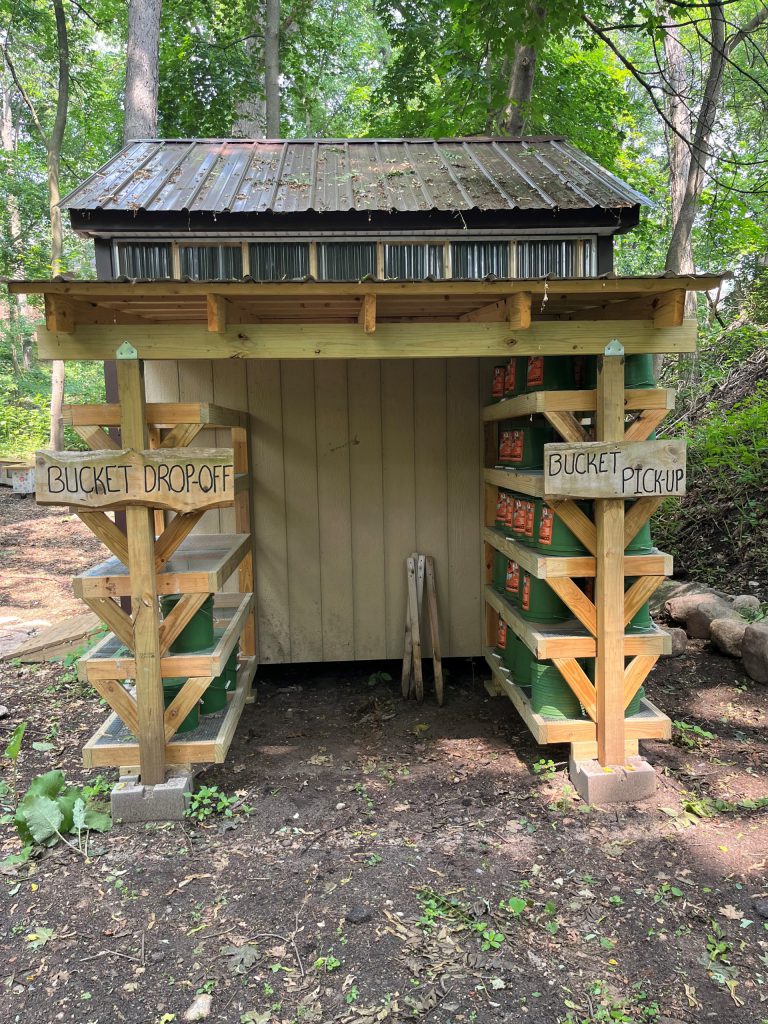
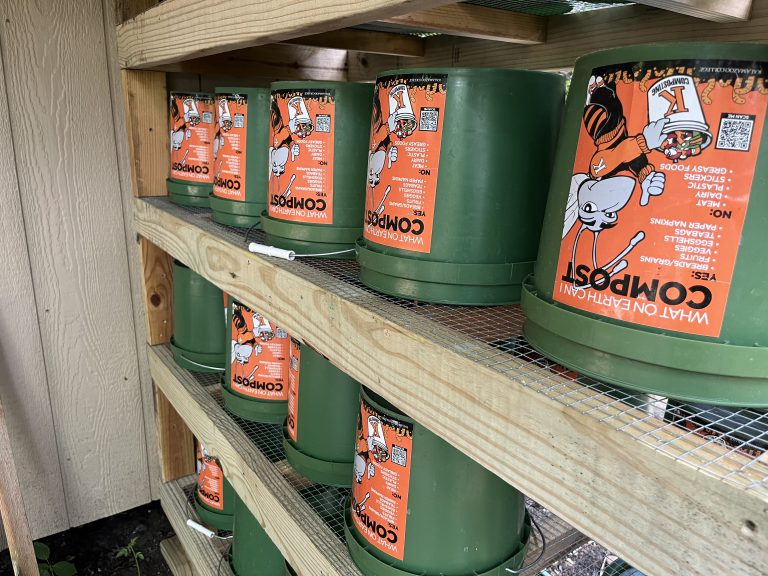
Now, back to those green buckets. If you’ve been to the Grove before, you might have noticed shelves filled with them. And if you assumed they needed to stay there, we have some good news.
You can take them home. Seriously!!!
K students, faculty and staff can pick up a clean green bucket from the Grove, take it home, fill it with food scraps and bring it back when it’s full. When you return it, you can exchange it for another clean bucket and start again. So even if you live somewhere without a compost pile conveniently sitting in the backyard, you can still compost your food waste through K. And taking home a bucket isn’t the only way students can get involved.
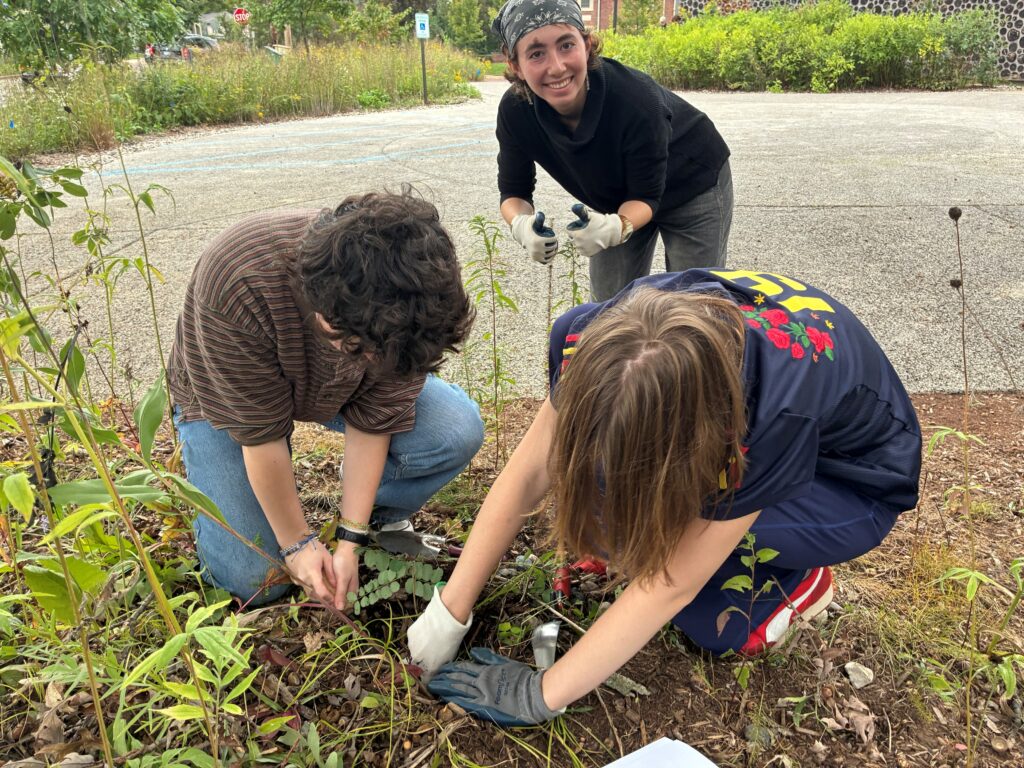
Need a PE credit? There’s composting for that too.
K offers PED-128: Composting during the fall and spring terms, giving students a chance to help with the program while learning more about food waste, composting and the environment along the way. But if taking an entire class about compost isn’t quite your thing, there are also events at the Grove.
And the next one involves smashing pumpkins.
Halloween is coming up, which means pumpkins are about to appear everywhere. Maybe you carve one. Maybe you give it a name and become emotionally attached to it.
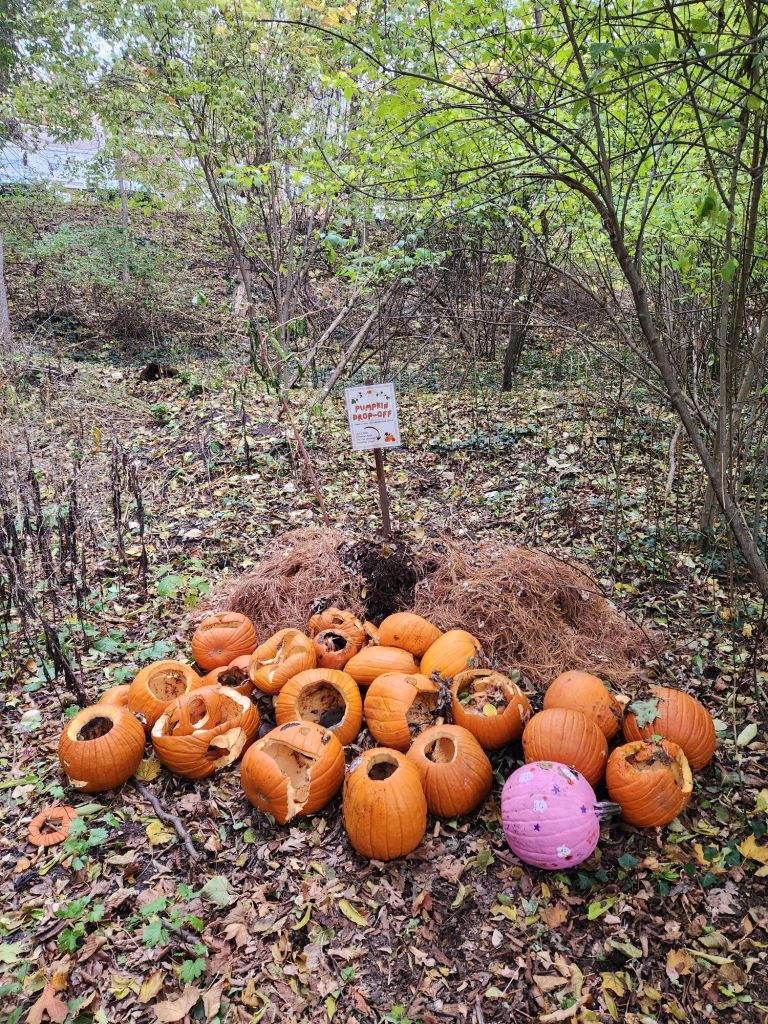
But eventually, November comes around, and that pumpkin has to go somewhere. Instead of throwing it away, bring it to the Grove! On Wednesday, November 4 from 4–6 p.m., the Compost Crew and Office of Student Activities will host a pumpkin smashing event where students can bring their old pumpkins and give them a much more exciting ending while contributing to the composting process.
It’s fun, slightly chaotic, and a lot better than letting your pumpkin slowly collapse outside your door. And in a way, that’s what makes the Grove interesting. It takes something most of us don’t think much about and makes that process visible. Food waste doesn’t magically disappear when it reaches the trash can. It still has to go somewhere. At the Grove, some of that waste gets a second life.
You don’t have to know anything about composting to participate. You don’t need to take the PE class or join the Composting Crew. You can start as simply as walking over to the Grove and picking up a green bucket.
Because yes, one more time for the people in the back: You really can take the green buckets home.
Written by: Romina Viramontes-Vargas K’28, Environmental Stewardship Intern
Larry J. Bell ’80 Environmental Stewardship Center
Subscribe to receive posts about the ESC, academics, student projects and events directly to your inbox!
The Climate Action Plan Committee had the opportunity to host the Week 8 Community Reflection in Stetson Chapel! Titled “Towards Carbon Neutrality with the Climate Action Plan,” the goal of this community reflection was twofold. First, the Climate Action Plan Committee wanted to share the current progress to fulfilling the Climate Action Plan’s goal of reducing greenhouse gas emissions to achieve carbon neutrality by 2050. Transparency and accessibility of information play a vital role in creating a campus-wide culture of sustainability, and the Climate Action Plan Committee is dedicated to increasing our community’s awareness of climate change as well as our efforts to combat it.
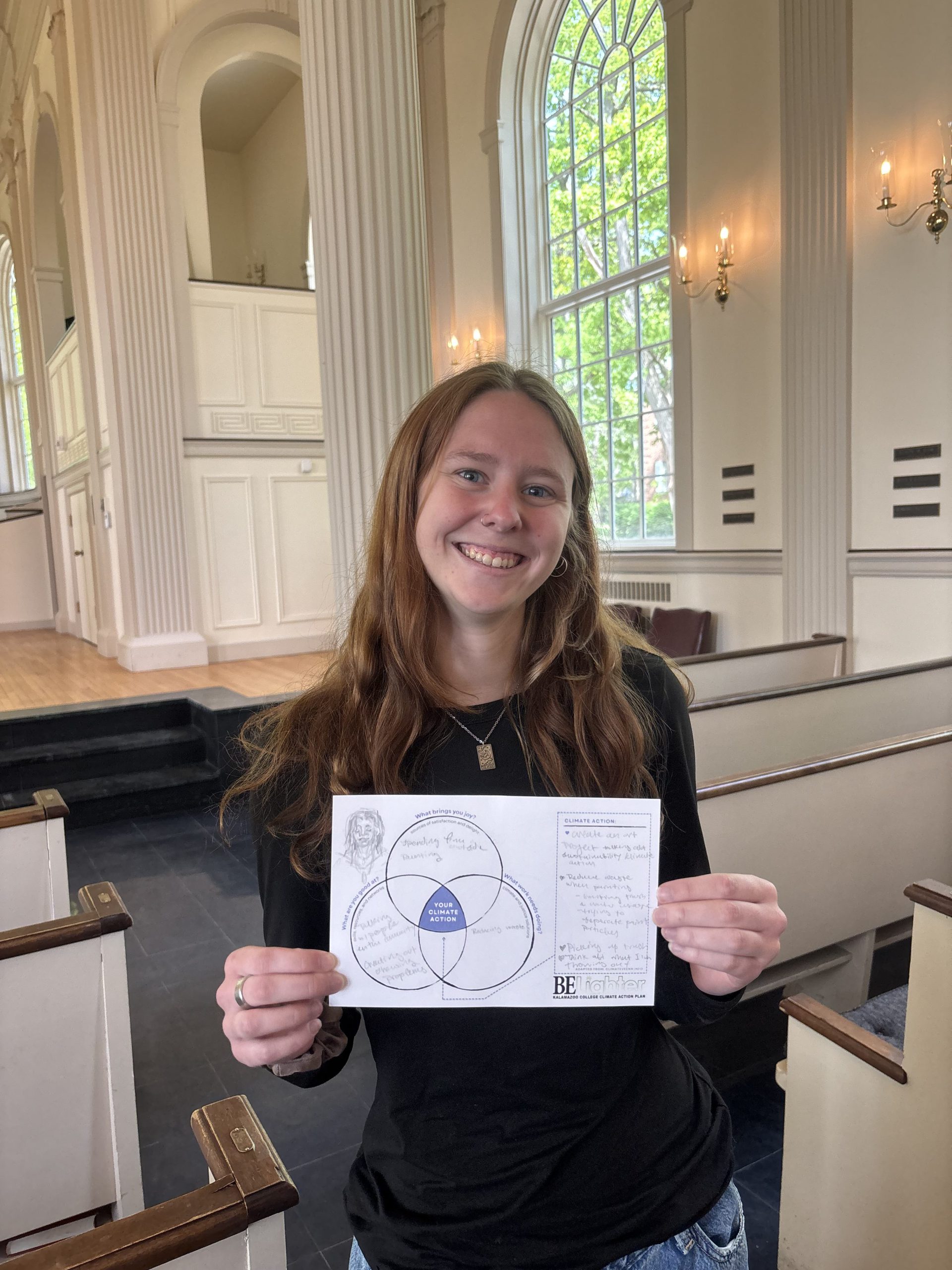
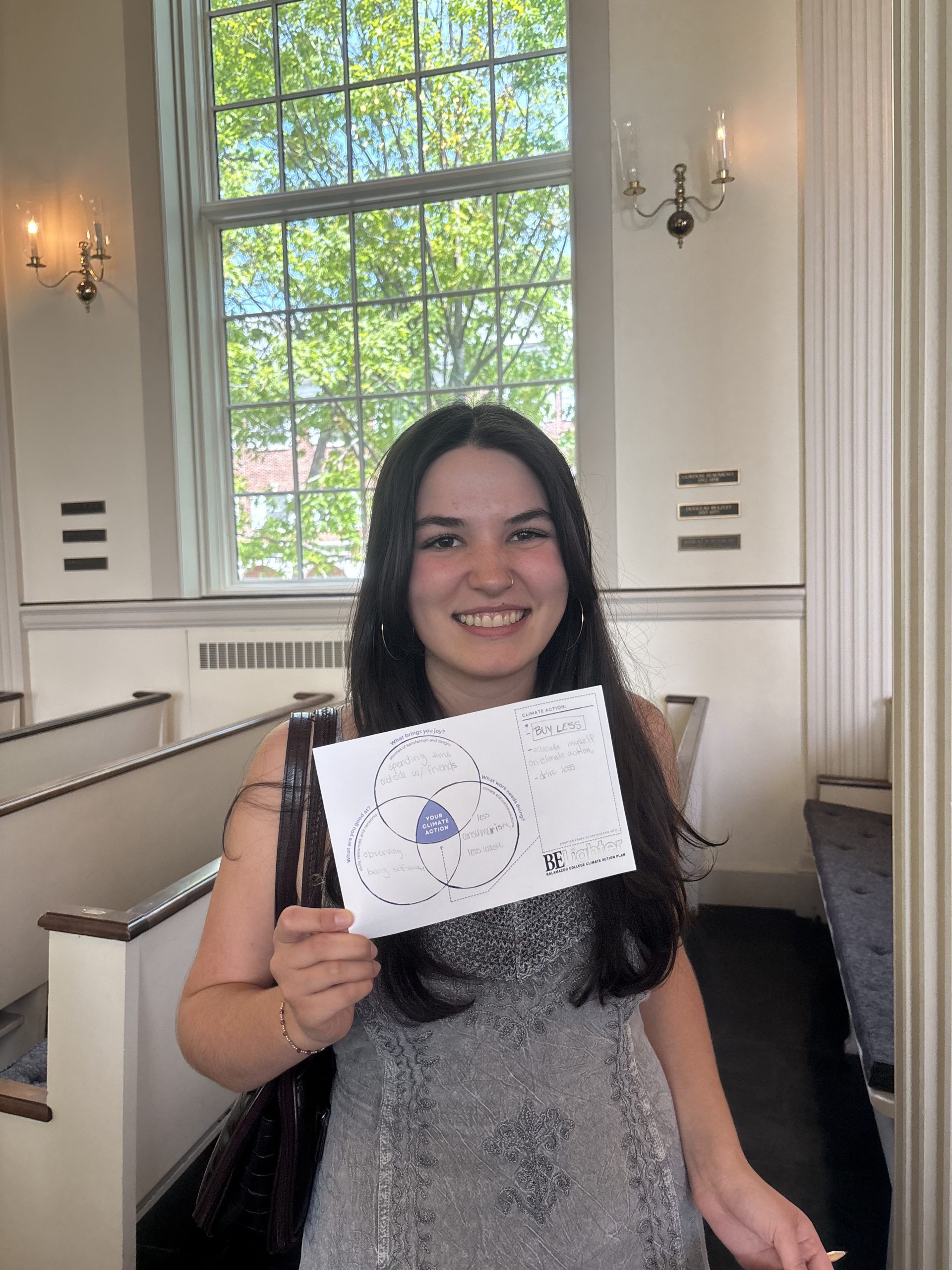
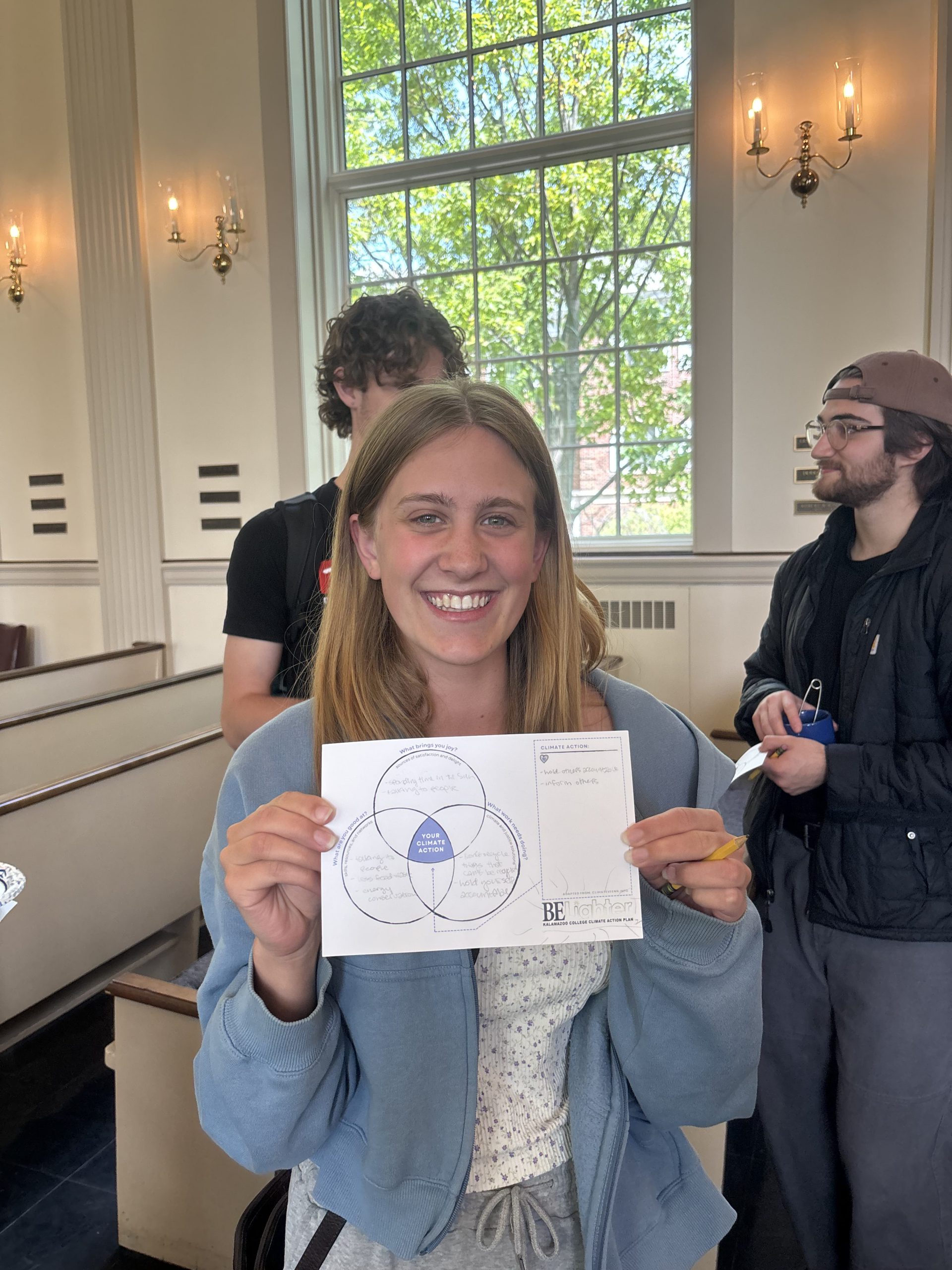
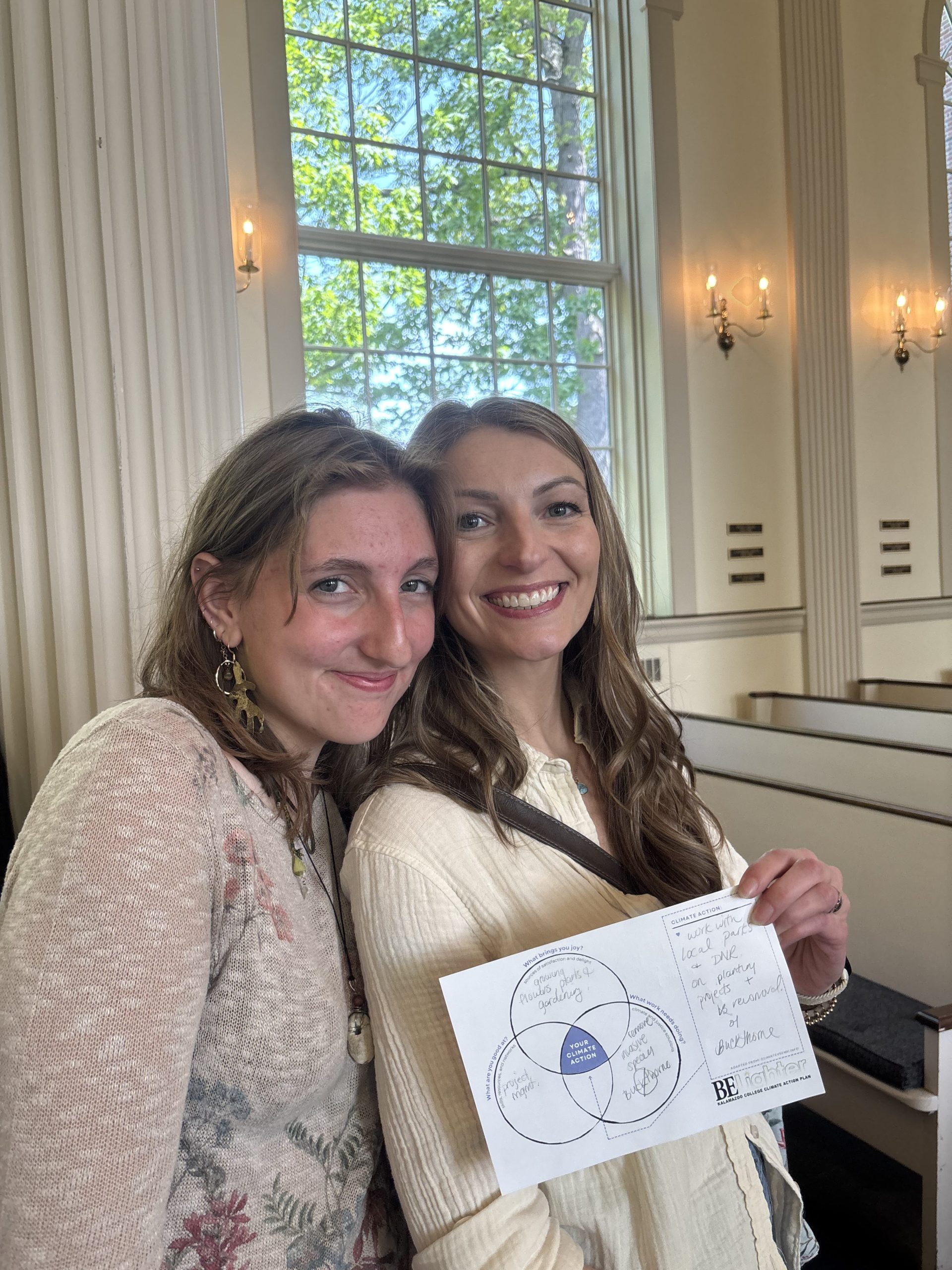
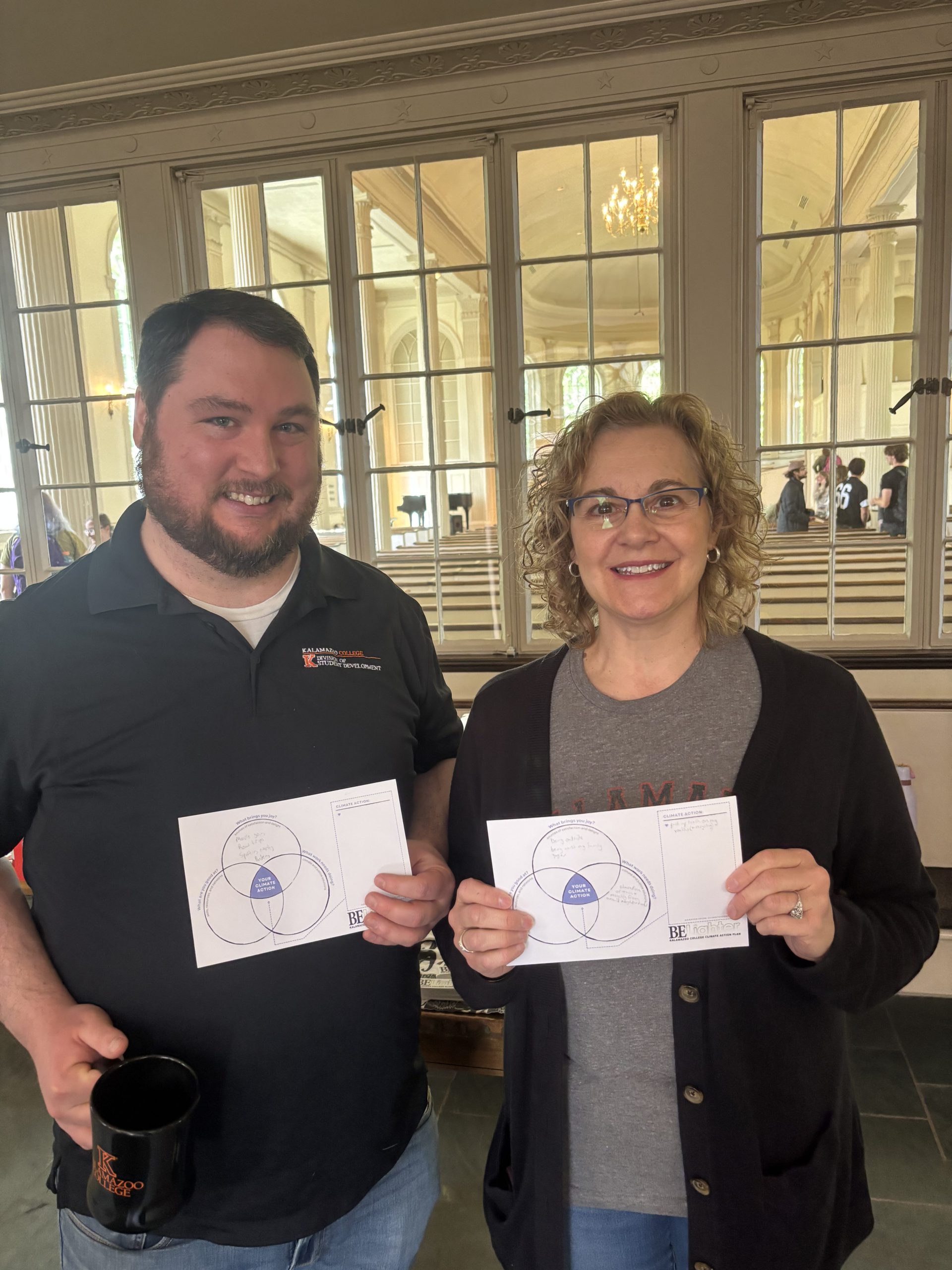
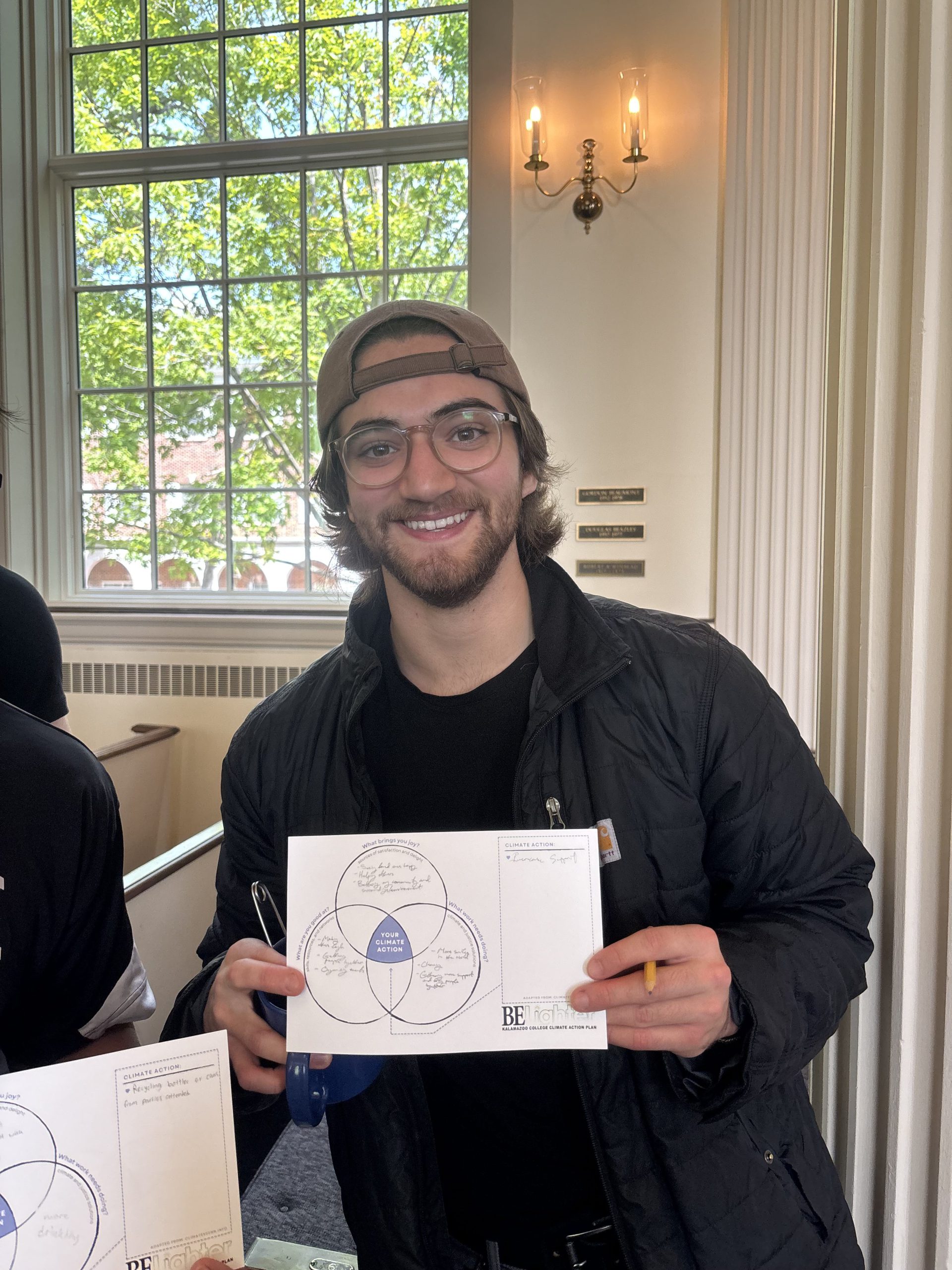
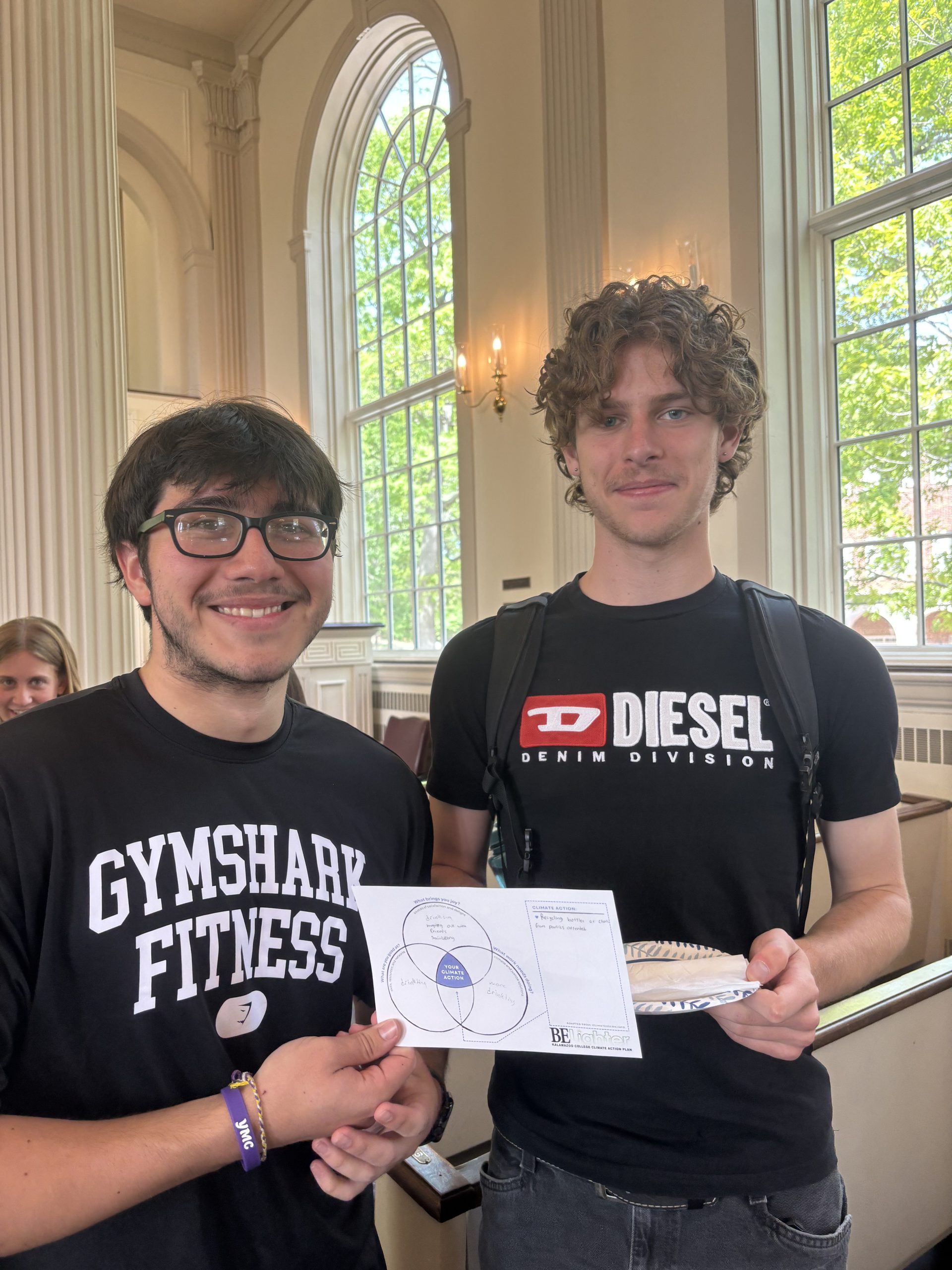
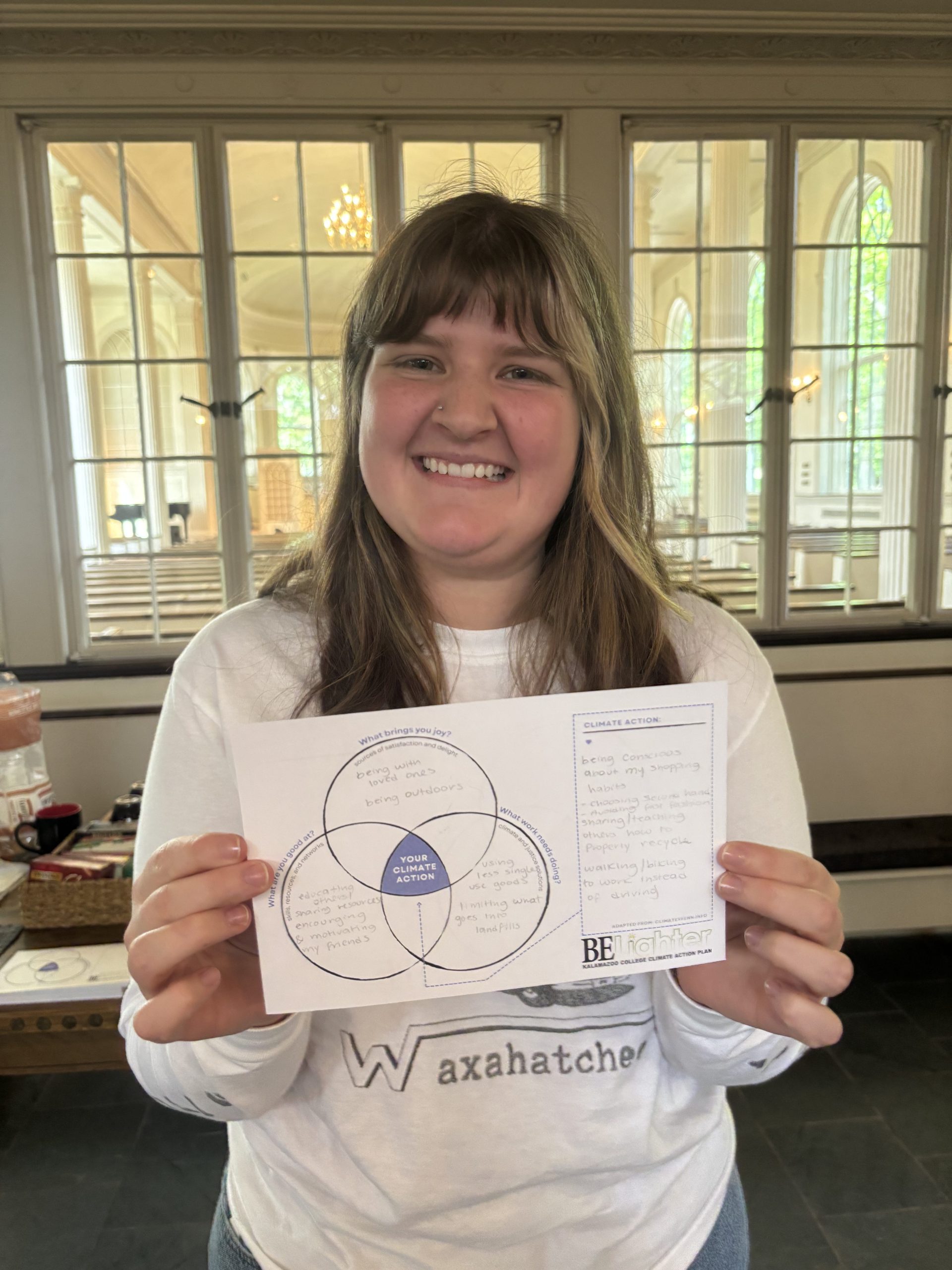
Second, the Committee wanted to create a productive space where students could create their own meaningful climate action. This past November, Environmental Stewardship Center Director Sara Stockwood and Outdoor Environmental Coordinator Greta Farley attended the Association for the Advancement of Sustainability in Higher Education (AASHE) Conference. As part of the sessions and keynotes they attended by people working towards sustainability on college campuses around the United States, they were asked to formulate their own personal climate action plans. In one session by Dr. Ayana Elizabeth Johnson, they were given a climate action Venn diagram (attached below) to fill out. The choice to include an activity was deliberate; climate action does not just happen to us, we have to work towards it together. While true climate justice requires systemic changes, we wanted to challenge the defeatist attitude that is quick to appear when we talk about enacting change by reminding our campus population that their actions do have an impact.
During the Community Reflection, attendees were challenged to use this Venn diagram to answer what brings them joy, what they’re good at and what work they think needs doing. After completing these questions, participants could assess the heart of the Venn diagram, where all three circles overlap to find their personal climate action. A few of them shared their diagrams with us:
Environmental Stewardship Center
Subscribe to receive posts about the ESC, academics, student projects and events directly to your inbox!
This past week, Kalamazoo College celebrated Worldwide Climate and Justice Education Week! Officially held the week of March 23-30, the World Wide Climate Teach-In brings together over 100 universities and 350 organizations from more than 50 countries, focusing on creating Climate and Justice dialogues in K-12 Schools, post-secondary institutions, and environmentally-minded communities across the globe. According to one participating college, the University of Kansas, “a Teach-In model invites researchers, community leaders, students, and faith groups to share space and participate in solutions-oriented discussions with attendees that will drive interdisciplinary perspectives and cultivate actionable solutions for your college and community.”
How does Kalamazoo College participate?
Because the official week fell during our spring break, Kalamazoo College decided to celebrate during Week 4, which coincided with both Earth Day and the Sustainability SIP Symposium. Faculty and staff from K across over 20 classes and programs facilitated discussions about the climate crisis and encouraged environmental justice both on campus and in educational spaces! From German students learning about art and sustainability in Vienna and increasing their ability to discuss these issues in another language, to student filmmakers creating short documentaries focused on climate/environment, to economics courses teaching about current issues and potential policy solutions to climate change, students all across the campus had the opportunity to integrate climate education into their everyday lives. More information on some of this year’s participants can be found here. Thank you to all of the students, faculty, and staff who participated in K’s Worldwide Climate Justice and Education Week!
Looking beyond the Climate Teach-in Week
Although the official event (and K’s unofficial one!) lasts only one week each year, promoting climate education remains important year-round. In fact, climate education is a core pillar of K’s Climate Action Plan (CAP), the framework we use to ensure that sustainability is a core value interwoven with all aspects of campus living. Under the guidance of the CAP, all students are encouraged to engage in climate education in their fields and to understand how to incorporate sustainability into their own lives amid a changing climate.
These goals help guide the environmental work that goes on around campus and beyond. We may have a long way to go towards global sustainability, but the efforts on campus this week are among the most important ways we can contribute to that goal. If you missed the Climate Education Week this year, don’t worry! It’ll be back next year, along with plenty of ways to participate. While it’s up to faculty and staff to design lessons, students are the driving advocates behind increasing awareness, and their voices can help jumpstart the movement by providing much-needed inspiration and drive.
Environmental Stewardship Center
Subscribe to receive posts about the ESC, academics, student projects, and events directly to your inbox!
This piece is part of a Senior Integrated Project (SIP) written by Madeline Moss K’26. We’re sharing it here in an effort to encourage our student body to submit their own sustainability-related pieces. You never know, you just might be featured in the ESC newsletter!
On a damp October afternoon, the Grove at Kalamazoo College hums murmurs with the sounds of trees rustling and the soft crunch of tires. Two deer grazes near the forested edge as a small green Gator pulls up in the forested area between the Living Learning House and the Arcus Center for Social Justice. At the wheel, Josephine Belsky ‘28, dressed in a light sweater, cargo pants, and Converse; beside her sits Cherry Acosta ‘26 in an oversized sweatshirt. Belsky parks the Gator in front of the shed, and Acosta hops out to begin unloading the buckets, marked by the scent of decaying food. Inside the buckets is part of something alive again: food waste being diverted from the landfill back into soil.
Tucked into a quiet corner of campus, Kalamazoo College’s composting program operates as a student-led initiative supported by the Larry J. Bell ‘80 Environmental Stewardship Center (ESC) and Facilities Management. A team of five students manages the program throughout the academic year, overseeing food-waste collection and engaging the campus community in composting practices, and typically teaching the Physical Education composting course offered in the fall and spring. Each crew member dedicates three to seven hours per week.
Acosta, who joined the program in fall 2023, traces their interest back to childhood. “I was a worm kid. I loved worms as a kid,” they said. “Then composting came along, it was through a friend sort of, and they introduced me to it, and I have been doing it since.”
For Belsky, who joined the crew in spring 2025, describes her motivation as rooted in environmental stewardship that is rooted in everyday responsibility. “Change really starts in the small things, and composting is one of those essential processes that get overlooked or just narrowed down to be ‘just for gardens’ or something,” she said. “It’s really a beautiful process of giving back to the land that sustains us and choosing not to be wasteful with what the Earth provides.”
She hopes that this deliberate, hands-on work has a lasting impact. “Maybe at least a few people leave here knowing that a better way exists and maybe they’ll tell a few more people and so on. It’s the little changes and someone has to make them.”
Composting is the natural process in which microorganisms break down organic materials such as food scraps, leaves, and yard trimmings into nutrient-rich soil additives. This process transforms what would otherwise be landfill waste into a valuable resource that supports soil health, improves water retention, and enhances fertility. The process of composting helps close the loop in the food and waste systems. Through diverting these materials through composting, it helps cut down on the reliance of chemical fertilizers that contribute to potential water pollution, damages ecosystems and harms organisms, and releases greenhouse gases.
The five-person composting crew divides routes across campus, collecting food waste from various offices, cafes, and living spaces. Each pair is assigned a specific route and day, completing collections once a week.
Once the buckets reach the Grove, the work begins. Belsky, Acosta, and Miyani Sonera ‘27 get to work. Acosta inserts two compost-specific thermometers into the center of the active pile the crew is working on this trimester which contains freshly added food waste. Designed for dense compost systems, the heavy-duty thermometers feature extended probes and color-coded zones that signify the pile’s internal activity and temperature.
Composting piles are categorized by active and inactive states. As microbes break down the food scraps, they release heat which helps break down the compost. The ideal microbial activity occurs between 80 to 130 degrees Fahrenheit; indicating an active, decomposing pile. Cooler temperatures slow down decomposition, while excessively high temperatures can kill the microbes that aid in decomposition.
Today’s readings were 84 and 75 degrees, averaging around 80, placing it on the lower end of the active range. As autumn temperatures dip, the pile mirrors the season. As the pile gets tempted, Sonera and Belsky fall into routine. One by one, they unload the buckets from the back of the Gator. Belsky hooks a bucket onto the hanging produce scale and adds it up in her calculator app on her phone. Once the weight is noted, Sonera tips the contents of the bucket onto an orange chopping board beside the scale. On this day, they tallied 17 buckets, totaling 124.5 pounds of food waste.
Since its founding in 2009, the composting program has evolved from a modest dining hall waste experiment into a campus-wide effort that now diverts thousands of pounds of food waste from landfills each year. The initiative was begun by Rob Townsend, a Facilities Management emeritus staff member who had been active in the campus recycling program. What started with dining hall scraps sent to a local pig farm, has expanded into on-campus composting and industrial-scale composting processed through My Green Michigan.
With the transition of leadership in Facilities Management coupled with the establishment of the Environmental Stewardship Center in 2019, the composting program entered a period of reevaluation. During that time, a student project explored the future of composting, weighing the possibility of an on-site, in-vessel system. However, a system such as this would require electricity, water, and space. The alternative of partnering with an external vendor, such as My Green Michigan, would better suit the Kalamazoo College campus.
In its early years, the program tested “Earth Tubs” which were eight-foot composting vessels that were introduced in 2012. While it was a successful way to process large quantities of food waste, the challenges persisted with odor, runoff, and mechanical failures led to their eventual retirement in 2018. After a two-year pause, the college restructured its approach, partnering with My Green Michigan, an organic collection company outside of Lansing, Mich. Their large-scale operations can handle materials like meat, dairy, and compostable disposables that the Grove’s system cannot process because of the specific requirements needed to process them. By diverting these materials from landfills, composting plays a critical role in reducing food waste and minimizing its environmental impact.
The harsh reality is that food waste in the United States is a significant and persistent problem. According to Feeding America, an estimated 92 billion pounds of food is discarded every year, a staggering amount that has a wide range of environmental impacts. Composting provides one practical way to address a small portion of that waste.
On campus, community members can compost bread, grains, fruits, vegetables, teabags and coffee grounds, unbleached coffee filters, and unbleached napkins. In the 2023-2024 academic year, the Grove processed 6,883 pounds of food waste, increasing to 8,299 pounds the following year. The program’s impact extends beyond the weight of material diverted from the landfill. Its effects are visible in campus growing spaces such as the Hoop House and the Jolly Garden, which supports hands-on opportunities, provides fresh produce, and hosts various projects. When the finished compost is not used in the growing spaces, it is made available to the wider campus community.
Through the industrial composting partnership, the impact of composting stretches beyond the Grove. During the 2023-2024 academic year, the program diverted 263,796 pounds of food waste, increasing to 327,962 pounds the following year. The increase is substantial, but it raises an important question: does this change reflect more food waste being produced, or more being diverted from landfills?
“It’s really hard to know,” said Sara Stockwood, Director of the Environment Stewardship Center. “I want to say greater efforts [are being made to compost].” She notes that convenience plays a major role in participation. “You have to get a bucket, fill it, and bring it back,” she said of the campus-wide compost program. “Versus if you’re in the Caf and you have leftover food, it’s really easy to just throw it in the compost can—so it’s already part of your process.”
While on-campus composting operates at a much smaller scale than industrial systems, its value lies in education rather than volume alone. The Grove’s compost system gives students hands-on experience with decomposition, soil health, and nutrient cycling. This allows them to engage directly with the processes behind sustainable food systems. By interacting with compost on campus, students see food waste as not an abstract environmental issue, but as something directly in front of them, giving them real stakes within the matter.
In this way, Kalamazoo College’s on-site composting and its partnership with My Green Michigan are complementary rather than unnecessary. The industrial program ensures that large quantities of organic waste are responsibly processed, while the Grove serves as a living classroom with its core goals of sustainable work through education and experimentation.
The industrial composting initiative also prompts questions about its environmental trade-offs, particularly regarding transportation. The collected materials are hauled twice weekly to Lansing, roughly 80 miles away. Stockwood acknowledged the concerns but said the overall impact remains positive. “It was worthwhile to do that versus having that [the food waste] going into a landfill,” she said. “The effects were better to participate in the vehicle driving. I know [My Green Michigan does] pick up from Bell’s Eccentric Cafe, HopCat, and maybe a few other places. They are coming [to Kalamazoo] anyways.”
Back at the Grove, Sonera pours another bucket onto the chopping block as Belsky retrieves the choppers from the shed. These long-handled blades are used to break the food waste into smaller pieces “It helps create more surface area,” Acosta said. “That way, the microbes can do their jobs faster.” The chopping step of composting is the most physical and sometimes, the messiest part of the job.
Today’s mix is heavy on produce: apples, oranges, kiwis, onions, potatoes, cauliflower, peppers, banana peels. There are some eggshells and lettuce leaves, too. The Book Club Cafe’s five buckets of coffee grounds add a welcome balance to the pile’s acidity while helping its smell.
But not everything on the block belongs. Inside one bucket, Sonera finds two “compostable” single-use containers. Despite their labeling, they’re designed for commercial composting, not the smaller-scale system they manage. With a sigh, Belsky grabs a gardening glove and plucks them out by hand. “Sometimes it is frustrating, but not frustrating because people put compostable disposable stuff like bags. And those are only compostable commercially, and we don’t have the size or skill for that,” Belsky said. “We pick it out and put it in the right [place] for people. We’ll put it in designated bins to be sorted later.”
After the offending items are fished out of the pile, Sonera and Belsky continue chop up the compost before it gets added to the active compost pile. This is one of their favorite parts of being on the crew. They get to see what people were eating and make guesses of what some of the items once were.
An example of what community members put into the bins comes from Ruby Winer ‘26 who has been composting with her housemates since winter 2025, “we compost pretty much all big food scraps. Egg shells, apple cores, banana peels, veggie/fruit scraps are the main things that we compost.”
For Winer, the system has been a small shift in her routine but knows her impact is meaningful. “The food scraps could sit in a landfill somewhere, or they could be used to create better soil for more plants going forward,” she said. “Because it was made so easy for us to do as a house, through K’s composting program, we were able to actually do it, instead of just knowing it’s a good thing to do.”
Composting did not become a conscious environmental choice for Zoe Allen ‘28 but rather a practical shift tied to daily life. When she moved out of the dorms and had a kitchen, composting naturally became a part of her routine. “I have been composting all of this year because I’ve been living in a house and making my own food waste,” she said. “Last year, living in a dorm, I did not compost.”
What ends up in Allen’s compost is mostly produce that has gone bad or is leftover. While composting might be new to her college routine, Allen noted that the practice is not unfamiliar, “My parents have composted my whole life, so it is something I’m very used to.” But now that she partakes it in, she feels inspired because, “I believe that there’s a lot of waste in the world that goes to dumpsters and landfills and that composting is a way to separate harmful waste from waste that can be beneficial again to the earth and can make healthier soil.”
Once the food is chopped down to size, Belsky opens the active pile of compost. Using a large pitchfork, Belsky moves aside the warm, decomposing center to make room for new material. Steam arises as she moves the pile. Then Sonera uses a shovel and begins to scoop up the chopped food waste and adds it into the middle.
An important part of composting is maintaining the proper balance between “greens” and “browns.” Greens being food waste that is rich in nitrogen, and browns being packed with carbon such as dried leaves or sawdust. In the past, the crew sourced sawdust from the Fine Arts Building’s set productions to help preserve this three-one green-to-brown ratio. Facilities Management also contributes by filling the leaf bins at the entrance of the Grove before giving any excess to the City of Kalamazoo. As Belsky said, “that’s another way we’re maintaining the aesthetic of campus, but we’re not putting leaves in the landfill.” The brown part is crucial to helping sustaining moisture, bringing in carbon, and balancing the pH levels.
Over the next two months, food waste will naturally heat up as bacteria break down organic matter, which releases energy in a series of exothermic reactions. When the pile’s internal temperature eventually drops below 80 degrees, it enters a “curing” stage where it is inactive. Meaning that it still turned several times per week to conserve airflow and allow for the end of decomposition to finish. The compost is ready when it looks and smells like soil would: dark, crumbly, and earthy scent, and has no lingering heat.
After layering and turning the pile, the Belsky closes the pile up, while Sonera stacks the bucket up so they can be cleaned during their next shift. In recent years, the composting crew has made deliberate efforts to improve organization and continuity. In the program’s earlier days, compost bins were mismatched assortment, everything from reused kitty litter containers to random collected buckets. Without consistent labels, the system was confusing for those trying to participate. The shift to a standardized green bucket helped make them identifiable with clear labeling, thus helping to streamline the process.
Looking ahead, the Environment Stewardship Center (ESC) is working with Parkhurst Dining to make all single-use disposable items fully industrially compostable. Once Parkhurst completes its transition as the new dining provider, the goal is to integrate industrial compost bins into campus events and dining spaces, treating compost collection with the same consistency as trash and recycling so that all material reliably reaches My Green Michigan’s facilities.
The ESC is currently piloting a collapsible three-bin sorting system: compost, recycling, and trash; made from recycled cardboard, with plans to add labeling. Stockwood hopes this model will eventually be adopted for catered events, creating a streamlined system in which “everything laid out is compostable,” reducing confusion and preventing contamination that could jeopardize the composting contract with My Green Michigan, which flags if too many non-compostable items are in a load.
Eventually, the vision is a campus culture where composting becomes second nature. First-year students arrive at systems that already work; sorting food waste becomes routine in the cafeteria, and students grow comfortable participating in both industrial and on-site composting programs. “The goals are always the same,” Stockwood said. “How can we capture and divert more from landfill to composting? Part of that is reducing waste, but it’s also about building a campus where everyone has the opportunity and the knowledge to take part.”
The compost buckets are stored on two shelves next to the sturdy shed, which houses tools and provides protection from Michigan’s harsh winters. The shed is a relatively recent addition. Before it, a makeshift lean-to shelter offered temporary protection for the compost during the colder months. However, as the program expanded, the storage system needed an upgrade. The weatherproof, closable shed, and shelving unit not only protects the buckets from the elements but streamlines their organization with the left side being for “bucket drop-off” and right-side having upside down clean compost bins “bucket pick-up.” Previously, the buckets of compost sat directly on the ground and without clear signage, it could be confusing for community members to know how to participate. This new setup makes it easier for everyone to contribute, ensuring that the process is both accessible and efficient.
Wednesdays and Fridays are bucket washing days for the crew in the Facilities Management parking lot. Each pair of crew members wash about 20-25 buckets per shift. The regular washing prevents odors and pests. Belsky said, “we don’t want to have to deal with super icky gross foods, so we try and wash them out every other day.”
On a cold Wednesday afternoon, the Gator’s bed is stacked high with around two dozen dirty buckets. Belsky drives behind Hicks, then she navigates the bumps of Academy Street’s iconic red bricks, turning the wheel carefully to keep the buckets from tumbling as she turns into the Facilities Management parking lot. She pulls into the garage, and Acosta hauls out the power washer while Belsky sheds her jacket and begins unloading the buckets.
The cleaning process is methodical. The pair begins the washing process by separating the buckets and lids and laying them out into two different piles. As Acosta rinses the buckets with the power washer, splashing out leftover scraps and pouring the rinsed water over a metal grate that catches any stray pieces. The tougher residue gets a blast from the power washer’s narrow nozzle. Belsky is bent over scrubbing each bucket with a scouring brush. Once the inside and outside of the buckets are cleaned, they repeat the process with the lids.
In the background, Acosta is playing a quiet playlist from their phone, while the pair chat about their days and talk about what classes they are going to register for next term. The air smells faintly of peppermint soap, cutting through any traces of decomposing food.
After a few splashes of cold water and numb fingers, they washed 22 buckets today. Carefully, they stack the clean buckets and load them onto the Gator. At the Grove, the freshly washed buckets are lined up in neat rows, ready for their next cycle.
Environmental Stewardship Center
Subscribe to receive posts about the ESC, academics, student projects and events directly to your inbox!
The Environmental Stewardship Center (ESC) is excited to welcome back all of our students, staff, and faculty back to campus for the spring trimester! We hope everyone had a relaxing break because we’re ready to hit the ground running with a host of exciting events this term. Our interns are located in Dewing Commons Monday through Thursday, and you can always stop by to ask questions and learn more about what we do! Below are all the ways the ESC is actively working to make a greener, more sustainable campus this spring:
#aab_accordion_3043eeb4_0 { }
Sustainability SIP Symposium
We’re so excited to announce our 2026 Sustainability SIP Symposium! Honoring the work of incredible seniors across all corners of campus who have completed Senior Integrated Projects dealing with themes of climate change, the environment, and sustainability, the Symposium will include a keynote speaker, presentations, great food, and lots to celebrate! The event is free and open to all! Come join us in the Arcus Center on Wednesday, April 22nd, from 6:30-9pm. In the meantime, keep an eye out for senior spotlights coming out soon on our Instagram!
#aab_accordion_c07063b6_1 { }
Hoop House
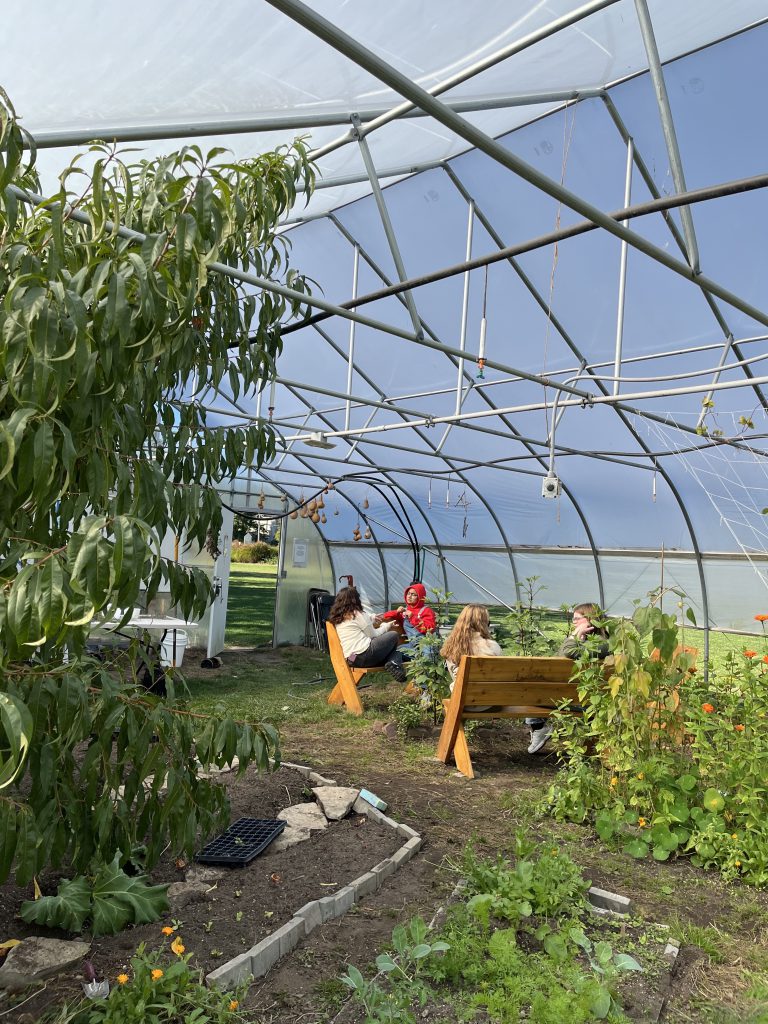
The Hoop House is happy to host open hours again this term! Open hours this term will be on Mondays, Wednesdays, and Fridays from 4:30-6:30pm. We’re also excited to host a number of events, including flower pressing, paper-making, herbal tea making, etc. Check our Instagram to stay updated!
#aab_accordion_89c592d8_2 { }
Composting
Composting is back up and running this term! In fact, our composting interns are already distributing mature compost from the fall and winter terms to the Jolly Gardens and the Hoop House. Grab a bucket to support our composting team and be a part of a sustainable local food cycle! And don’t forget to be on the look out for Groove Grove during 9th week!
#aab_accordion_09753638_3 { }
P.E. Classes
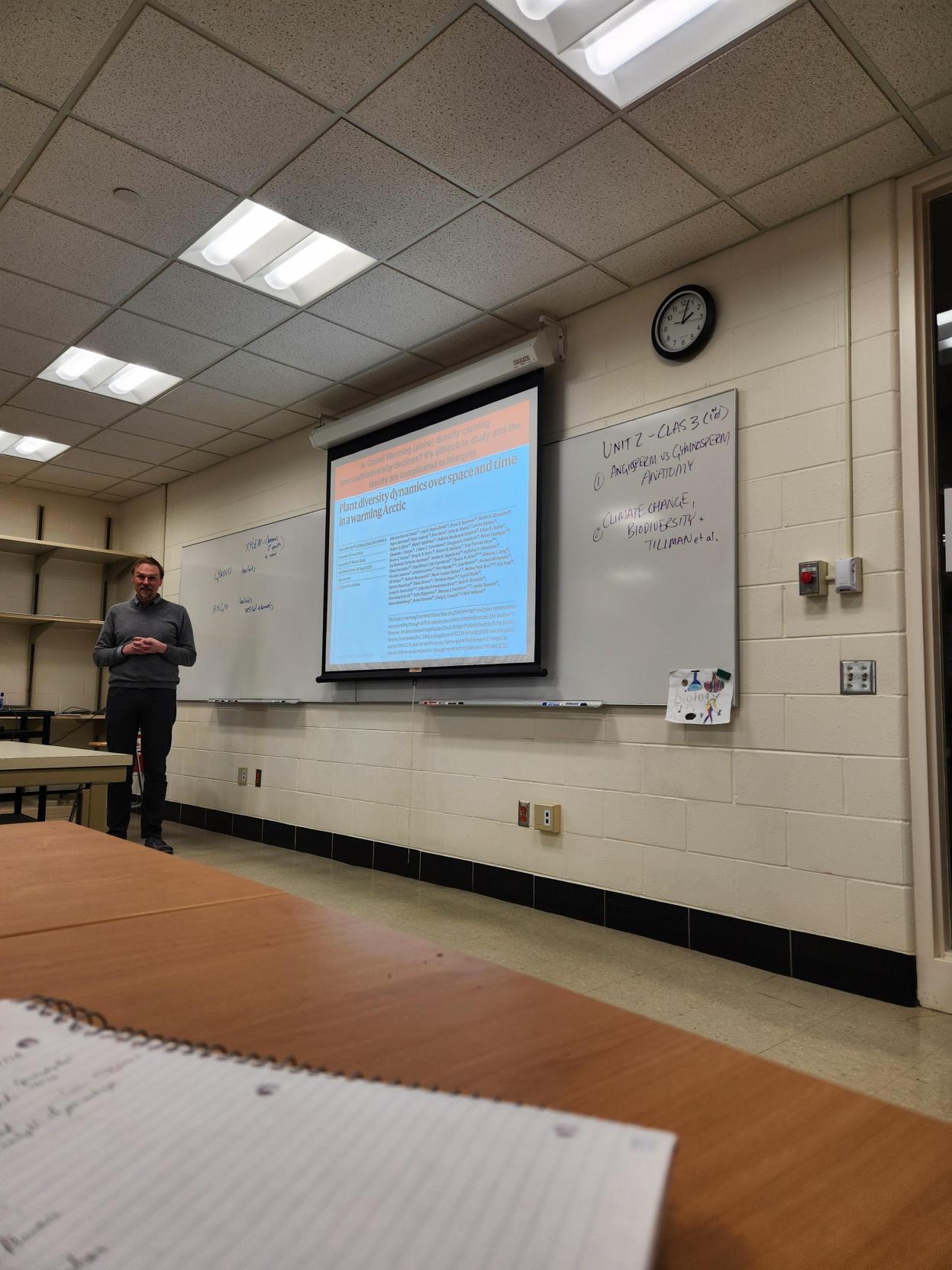
It’s spring, which means it is time for everyone’s favorite P.E. courses: composting and gardening! These courses highlight our campus’s commitment to experimental learning and developing a sense environmental responsibility, core pillars of our Climate Action Plan. If you haven’t had the chance to take one of the amazing classes yet, be on the look out next fall and spring terms!
#aab_accordion_41adffcf_4 { }
Global Climate Education Week
Every year, the World Wide Climate & Justice Education Week is an event focused on creating Climate and Justice dialogues across primary and secondary schools, colleges and universities, and the greater international community of advocates across the globe. A “Teach-in” model invites students, staff, faculty, community leaders, and faith groups to create space and participate in solutions-oriented discussions about climate change that will drive interdisciplinary perspectives and cultivate actionable solutions. This year, Kalamazoo College is happy to participate with faculty from a wide array of departments, ranging from fine arts to business to the natural sciences. The Global event occurred in March, but Kalamazoo College’s Climate Education Week takes place during Week 4 with faculty incorporating environmental and sustainability issues into their lessons, and we encourage you to ask your profs to participate!
#aab_accordion_cfebe3a3_5 { }
Climate Connection Series
The Climate Connection Series aims to not only discuss the Kalamazoo College’s Climate Action Plan goals but also to encourage students to incorporate those goals into their academic and personal lives. Two events will be held this term, one in Week 6 discussing the learning and environmental responsibility goals and the other in Week 7 discussing the resource conservation and greenhouse gas emission goals. More information coming soon!
#aab_accordion_a1148765_6 { }
Week 8 Community Reflection
The Climate Action Plan (CAP) Committee is happy to host the Week 8 Community Reflection! Committee members, which include students, faculty, and staff, will come together to discuss a basic overview of the CAP and its goals, major wins that we’ve accomplished, and where we’re headed now. Additionally, the CAP Committee aims to encourage students to get involved, stay informed, and incorporate the CAP into their own lives through this community reflection. More details coming soon!
#aab_accordion_12c9682b_7 { }
Sustainability Chats
The ESC is happy to continue hosting our biweekly Sustainability Chats! Every even week Wednesday we come together during common time (11am) to discuss on-campus environmental opportunities and news – snacks provided!
#aab_accordion_007b6a24_8 { }
Community Events
Harvest Lecture Series: The ValleyHUB Honorable Harvest Lecture Series explores ways in which we can come together to nurture and restore the Honorable Harvest in our communities and in our everyday lives. The 2026 spring series takes place on Tuesdays at 6:30-7:30 p.m. from March 10th – April 21st, and lectures occur in Classroom 223 at the Marilyn J Schlack Culinary and Allied Health Building, 418 E. Walnut St. Kalamazoo
Farmer’s Market: the PCF Farmer’s Market begins in May 2nd! It’s open on Saturdays 7am to 1pm, so get out and support local farms and businesses!
Foodways Symposium: The Kalamazoo 2026 Southeast Asian Foodways Symposium takes places April 10th – April 11th. The symposium acts as an exploration and celebration of the Southeast Asian food cultures found here in Michigan. The event includes a keynote address, cooking demos, classes, hands-on activities, community conversations, kids activities, local area vendors, food and more!
Environmental Stewardship Center
Subscribe to receive posts about the ESC, academics, student projects and events directly to your inbox!
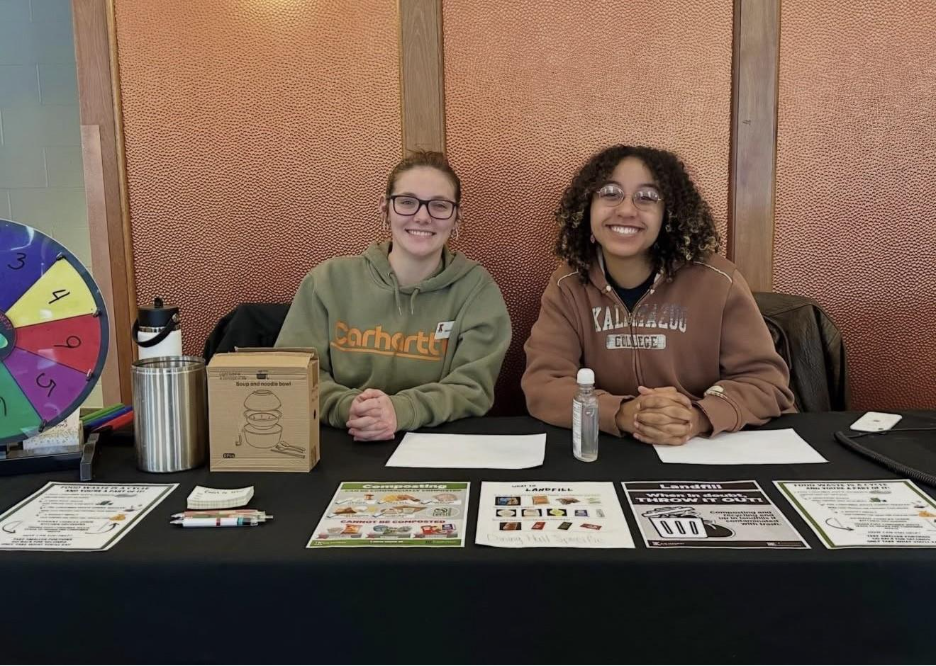
A few weeks ago on February 4th, the Environmental Stewardship Center (ESC) was happy to partner with the Parkhurst Dining team for Weigh the Waste. Led by two ESC interns, Madi Magda ’26 and Mo Silcott ’27, students were invited to weigh their waste and play trivia games centered around composting to win prizes – and it was a huge hit!
This event has been run by Parkhurst at other schools in the past, and Kalamazoo College decided to join in on the fun this year! Weigh the Waste is an event where sustainability initiatives are held on campuses to raise awareness about the food that is wasted on a daily basis. There is a visual aspect to demonstrating the food waste as well: food that would normally be thrown away is put into a clear bin that is on a scale to be weighed. To promote education on compost, students who threw their waste away got to play trivia and were able to win prizes if they got the answers right.
Not only did this event help students visualize the compounding effects of wastefulness that is usually hidden, but it actively educated students about composting and encouraged them to be more conscious of their food waste and carbon footprint. “The best part about this event was seeing them become interested in wanting to be better about food waste and composting,” says Magda K’26. To learn more about composting, you can visit the Composting page on the Sustainability at K website.
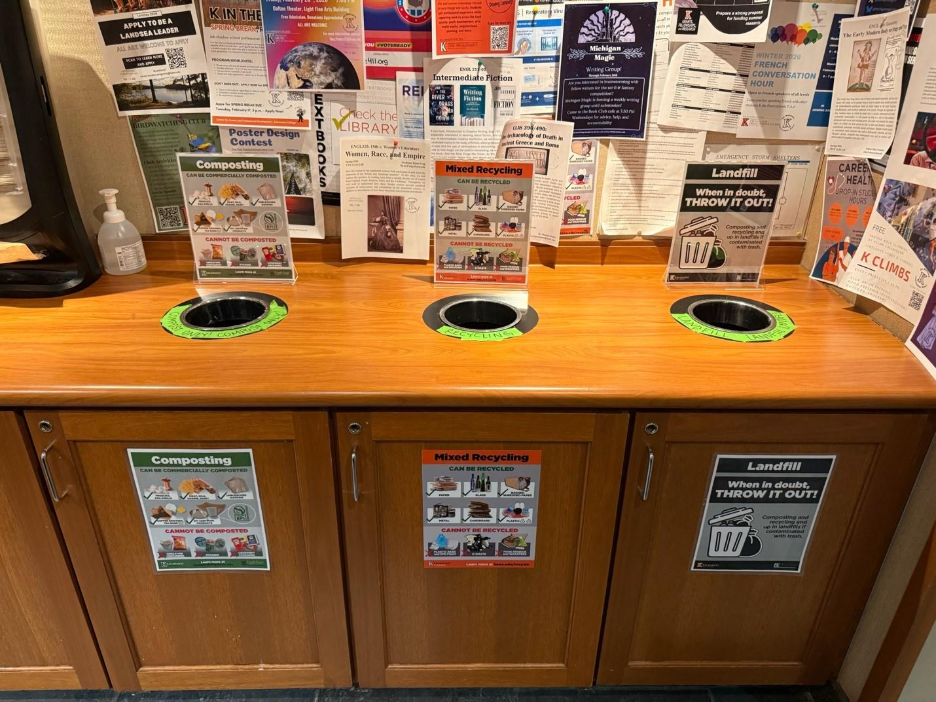
This project, along with many others, was brought to life by the new Dining Sustainability Intern, Madi Magda ‘26, who has been coordinating sustainable development between the ESC and K’s dining partner, Parkhurst. For example, her efforts have resulted in a new commercial composting bin being added to the Book Club Cafe in addition to the recycling and landfill containers. This new addition to K’s eco-infrastructure is a step towards responsible waste management on our campus. Magda designed new composting stickers similar to the recycling stickers to educate students and staff on the correct ways to recycle and compost their waste, facilitating a transition to a more environmentally-friendly culture on campus. Another collaboration struck by the Dining Sustainability Intern was a promotion of reusable cups at the Book Club; there are now punch cards in the book club that get two punches towards a free drink if you bring your own mug or cup from home!
Environmental Stewardship Center
Subscribe to receive posts about the ESC, academics, student projects and events directly to your inbox!
A new program has sprung up at Kalamazoo College that stands as a testament to the Kalamazoo community’s collective efforts to make K more accessible and sustainable. This winter break, Student Development helped shuttle students to and from airports to address the burden of high transportation costs for out of state students.
This initiative was the brainchild of Sally Read, Director of Student Engagement and Haley Mangette, Assistant Director of Student Engagement, who now coordinate the program. They began offering rides last winter break in 2024 after hearing concerns from students about the obstacles they face getting to the airport to travel home for breaks. Students flying out from Grand Rapids (GRR) sometimes have to pay $60-100 for an Uber ride to the city from Kalamazoo. Alternatively, flights from Kalamazoo (AZO) are more accessible, but tend to be more limited in airlines which can lead to higher prices. There also tend to be more direct flights coming out of GRR or Detroit compared to a smaller airport like AZO, which significantly reduces carbon emissions compared to connecting flights. This program is primarily focused on making K more accessible for out of state students who face larger functional and financial challenges. The shuttle service transported 21 students leaving for winter break in 2024 and 43 students returning in January 2025. The program ramped up last year, with more students relying on the shuttle service for last year’s spring break and the start of the 2025 fall trimester. This past winter break, 64 students were driven to airports in November and 42 students were shuttled back to school in January.
The shuttle service is not just a step forward in accessibility and community-building, but also advances sustainability efforts on campus. Most of the students were transported in groups, especially on further trips to GRR where they usually drove 3-5 students at a time, and sometimes upwards of ten students at once. Compared to each student individually taking an Uber, this cuts trips to the airport by half. “This program is really important to me because it speaks to the value of a community like K, and how social justice and environmental justice have to go hand-in-hand,” says Sally Read, “The more we see ourselves as a community, not just individuals, the better we can share resources to make sure everyone gets what they need.”
So who makes this program possible? The K community does! Read explains, “We rely heavily on volunteers, and we’ve been really grateful for people’s willingness to give their time to help students.” In addition to the Office of Student Activities, other groups have provided support and funding for this program, such as Outdoor Programs, the Intercultural Center, and the Center for Career and Professional Development. Most drivers are regular volunteers, with 15-20 staff and faculty involved. It speaks to the investment and cooperation of the K community that volunteers come from every part of Kalamazoo College, from student drivers to members of the President’s staff.
The future of this sustainable initiative looks quite positive! Mangette and Read are hoping to improve the program by coordinating some larger group rides to Detroit or Chicago next winter, with the possibility of taking up to 35 students at once using one of the college buses. It would not only save students money to fly from one of these hubs, but reduce carbon emissions by taking even less trips as well as cutting the need for connecting flights. We can’t wait to see this initiative bloom and provide support to more members of the K community.
Welcome back to campus everyone! We hope you had a wonderful winter break, and we can’t wait to see familiar faces and old friends back on campus.
While not as active as Fall or Spring, the Winter trimester is still full of opportunities to get involved with the Environmental Stewardship Center (ESC) and sustainability on campus as a whole. Our interns are located in Dewing Commons on Mondays and Thursdays, and you can always stop by to ask questions and learn more about what we do! Below are all the ways the ESC is actively working to make a greener, more sustainable campus this term:
#aab_accordion_5519a3b2_0 { }
Composting
Our composting program is up and running for winter 2026! Please stop by and grab a bucket!
#aab_accordion_eeaf612d_1 { }
ESC
The ESC is happy to continue hosting our biweekly Sustainability Chats! Every even week Wednesday we come together during common time (11am) to discuss on-campus environmental opportunities and news – snacks provided!
#aab_accordion_d13f291c_2 { }
Hoop House
The Hoop House will still continue to have open hours this term! Instead of our fall and spring schedule, open hours this term will be on either Tuesday or Thursday depending on the weather. Check our Instagram to see when open hours are!
#aab_accordion_565d3553_3 { }
Midwest Outdoor Leadership Conference (MWOLC)
This term, Kalamazoo College is happy to host the Midwest Outdoor Leadership Conference (MWOLC). From February 6-8, participating students can attend workshops, meet other students from across the midwest, and join in fun activities like rock wall climbing! This year’s theme is “Rooted – Outdoorsmanship in Identity, Community, and Justice.” While not run by the ESC, we’re so excited about this opportunity that we absolutely had to share it here. Make sure to register!
This past Friday, students and staff gathered on the quad to blow off some steam by smashing pumpkins and eating s’mores. With the help of Kalamazoo College’s Office of Student Activities and the Environmental Stewardship Center’s Composting Crew, cartloads of pumpkins were successfully smashed into smithereens!
Dozens of students, as well as some family of faculty members, came to throw, stomp, chop, and ultimately demolish a batch of pumpkins last week. Students cheered each other on as they chucked pumpkins at the ground, healthily venting the stress from the impended finals season. In between slamming pumpkins with shovels, students shared cozy cups of hot chocolate and gooey s’mores and chatted amidst the fitting tune of alternative rock band, Smashing Pumpkins.
The pumpkins were donated by students and community members, most of which were left over from Halloween decorations and fall harvests. Every year, millions of pounds of pumpkins end up in landfills where they contribute to the significant methane emissions of landfills, rather than successfully decomposing and returning nutrients to the soil. Rather than throwing out these festive vegetables, the Composting Crew collected them in the Grove and returned over a quarter of a ton of pumpkins back to the earth.
That’s right! After a significant amount of transporting and chopping and weighing, 517 pounds of pumpkins were composted just from this year’s Smashing Pumpkins event, not including other pumpkins received in community bucket drop-offs. The compost pile has doubled in size and has been steaming away as it rapidly breaks down the load of pumpkins. The nutrient-dense soil will be given to the Hoop House and the Jolly Garden once it’s cured in the spring to feed next year’s gardens! We hope to see you all at the Smashing Pumpkins event next fall!
Environmental Stewardship Center
Subscribe to receive posts about the ESC, academics, student projects and events directly to your inbox!
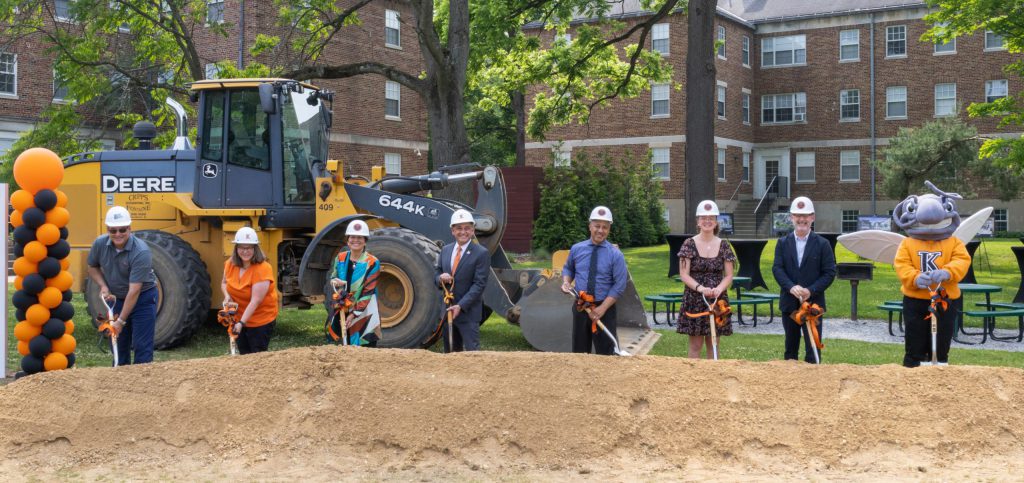
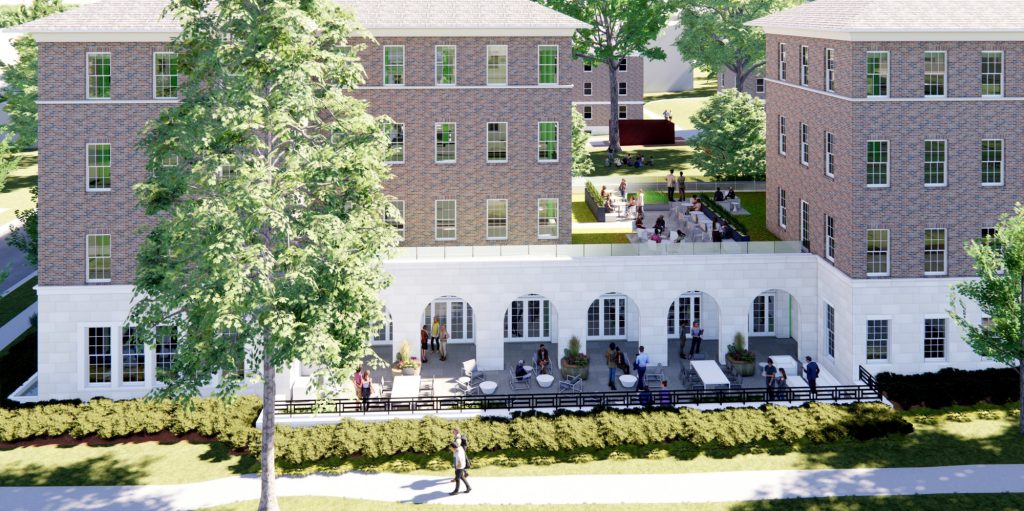
The new residence halls are the talk of the town here at Kalamazoo College as construction has been chugging along since the groundbreaking ceremony on June 12th, 2025. As the new halls represent K’s investment in affordable, inclusive spaces, they also reflect our commitment to advancing sustainability to meet the goals of our Climate Action Plan, which is guiding Kalamazoo College towards carbon neutrality by 2050.
Andy Brown, K’s News and Social Media Director and member of the Climate Action Plan Committee wrote a thorough article, New Residence Halls Embrace Sustainability, on the sustainable features of the new residence halls that describes the renewable energies used, the reduced embodied carbon in the construction of the building, the native landscaping, and the civil engineering that will support more sustainable lifestyle practices of students. Brown’s article also features input from K’s very own Chief Sustainability Officer and Associate Vice President of Facilities Management, Susan Lindemann. She is also co-chair of the CAP Committee and provides insight within the article as to how the elements of the new residence halls align with our Climate Action Plan and the goals established to achieve carbon neutrality. We highly encourage you to give this article a read!
Environmental Stewardship Center
Subscribe to receive posts about the ESC, academics, student projects and events directly to your inbox!