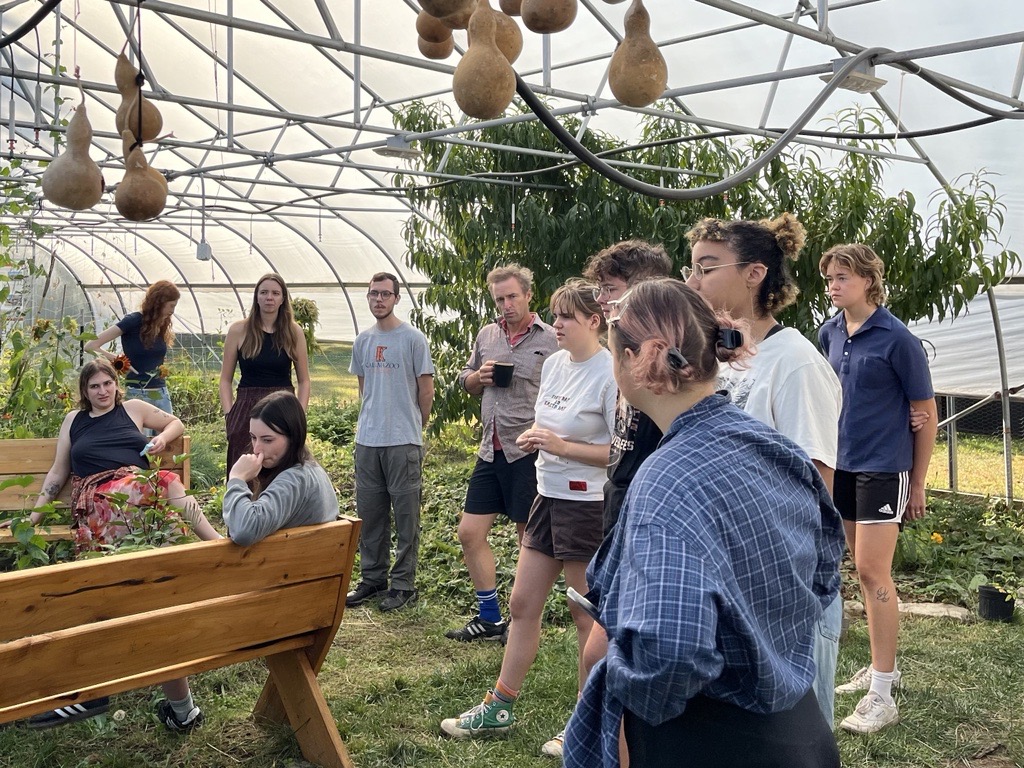
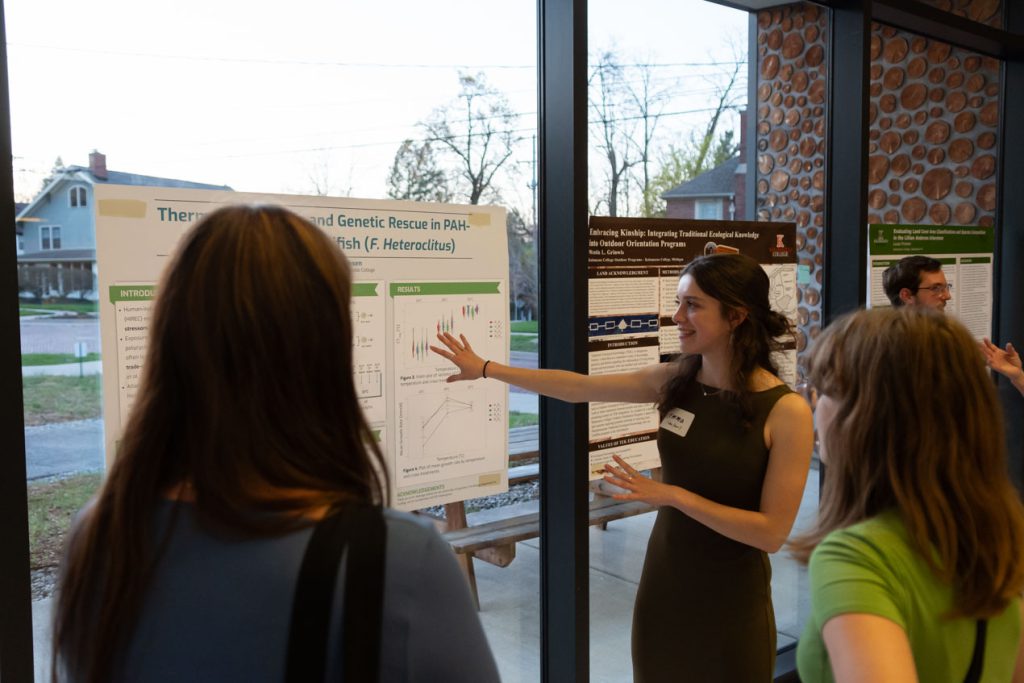
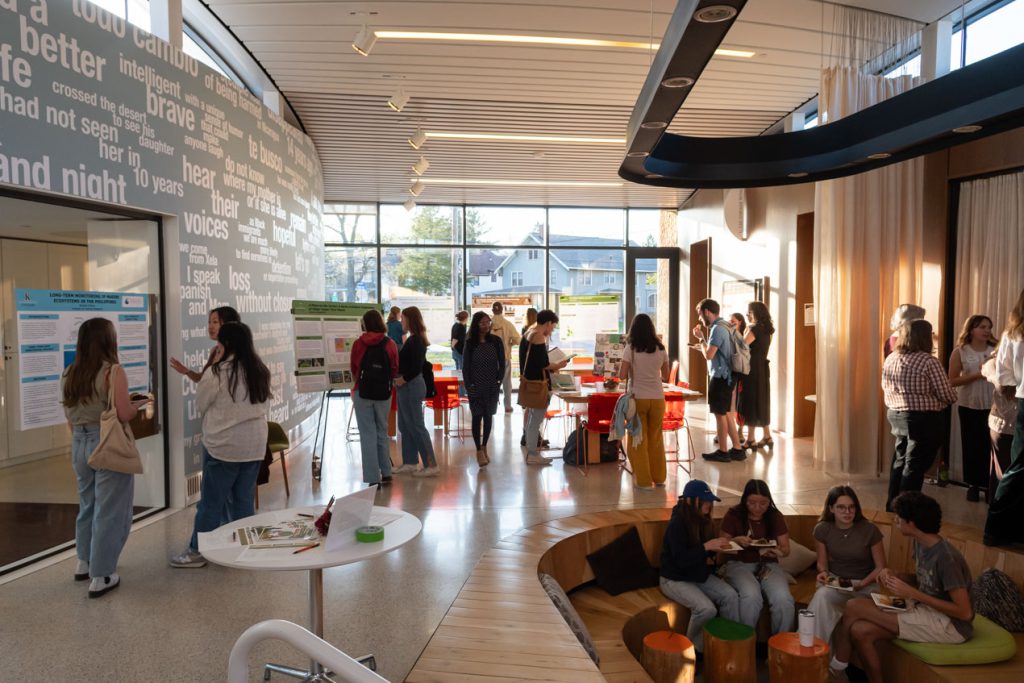
Third week is coming to a close and Earth Week is upon us, bringing with it the 2026 Sustainability SIP Symposium. The Symposium, hosted at the Arcus Center for Social Justice Leadership this Wednesday, April 22nd, will showcase 17 seniors with sustainable Senior-Integrated Projects across their respective departments. The keynote speaker, Reese Dillard, will speak about relationship building and environmental political movements beginning at 6:30 pm, followed by two rounds of senior presenters starting at 7:30 pm. All are welcome, and we hope to see you there!
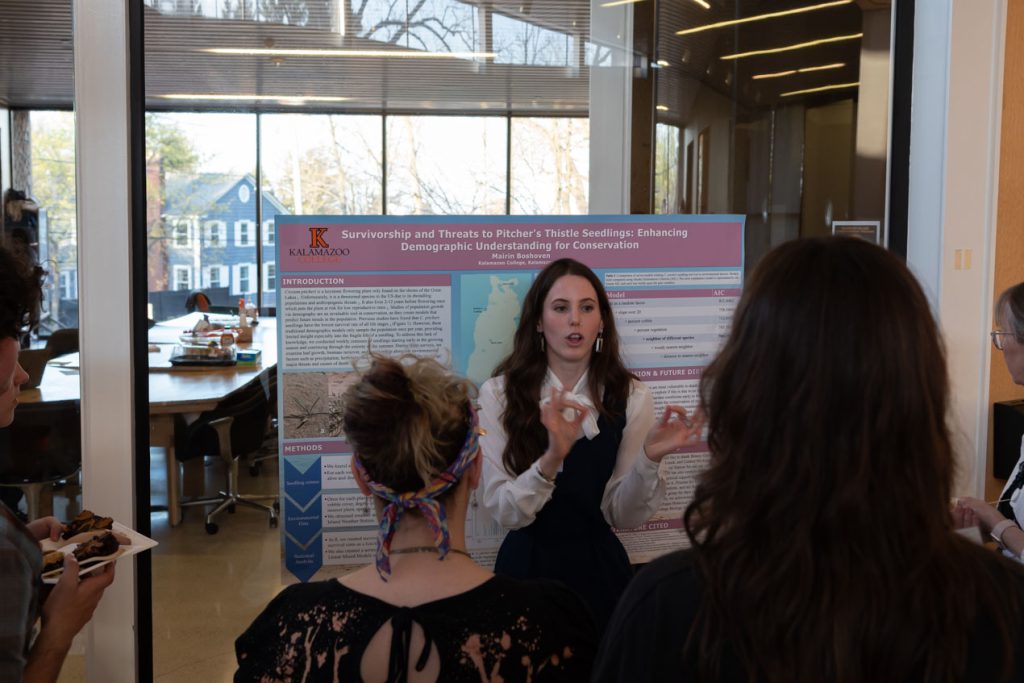
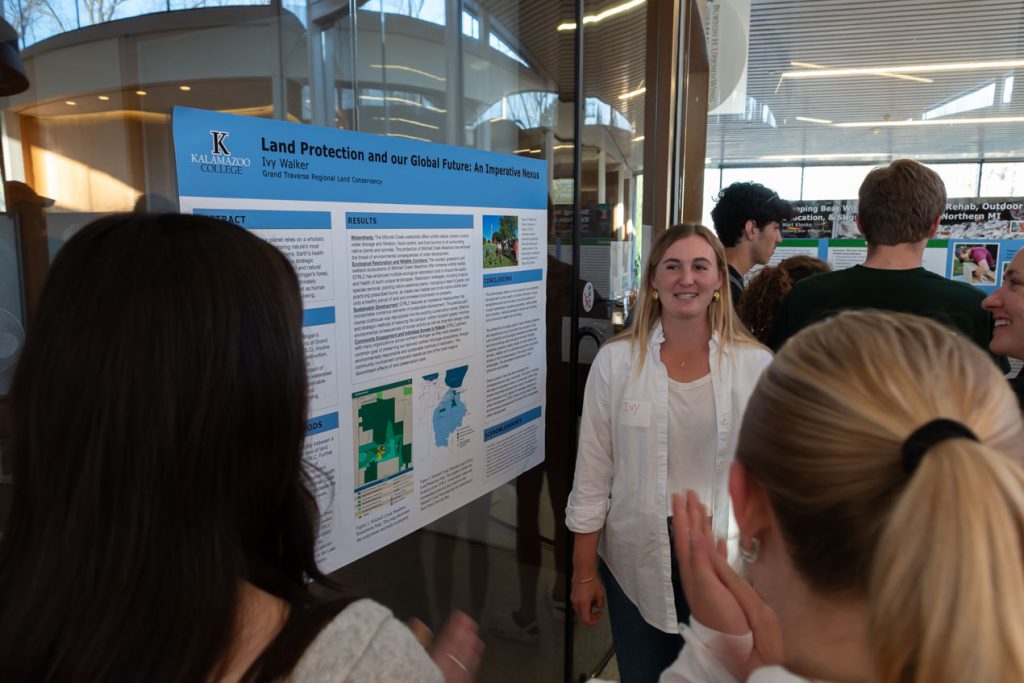
Mairin Boshoven K’25 presenting at the 2025 Sustainability SIP SymposiumIvy Walker K’25 presenting at the 2025 Sustainability SIP Symposium
Now that it’s the spring trimester and summer is in sight, current juniors may be investigating their options for SIPs. The Symposium is put on by the Larry J. Bell ’80 Environmental Stewardship Center and the Environmental Studies department, but the presenters aren’t limited to seniors with the Environmental Studies concentration. Drawing from this year’s graduating seniors, Madeline Moss (English major) reported on Southwest Michigan food systems, while Ryan Neihsl (History major) compared the effect of beavers and pigs on European-Indigenous relations. Also featured are a Studio Art and Critical Ethnic Studies double major, Sophia Sprick, who will present sculptures reflecting material memory and embodied knowledge, and Nora Parks-Church, who will present on the ethics of invasion and restoration ecology as part of her Philosophy and Psychology double major.
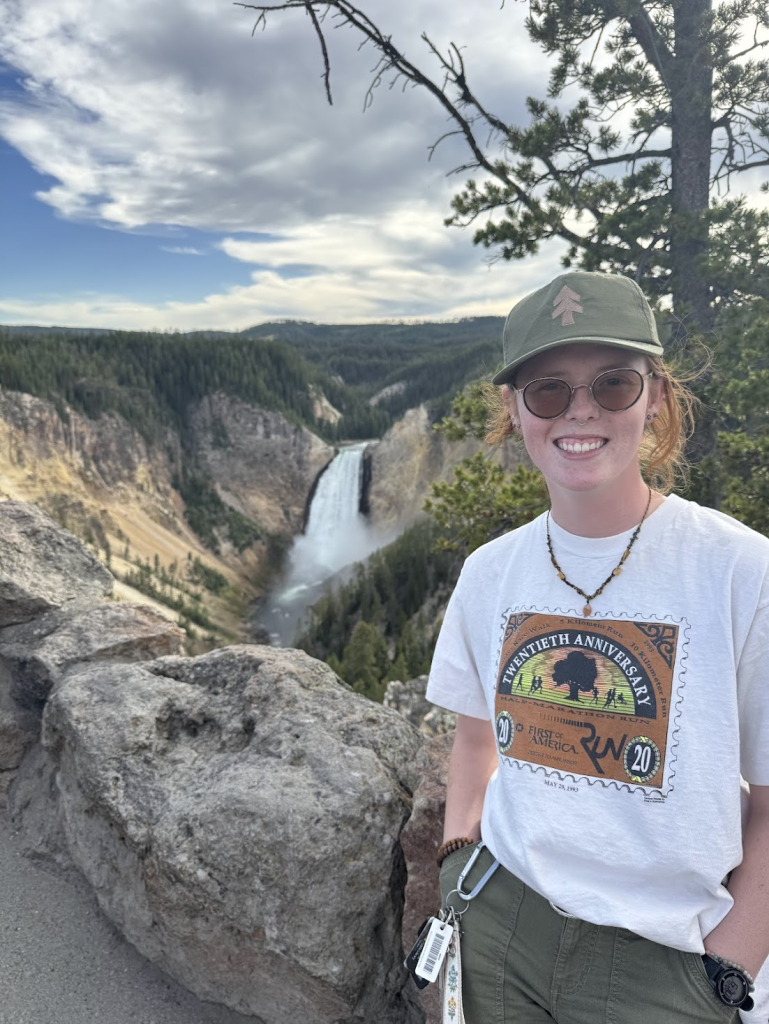
Luke Werner K’26 holding a pikeNat Ward K’26 at Yellowstone National Park
Nearly every year, a few seniors choose to complete their SIP at Kalamazoo College’s Lillian Anderson Arboretum, our 140-acre off-campus green space. This year, Madi Magda K’26, is showing how tread management can combat trail erosion. In past years, seniors have focused on land cover area classifications or invasive species in the Arb. If you want more examples of past research, check out our past Symposiums! Similarly, seniors have chosen to conduct their SIP through an internship, such as Tending Tilth, where Lauren Stallman K’26 studied prescribed grazing for ecosystem management, or with the Kalamazoo Nature Center, where seniors can study regenerative agriculture practices or youth outdoor education. Some students took their focus out of state, such as Nat Ward K’26, who studied the bison in Yellowstone National Park, or Sofia Fleming K’25, who researched invasive squirrel diets in Washington state.
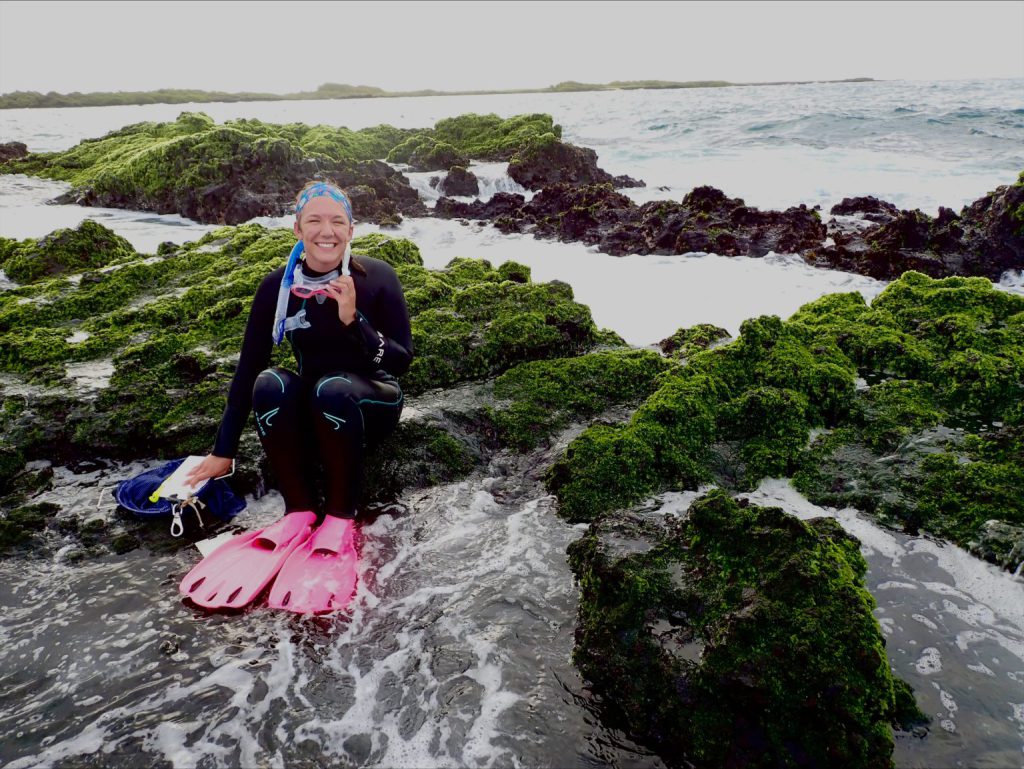
As rising seniors, some juniors may be interested in bridging their SIP with their experiences abroad, like Brooke Dolhay K’25, who studied marine ecosystems at the Institute for Marine Research in the Philippines, or Hailey Yoder K’26, who observed the effects of reef restoration in the Galapagos.
Hailey Yoder K’26 waiting near her coral sites in the Galápagos
The key takeaway is to network! There are many ways to get involved in research or community engagement, and the easiest way to find them is to ask around. The ESC can suggest ideas from their wishlist of sustainable projects that a rising senior can embrace, and Environmental Studies professors often hear about research and internship opportunities in the area that they can connect students to. As summer approaches, consider experiential education opportunities near you over the break, and reach out to the ESC if you want to discuss ideas or are looking for project funding! There is no one-size-fits-all approach to completing a SIP, and this Symposium showcases seniors’ creativity and intersecting interests in their capstone projects.
Want to be inspired in person? Come to the Sustainability SIP Symposium this Earth Day to celebrate our seniors and learn about how they’re integrating sustainability into their studies.
Environmental Stewardship Center
Subscribe to receive posts about the ESC, academics, student projects, and events directly to your inbox!
This piece is part of a Senior Integrated Project (SIP) written by Madeline Moss K’26. We’re sharing it here in an effort to encourage our student body to submit their own sustainability-related pieces. You never know, you just might be featured in the ESC newsletter!
On a damp October afternoon, the Grove at Kalamazoo College hums murmurs with the sounds of trees rustling and the soft crunch of tires. Two deer grazes near the forested edge as a small green Gator pulls up in the forested area between the Living Learning House and the Arcus Center for Social Justice. At the wheel, Josephine Belsky ‘28, dressed in a light sweater, cargo pants, and Converse; beside her sits Cherry Acosta ‘26 in an oversized sweatshirt. Belsky parks the Gator in front of the shed, and Acosta hops out to begin unloading the buckets, marked by the scent of decaying food. Inside the buckets is part of something alive again: food waste being diverted from the landfill back into soil.
Tucked into a quiet corner of campus, Kalamazoo College’s composting program operates as a student-led initiative supported by the Larry J. Bell ‘80 Environmental Stewardship Center (ESC) and Facilities Management. A team of five students manages the program throughout the academic year, overseeing food-waste collection and engaging the campus community in composting practices, and typically teaching the Physical Education composting course offered in the fall and spring. Each crew member dedicates three to seven hours per week.
Acosta, who joined the program in fall 2023, traces their interest back to childhood. “I was a worm kid. I loved worms as a kid,” they said. “Then composting came along, it was through a friend sort of, and they introduced me to it, and I have been doing it since.”
For Belsky, who joined the crew in spring 2025, describes her motivation as rooted in environmental stewardship that is rooted in everyday responsibility. “Change really starts in the small things, and composting is one of those essential processes that get overlooked or just narrowed down to be ‘just for gardens’ or something,” she said. “It’s really a beautiful process of giving back to the land that sustains us and choosing not to be wasteful with what the Earth provides.”
She hopes that this deliberate, hands-on work has a lasting impact. “Maybe at least a few people leave here knowing that a better way exists and maybe they’ll tell a few more people and so on. It’s the little changes and someone has to make them.”
Composting is the natural process in which microorganisms break down organic materials such as food scraps, leaves, and yard trimmings into nutrient-rich soil additives. This process transforms what would otherwise be landfill waste into a valuable resource that supports soil health, improves water retention, and enhances fertility. The process of composting helps close the loop in the food and waste systems. Through diverting these materials through composting, it helps cut down on the reliance of chemical fertilizers that contribute to potential water pollution, damages ecosystems and harms organisms, and releases greenhouse gases.
The five-person composting crew divides routes across campus, collecting food waste from various offices, cafes, and living spaces. Each pair is assigned a specific route and day, completing collections once a week.
Once the buckets reach the Grove, the work begins. Belsky, Acosta, and Miyani Sonera ‘27 get to work. Acosta inserts two compost-specific thermometers into the center of the active pile the crew is working on this trimester which contains freshly added food waste. Designed for dense compost systems, the heavy-duty thermometers feature extended probes and color-coded zones that signify the pile’s internal activity and temperature.
Composting piles are categorized by active and inactive states. As microbes break down the food scraps, they release heat which helps break down the compost. The ideal microbial activity occurs between 80 to 130 degrees Fahrenheit; indicating an active, decomposing pile. Cooler temperatures slow down decomposition, while excessively high temperatures can kill the microbes that aid in decomposition.
Today’s readings were 84 and 75 degrees, averaging around 80, placing it on the lower end of the active range. As autumn temperatures dip, the pile mirrors the season. As the pile gets tempted, Sonera and Belsky fall into routine. One by one, they unload the buckets from the back of the Gator. Belsky hooks a bucket onto the hanging produce scale and adds it up in her calculator app on her phone. Once the weight is noted, Sonera tips the contents of the bucket onto an orange chopping board beside the scale. On this day, they tallied 17 buckets, totaling 124.5 pounds of food waste.
Since its founding in 2009, the composting program has evolved from a modest dining hall waste experiment into a campus-wide effort that now diverts thousands of pounds of food waste from landfills each year. The initiative was begun by Rob Townsend, a Facilities Management emeritus staff member who had been active in the campus recycling program. What started with dining hall scraps sent to a local pig farm, has expanded into on-campus composting and industrial-scale composting processed through My Green Michigan.
With the transition of leadership in Facilities Management coupled with the establishment of the Environmental Stewardship Center in 2019, the composting program entered a period of reevaluation. During that time, a student project explored the future of composting, weighing the possibility of an on-site, in-vessel system. However, a system such as this would require electricity, water, and space. The alternative of partnering with an external vendor, such as My Green Michigan, would better suit the Kalamazoo College campus.
In its early years, the program tested “Earth Tubs” which were eight-foot composting vessels that were introduced in 2012. While it was a successful way to process large quantities of food waste, the challenges persisted with odor, runoff, and mechanical failures led to their eventual retirement in 2018. After a two-year pause, the college restructured its approach, partnering with My Green Michigan, an organic collection company outside of Lansing, Mich. Their large-scale operations can handle materials like meat, dairy, and compostable disposables that the Grove’s system cannot process because of the specific requirements needed to process them. By diverting these materials from landfills, composting plays a critical role in reducing food waste and minimizing its environmental impact.
The harsh reality is that food waste in the United States is a significant and persistent problem. According to Feeding America, an estimated 92 billion pounds of food is discarded every year, a staggering amount that has a wide range of environmental impacts. Composting provides one practical way to address a small portion of that waste.
On campus, community members can compost bread, grains, fruits, vegetables, teabags and coffee grounds, unbleached coffee filters, and unbleached napkins. In the 2023-2024 academic year, the Grove processed 6,883 pounds of food waste, increasing to 8,299 pounds the following year. The program’s impact extends beyond the weight of material diverted from the landfill. Its effects are visible in campus growing spaces such as the Hoop House and the Jolly Garden, which supports hands-on opportunities, provides fresh produce, and hosts various projects. When the finished compost is not used in the growing spaces, it is made available to the wider campus community.
Through the industrial composting partnership, the impact of composting stretches beyond the Grove. During the 2023-2024 academic year, the program diverted 263,796 pounds of food waste, increasing to 327,962 pounds the following year. The increase is substantial, but it raises an important question: does this change reflect more food waste being produced, or more being diverted from landfills?
“It’s really hard to know,” said Sara Stockwood, Director of the Environment Stewardship Center. “I want to say greater efforts [are being made to compost].” She notes that convenience plays a major role in participation. “You have to get a bucket, fill it, and bring it back,” she said of the campus-wide compost program. “Versus if you’re in the Caf and you have leftover food, it’s really easy to just throw it in the compost can—so it’s already part of your process.”
While on-campus composting operates at a much smaller scale than industrial systems, its value lies in education rather than volume alone. The Grove’s compost system gives students hands-on experience with decomposition, soil health, and nutrient cycling. This allows them to engage directly with the processes behind sustainable food systems. By interacting with compost on campus, students see food waste as not an abstract environmental issue, but as something directly in front of them, giving them real stakes within the matter.
In this way, Kalamazoo College’s on-site composting and its partnership with My Green Michigan are complementary rather than unnecessary. The industrial program ensures that large quantities of organic waste are responsibly processed, while the Grove serves as a living classroom with its core goals of sustainable work through education and experimentation.
The industrial composting initiative also prompts questions about its environmental trade-offs, particularly regarding transportation. The collected materials are hauled twice weekly to Lansing, roughly 80 miles away. Stockwood acknowledged the concerns but said the overall impact remains positive. “It was worthwhile to do that versus having that [the food waste] going into a landfill,” she said. “The effects were better to participate in the vehicle driving. I know [My Green Michigan does] pick up from Bell’s Eccentric Cafe, HopCat, and maybe a few other places. They are coming [to Kalamazoo] anyways.”
Back at the Grove, Sonera pours another bucket onto the chopping block as Belsky retrieves the choppers from the shed. These long-handled blades are used to break the food waste into smaller pieces “It helps create more surface area,” Acosta said. “That way, the microbes can do their jobs faster.” The chopping step of composting is the most physical and sometimes, the messiest part of the job.
Today’s mix is heavy on produce: apples, oranges, kiwis, onions, potatoes, cauliflower, peppers, banana peels. There are some eggshells and lettuce leaves, too. The Book Club Cafe’s five buckets of coffee grounds add a welcome balance to the pile’s acidity while helping its smell.
But not everything on the block belongs. Inside one bucket, Sonera finds two “compostable” single-use containers. Despite their labeling, they’re designed for commercial composting, not the smaller-scale system they manage. With a sigh, Belsky grabs a gardening glove and plucks them out by hand. “Sometimes it is frustrating, but not frustrating because people put compostable disposable stuff like bags. And those are only compostable commercially, and we don’t have the size or skill for that,” Belsky said. “We pick it out and put it in the right [place] for people. We’ll put it in designated bins to be sorted later.”
After the offending items are fished out of the pile, Sonera and Belsky continue chop up the compost before it gets added to the active compost pile. This is one of their favorite parts of being on the crew. They get to see what people were eating and make guesses of what some of the items once were.
An example of what community members put into the bins comes from Ruby Winer ‘26 who has been composting with her housemates since winter 2025, “we compost pretty much all big food scraps. Egg shells, apple cores, banana peels, veggie/fruit scraps are the main things that we compost.”
For Winer, the system has been a small shift in her routine but knows her impact is meaningful. “The food scraps could sit in a landfill somewhere, or they could be used to create better soil for more plants going forward,” she said. “Because it was made so easy for us to do as a house, through K’s composting program, we were able to actually do it, instead of just knowing it’s a good thing to do.”
Composting did not become a conscious environmental choice for Zoe Allen ‘28 but rather a practical shift tied to daily life. When she moved out of the dorms and had a kitchen, composting naturally became a part of her routine. “I have been composting all of this year because I’ve been living in a house and making my own food waste,” she said. “Last year, living in a dorm, I did not compost.”
What ends up in Allen’s compost is mostly produce that has gone bad or is leftover. While composting might be new to her college routine, Allen noted that the practice is not unfamiliar, “My parents have composted my whole life, so it is something I’m very used to.” But now that she partakes it in, she feels inspired because, “I believe that there’s a lot of waste in the world that goes to dumpsters and landfills and that composting is a way to separate harmful waste from waste that can be beneficial again to the earth and can make healthier soil.”
Once the food is chopped down to size, Belsky opens the active pile of compost. Using a large pitchfork, Belsky moves aside the warm, decomposing center to make room for new material. Steam arises as she moves the pile. Then Sonera uses a shovel and begins to scoop up the chopped food waste and adds it into the middle.
An important part of composting is maintaining the proper balance between “greens” and “browns.” Greens being food waste that is rich in nitrogen, and browns being packed with carbon such as dried leaves or sawdust. In the past, the crew sourced sawdust from the Fine Arts Building’s set productions to help preserve this three-one green-to-brown ratio. Facilities Management also contributes by filling the leaf bins at the entrance of the Grove before giving any excess to the City of Kalamazoo. As Belsky said, “that’s another way we’re maintaining the aesthetic of campus, but we’re not putting leaves in the landfill.” The brown part is crucial to helping sustaining moisture, bringing in carbon, and balancing the pH levels.
Over the next two months, food waste will naturally heat up as bacteria break down organic matter, which releases energy in a series of exothermic reactions. When the pile’s internal temperature eventually drops below 80 degrees, it enters a “curing” stage where it is inactive. Meaning that it still turned several times per week to conserve airflow and allow for the end of decomposition to finish. The compost is ready when it looks and smells like soil would: dark, crumbly, and earthy scent, and has no lingering heat.
After layering and turning the pile, the Belsky closes the pile up, while Sonera stacks the bucket up so they can be cleaned during their next shift. In recent years, the composting crew has made deliberate efforts to improve organization and continuity. In the program’s earlier days, compost bins were mismatched assortment, everything from reused kitty litter containers to random collected buckets. Without consistent labels, the system was confusing for those trying to participate. The shift to a standardized green bucket helped make them identifiable with clear labeling, thus helping to streamline the process.
Looking ahead, the Environment Stewardship Center (ESC) is working with Parkhurst Dining to make all single-use disposable items fully industrially compostable. Once Parkhurst completes its transition as the new dining provider, the goal is to integrate industrial compost bins into campus events and dining spaces, treating compost collection with the same consistency as trash and recycling so that all material reliably reaches My Green Michigan’s facilities.
The ESC is currently piloting a collapsible three-bin sorting system: compost, recycling, and trash; made from recycled cardboard, with plans to add labeling. Stockwood hopes this model will eventually be adopted for catered events, creating a streamlined system in which “everything laid out is compostable,” reducing confusion and preventing contamination that could jeopardize the composting contract with My Green Michigan, which flags if too many non-compostable items are in a load.
Eventually, the vision is a campus culture where composting becomes second nature. First-year students arrive at systems that already work; sorting food waste becomes routine in the cafeteria, and students grow comfortable participating in both industrial and on-site composting programs. “The goals are always the same,” Stockwood said. “How can we capture and divert more from landfill to composting? Part of that is reducing waste, but it’s also about building a campus where everyone has the opportunity and the knowledge to take part.”
The compost buckets are stored on two shelves next to the sturdy shed, which houses tools and provides protection from Michigan’s harsh winters. The shed is a relatively recent addition. Before it, a makeshift lean-to shelter offered temporary protection for the compost during the colder months. However, as the program expanded, the storage system needed an upgrade. The weatherproof, closable shed, and shelving unit not only protects the buckets from the elements but streamlines their organization with the left side being for “bucket drop-off” and right-side having upside down clean compost bins “bucket pick-up.” Previously, the buckets of compost sat directly on the ground and without clear signage, it could be confusing for community members to know how to participate. This new setup makes it easier for everyone to contribute, ensuring that the process is both accessible and efficient.
Wednesdays and Fridays are bucket washing days for the crew in the Facilities Management parking lot. Each pair of crew members wash about 20-25 buckets per shift. The regular washing prevents odors and pests. Belsky said, “we don’t want to have to deal with super icky gross foods, so we try and wash them out every other day.”
On a cold Wednesday afternoon, the Gator’s bed is stacked high with around two dozen dirty buckets. Belsky drives behind Hicks, then she navigates the bumps of Academy Street’s iconic red bricks, turning the wheel carefully to keep the buckets from tumbling as she turns into the Facilities Management parking lot. She pulls into the garage, and Acosta hauls out the power washer while Belsky sheds her jacket and begins unloading the buckets.
The cleaning process is methodical. The pair begins the washing process by separating the buckets and lids and laying them out into two different piles. As Acosta rinses the buckets with the power washer, splashing out leftover scraps and pouring the rinsed water over a metal grate that catches any stray pieces. The tougher residue gets a blast from the power washer’s narrow nozzle. Belsky is bent over scrubbing each bucket with a scouring brush. Once the inside and outside of the buckets are cleaned, they repeat the process with the lids.
In the background, Acosta is playing a quiet playlist from their phone, while the pair chat about their days and talk about what classes they are going to register for next term. The air smells faintly of peppermint soap, cutting through any traces of decomposing food.
After a few splashes of cold water and numb fingers, they washed 22 buckets today. Carefully, they stack the clean buckets and load them onto the Gator. At the Grove, the freshly washed buckets are lined up in neat rows, ready for their next cycle.
Environmental Stewardship Center
Subscribe to receive posts about the ESC, academics, student projects and events directly to your inbox!
This blog post is part of the ESC Summer Fellowship 2025 series. These fellowships provided funding for research projects related to the environment, sustainability and/or the Climate Action Plan. This post was written by Ava King, one the fellows of this past summer cycle.
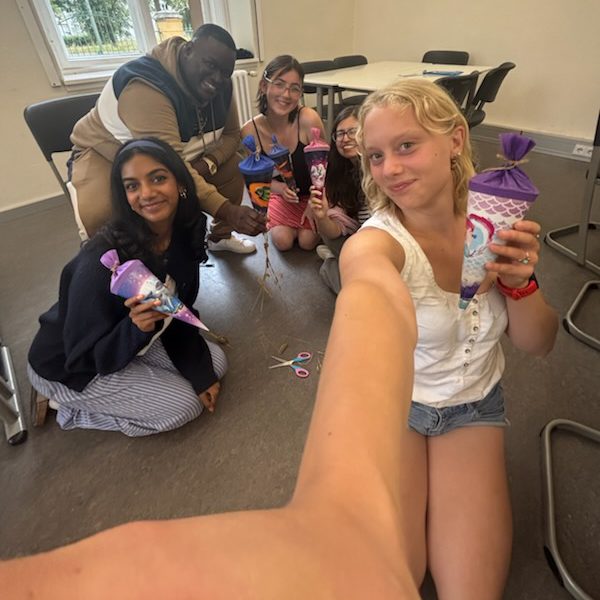
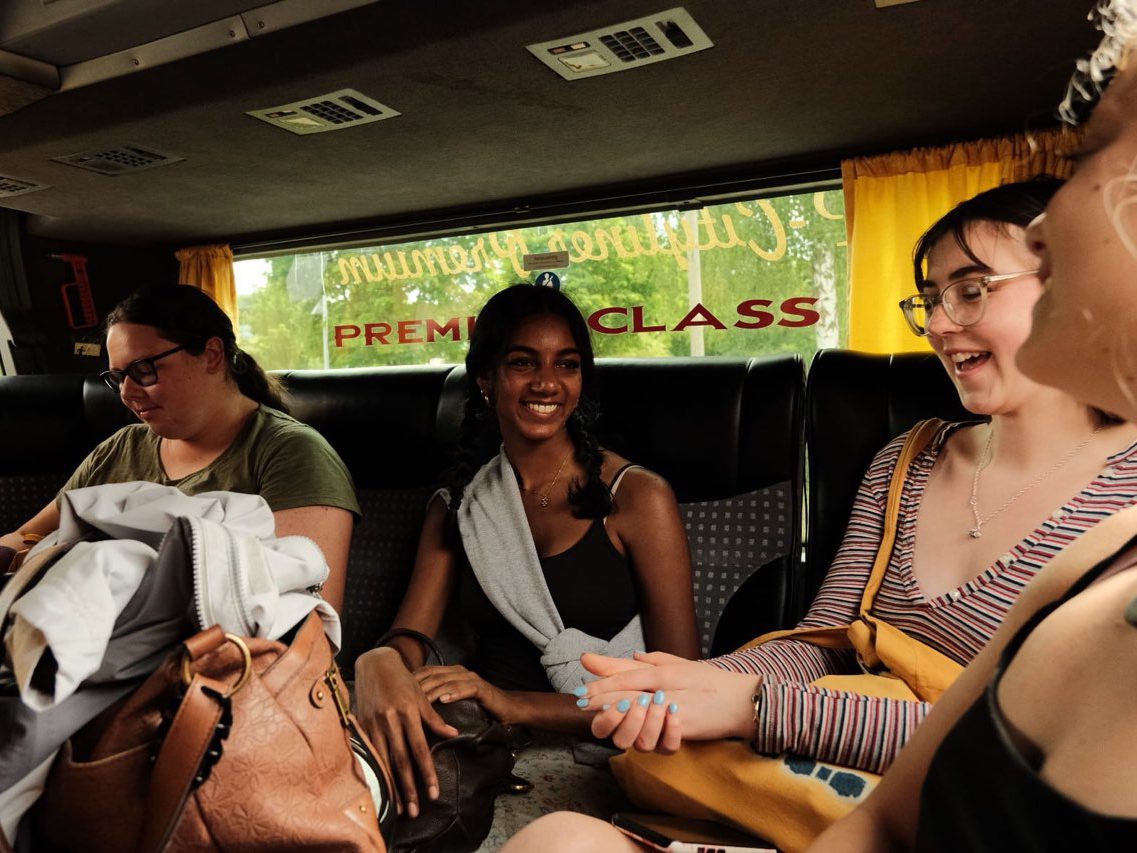
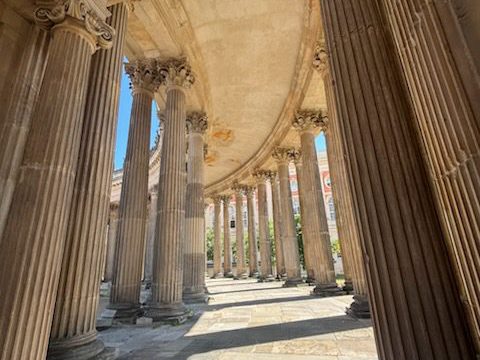
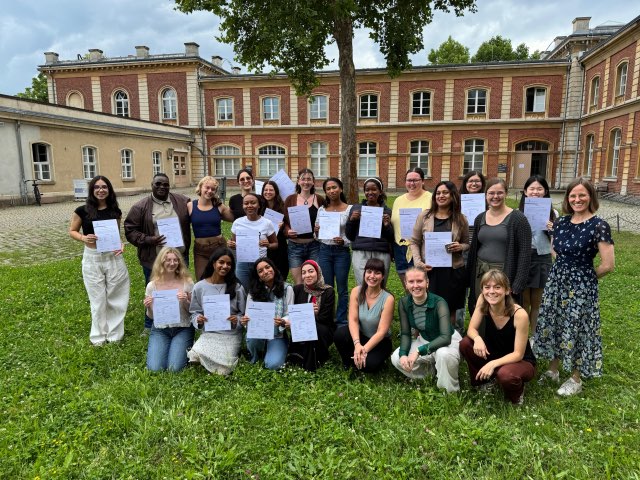
Hello! My name is Ava King, and I am a rising sophomore at K looking to study biology, as well as a mixture of philosophy and German. This summer I was granted the opportunity to spend two weeks at the University of Potsdam, participating in the Sustainable Development Academy. This academy brought together undergraduate, graduate, and postgraduate students from over ten countries in the context of global sustainability and mindsets surrounding these topics. Throughout this program we learned from experts in various fields, listening to lectures and participating in field trips to tour significant areas around Potsdam and Berlin. The history of Potsdam was enticing to learn, as we were able to study at Neue Palais, a former palace now utilized as a university.
This opportunity has been enlightening in more ways than I could have expected. The friends I made through this program allowed me to glimpse perspectives I have never understood before, from varying cultural norms to driving on the left side of the road. I truly believe and hope these people will stay in my life for the long run, which is the greatest gift I could have been granted from this experience. The beauty of Potsdam and Berlin was immense, and I hope to return one day for graduate work or other opportunities spoken of at this conference.
Another experience I would like to speak of in regards to this experience may seem generic, which is growing a deeper sense of self. I have always valued my time alone, pondering ideas or simply taking a social break as I am an introvert. There is something so solidifying in traveling abroad for the first time alone (minus Canada, living in Michigan I don’t count it). There’s a certain openness with the world and with yourself you must come by to succeed in this type of adventure, and this method of visualization is one I hope to always hold onto. The anxiety of new items awakens something in me. My host parents for example, only spoke German (with a limited English vocabulary I found later in the weeks). This was terrifying, but I can now say that my German improved significantly during my time with them, and I am lucky to have another set of grandparents in my life.
I would like to thank the German department, Center for International Programs, and Environmental Stewardship Center at Kalamazoo College for making this opportunity possible, as well as the SDA and International Programs Center at the University of Potsdam for hosting this conference. I would also like to send a special thank you to Professor Sederberg, as the kind and significant amount of support provided permitted this experience to flow smoothly. I was able to stay with the original host parents of Professor Sederberg from when she first arrived in Germany. This was a gift I am so grateful to receive as this couple has changed my life, and so has Professor Sederberg. Thank you to all who have lent their support to me over the past weeks and months preparing for this trip, and to those at U.P. who have made that campus feel as a second home.
Environmental Stewardship Center
Subscribe to receive posts about the ESC, academics, student projects and events directly to your inbox!
As we wrap up 10th week here on campus, we’re taking a look back at some of the phenomenal events, programming, and notable moments from the Environmental Stewardship Center this year.
Climate Action Plan
This year, we worked incredibly hard to make our Climate Action Plan more effective and accessible for our greater campus community.
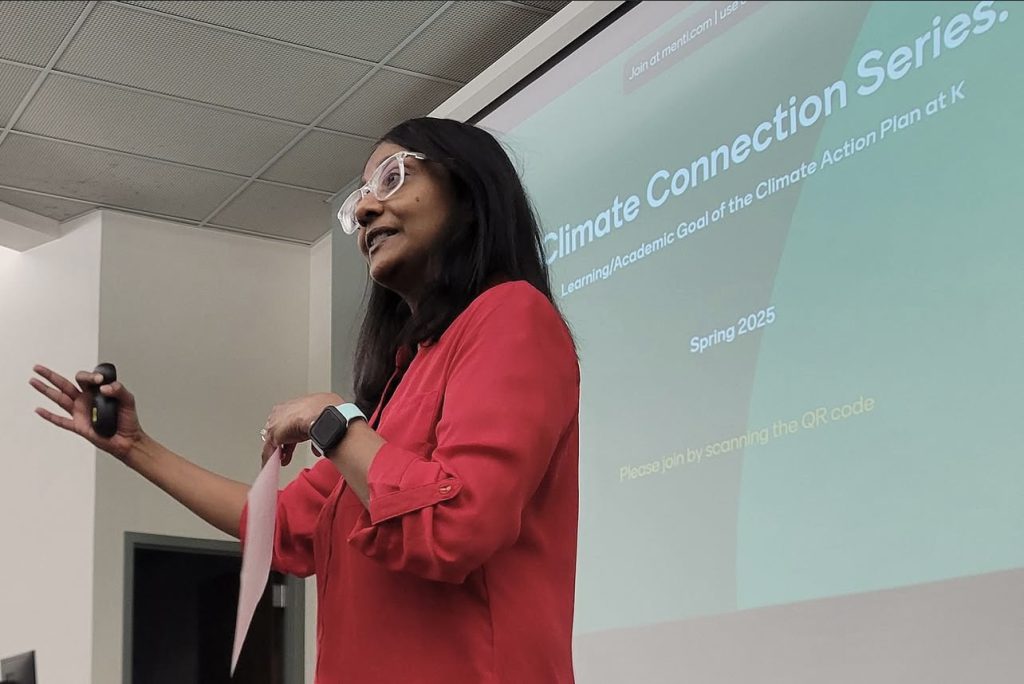
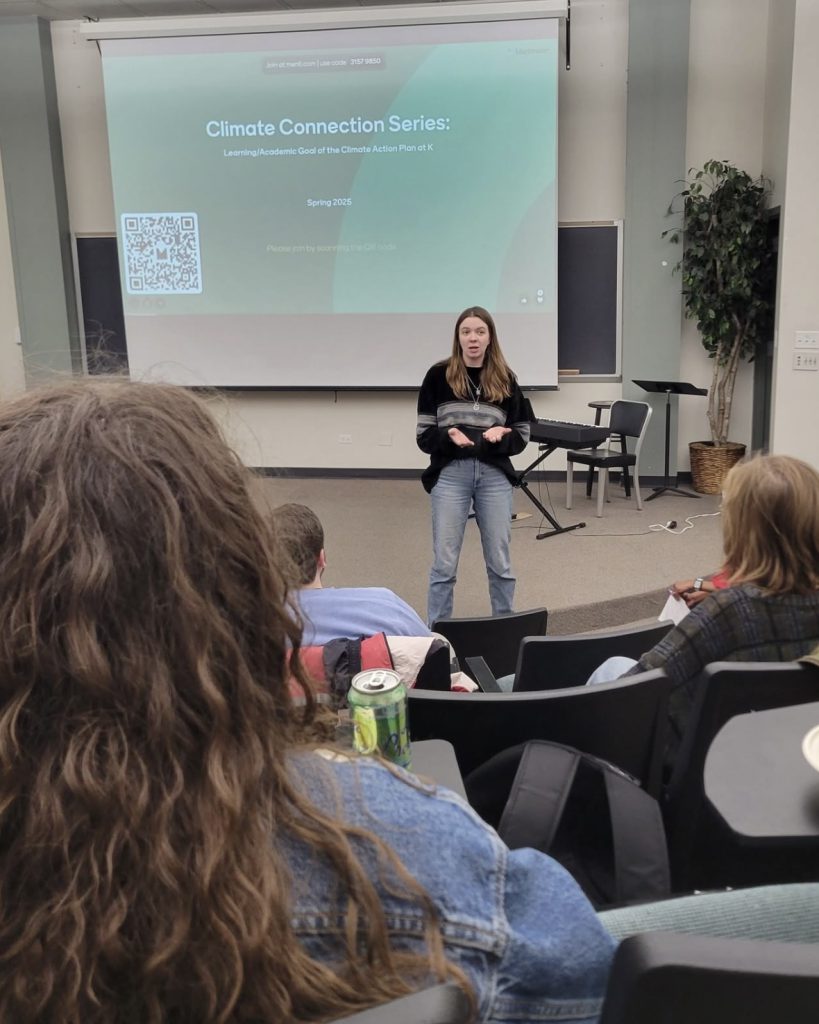
We launched the Climate Connection Series, a new opportunity for students, faculty, and staff to give ideas and feedback about our CAP goals. The Series reached over 50 campus community members and is helping shape our approach to orientation and more in the coming year. We also saw over 30 faculty and staff members participate in Global Climate and Justice Education Week, helping ensure that climate literacy is embedded in campus culture here at K.
We also made incredible progress on our CAP Goals during the 2024 Fiscal Year. This includes resource conservation like enforcing our helium policy, creating a more efficient and localized electric metering system, and increasing transparency around fossil fuel divestment. You can read more about that progress here!
Environmental Stewardship & Studies
It was also a fantastic year in our Environmental Stewardship Center, and in the Environmental Studies Department!
We welcomed a host of new Environmental Studies Concentrators this year! Many of those new faces showed up to our Sustainability Lunches, a new initiative that welcomes the campus community to discuss environmental issues and projects on campus while eating snacks and getting to know one another.
It was a delight to work with an incredible crew of Environmental Stewardship Interns. Taking on roles in the Hoop House, Arboretum, the Compost Crew, and the Climate Action Plan Committee, these students were invaluable to ensuring that Kalamazoo College had reliable and engaging environmental programming throughout the year. Their work included running the Arboretum and Composting PE classes, facilitating Harvest and Cultivation Ceremonies at the Hoop House, bringing back Groove Grove, leading first year students on green campus tours, and more!
Sustainability SIP Symposium
One of the definite highlights from the year was the 2025 Sustainability SIP Symposium. We heard from 13 passionate students who completed their Senior Integrated Projects in an environmental field. Over 100 students, faculty, staff, and community members packed the Arcus Center for an unforgettable evening filled with learning, connection, and environmental consciousness. Click here for a recap on the Symposium. You can also read about some of our senior’s work on food justice, coral reef restoration, and sustainable grazing methods!
Cheers to a great year!
Thank you all for another phenomenal year in the Environmental Stewardship Center and beyond. We are very proud of the work we’ve accomplished, and are already planning for ways to continue making sustainable changes in the coming years. None of these efforts could be possible without widespread campus support from our passionate students and dedicated faculty and staff. Thank you for all that you do! Stay tuned and subscribed for more updates in the fall, and have a safe and lovely summer!
Last week, Kalamazoo College celebrated Worldwide Climate and Justice Education Week! Joining 100 universities and over 40,000 faculty and staff from around the world, the week was all about facilitating discussion about the climate crisis, and encouraging environmental justice on campuses and in educational spaces.
Faculty and staff from K helped to #MakeClimateAClass in over 40 different classes, programs, social media posts, and events last week! From documentary students creating new films about climate action, to creative writing workshoppers writing climate fiction stories, to statistics classes learning how to effectively model climate change, students all across the campus had the opportunity to integrate climate education into their every day lives. For a complete list of the Climate Week offerings around campus, clickhere.
Events on Campus
We also hosted some great events outside of classes to celebrate climate action!
On Wednesday afternoon, members of the campus community gave input on the Climate Action Plan’s Learning Goal! They discussed how to incorporate environmental themes into the classroom and into campus life, and what future steps might be necessary for students to graduate with climate literacy.
Despite the snow, we also took students out to the Arboretum for a chilly hike! It was great to celebrate one of our beloved living learning labs even in the throes of Michigan spring.
On Thursday evening, students gathered with Kennedy Williams, a WMU alum, and Donna McClurkan, a member of the Kalamazoo Climate Crisis Coalition, in a Climate Anxiety Forum. Climate cafes are an opportunity to discuss our anxieties and fears about the climate crisis, and to make connections with others who share the same worries. It was a much-needed opportunity to build community and find a little peace in the rush of spring term!
Next Steps
Although the official event lasted a week, climate education remains important all year round. In fact, it’s central to Kalamazoo College’s Climate Action Plan – under the guidance of the Plan, all students should be able to engage with climate education in their fields, and have an understanding of how to build a life and career in the midst of a changing climate.
These goals help guide the environmental work that goes on around campus and beyond. If you missed the Climate Education Week this year, don’t worry! It’ll be back next year, and there are plenty of ways to participate – while it’s up to faculty and staff to participate, students’ voices can help jumpstart the movement and provide much-needed inspiration. Want to get involved with other environmental action happening around campus? Check out what the Environmental Stewardship Center has in store this term!
This week, environmentally-minded folks at Kalamazoo College had two things to celebrate: Earth Week, and the 2024 Sustainability SIP Symposium!
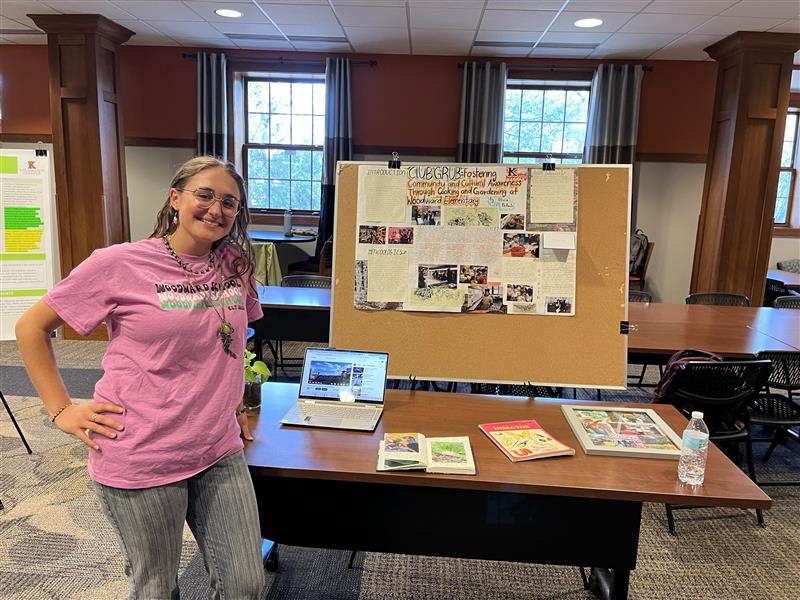
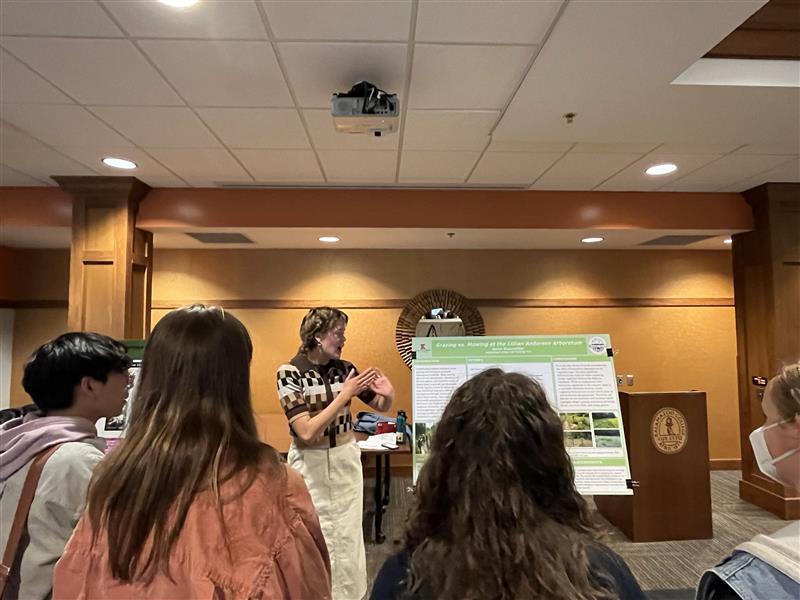
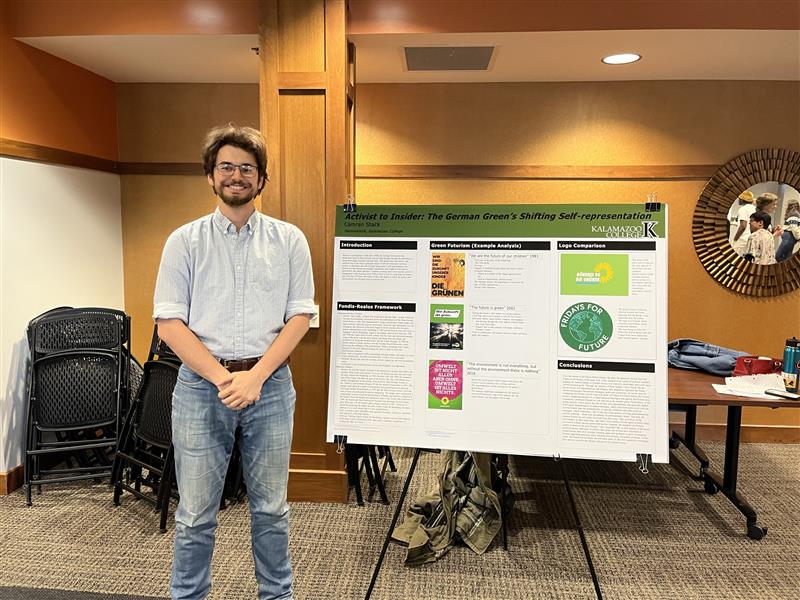
Hosted by the Environmental Stewardship Center and the Environmental Studies Department, the Symposium is a gathering of seniors who completed their Senior Integrated Project (SIP) in Environmental Studies; their projects came from disciplines all across campus, from biology, to German, to art!
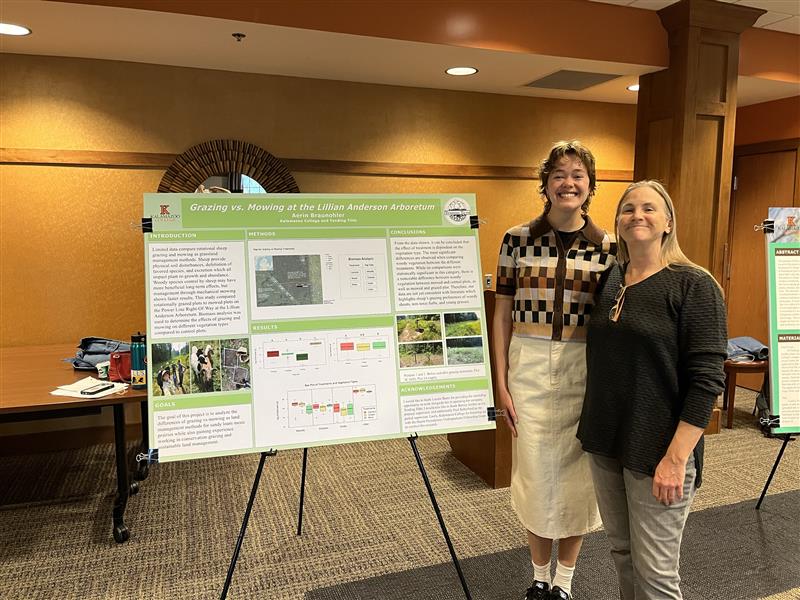
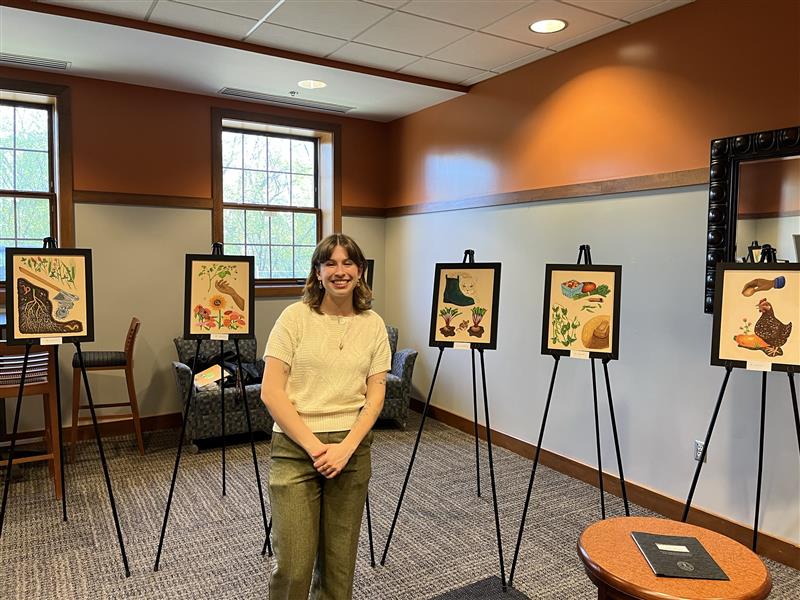
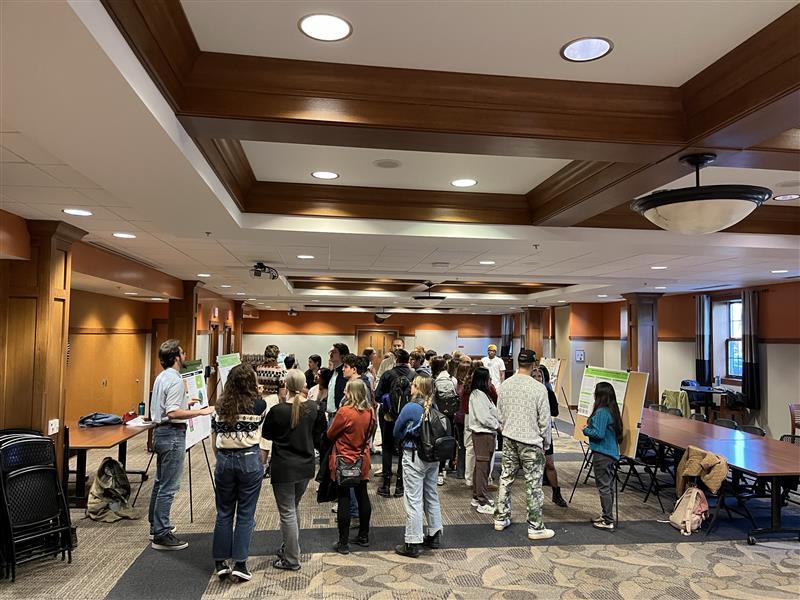
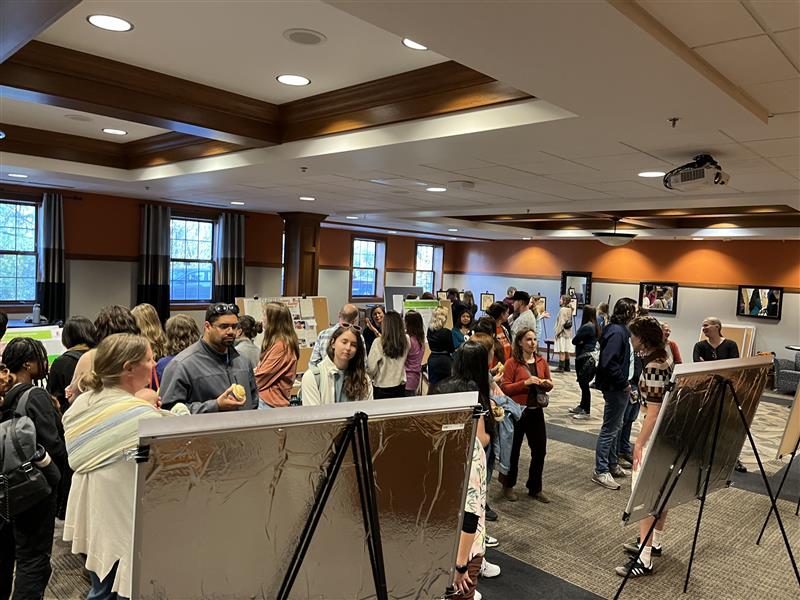
Students, families, and friends came together in the Banquet Hall to hear the seniors present on their topics, answer questions, and explore the work of their peers. This year’s SIPs covered a diverse range of topics, including grazing sheep in the Arboretum, tackling the ins and outs of ecotourism in Costa Rica, and painting human-nature relations inspired by the Nature Center’s DeLano Farms.
The SIP Symposium is an important event because it invites all of our campus community to understand a key concept: that sustainability at Kalamazoo College is a collective effort! It doesn’t only come from the Environmental Stewardship Center, or the natural sciences; sustainability takes all of us, from all communities and areas of study.
A special thank you to our seniors, who created and shared such wonderful projects with us: Aide Hazel Gaitan, Guenevere Baierle, Camran Stack, Olivia DePauli, Quinn Collins, Celia A. Kuch, Aerin Braunohler, Gabriel Coleman.
We can’t wait to see you all at next year’s Symposium!
On April 19th and 20th, 2023, Kalamazoo College hosted the 2023 Sustainability SIP Symposium. The event was sponsored by the Larry J. Bell ’80 Environmental StewardshipCenter and Environmental Studies Concentration. The 2023 Symposium marked the first in person Sustainability SIP Symposium since the start of the COVID-19 pandemic. We were happy to present in person again!
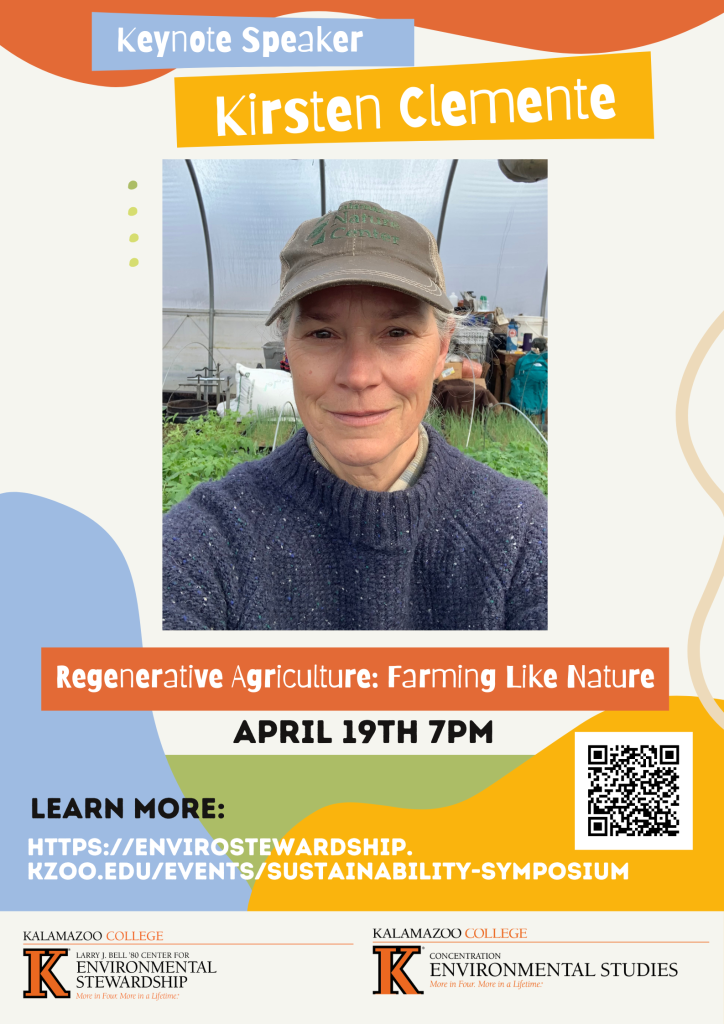
Keynote speaker, Kirsten Clemente, Farm Director at the Kalamazoo Nature Center, shared her work centering around regenerative farming, and the challenge of how to create a system of agriculture that supports our human population and is also ecologically sustainable.
The following night, Kalamazoo College seniors presented their Senior Integrated Projects (SIPs) related to the environment or sustainability. The SIPs came from various academic departments: Environmental Studies, Critical Ethnic Studies, Biology and Physics.
Learn about these talented and driven students below:
Lauren Crossman (Political Science & History Majors, English Minor American Studies Concentration): Sustainable Goal Setting with Businesses on the Kalamazoo Mall
Kiah Holdsworth (Math Major): Analysis of Kalamazoo College Campus Tree Health, Vulnerability, and Carbon Sequestered Between 2019 and 2022
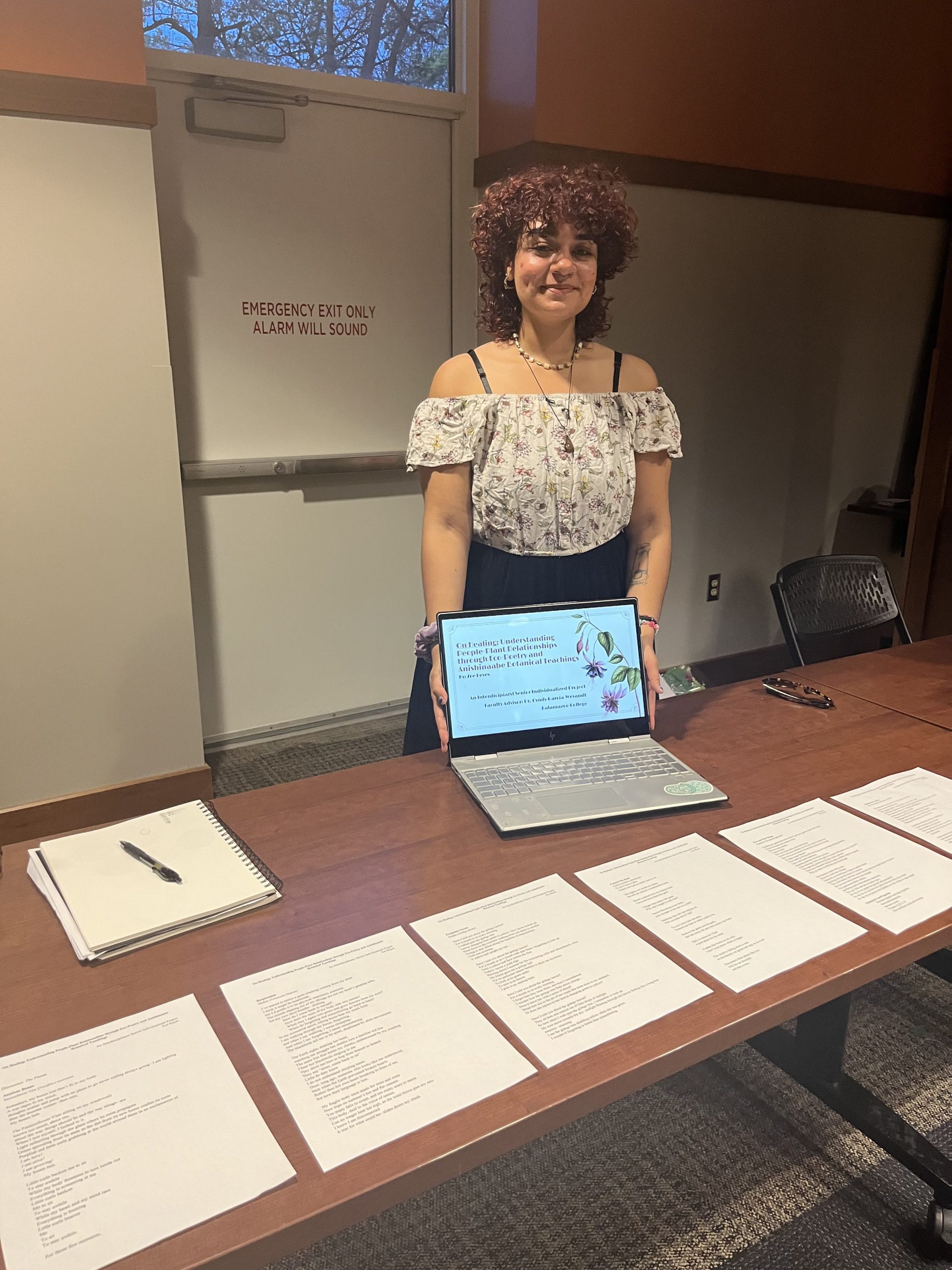
Zoe Reyes (Biology & Spanish Major, Anthropology & Sociology Minor): On Healing: Understanding People-Plant Relations through Eco-poetry and Anishinaabe Botanical Teachings
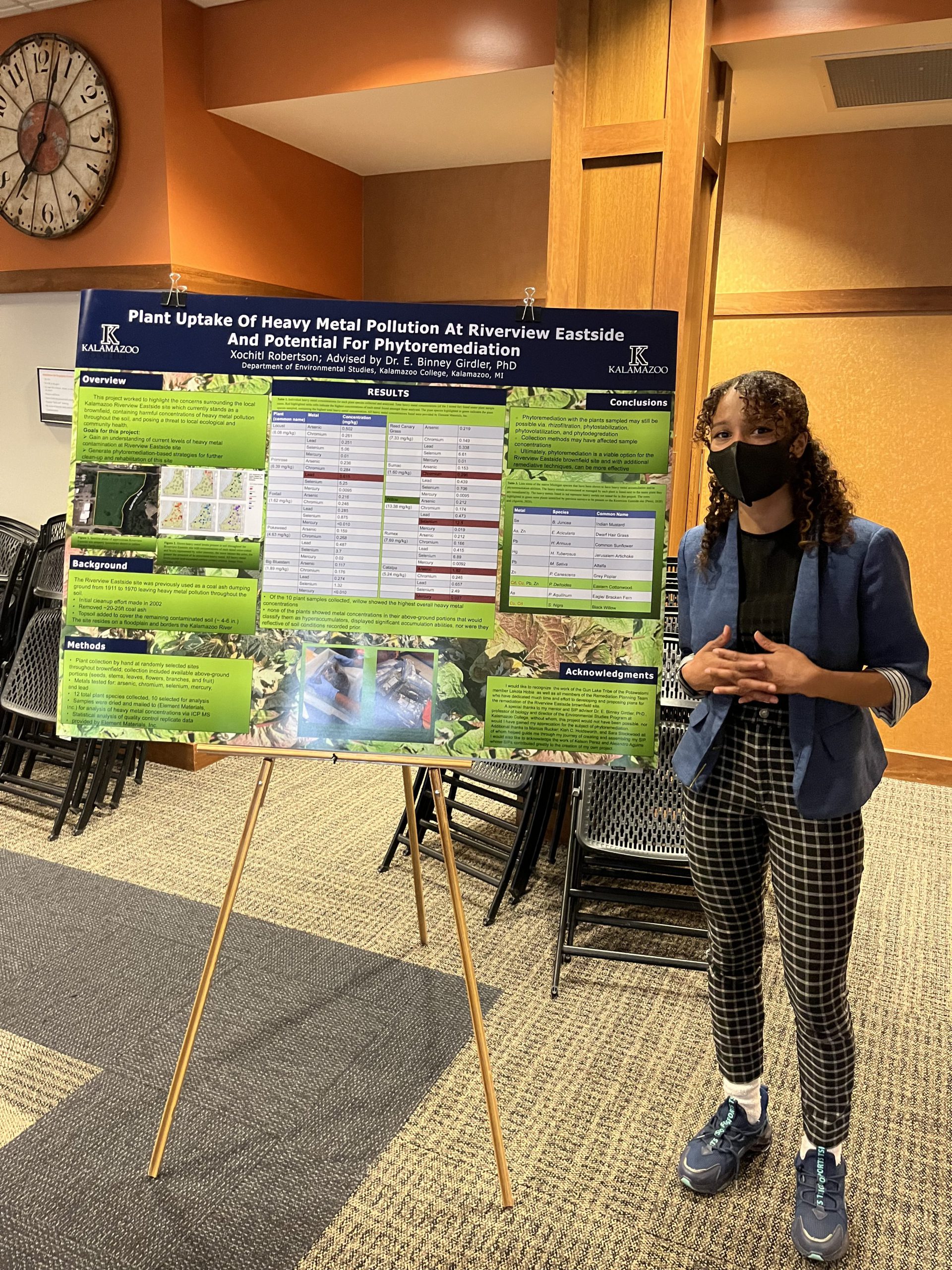
Xochitl Robertson (Biology Major): Plant Uptake Of Heavy Metal Pollution At Riverview Eastside And Potential For Phytoremediation
Maeve Crothers (Political Science Major, Environmental Studies Concentration): Seed Sovereignty through Community Based Seed Stewardship
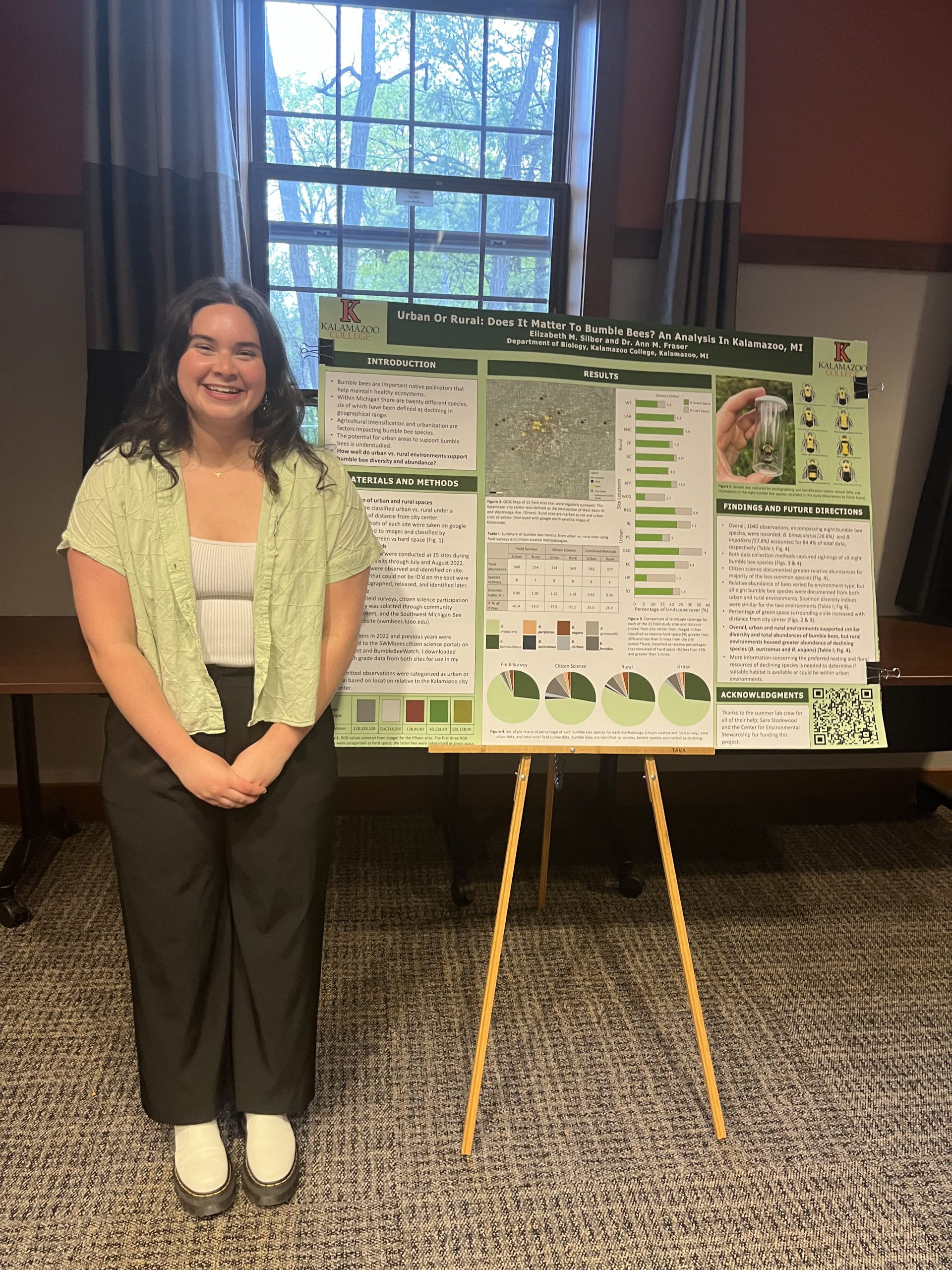
Lizzy Silber (Biology Major, Economics Major, Environmental Studies Concentration): Urban Or Rural: Does It Matter To Bumble Bees? An Analysis In Kalamazoo, MI
Celine Lignell (Biology & Critical Ethnic Studies Major, Anthropology & Sociology Minor): Envisioning a Decolonial Education for Our Kids: An Exploration into the Summer Camp Experience
Natalie Call (Biology Major, Psychology Minor): Exploring the moose-wolf population dynamics of Isle Royale National Park, MI
Maeve Novotny (Biology Major, Environmental Studies Concentration): Farming with Nature: An Internship at DeLano Homestead
Katherine Rock (Biology Major): New Invaders to Hardwood Forests: Discovering Jumping Worms (Amynthas) at the Lillian Anderson Arboretum
Bella Kirchgessner (Anthropology/Sociology Major, Political Science Minor Environmental Studies Concentration): Now that I am Wiser…I Know the Earth Loves Me Back Love Letters to Persons from Environmental Anthropologists
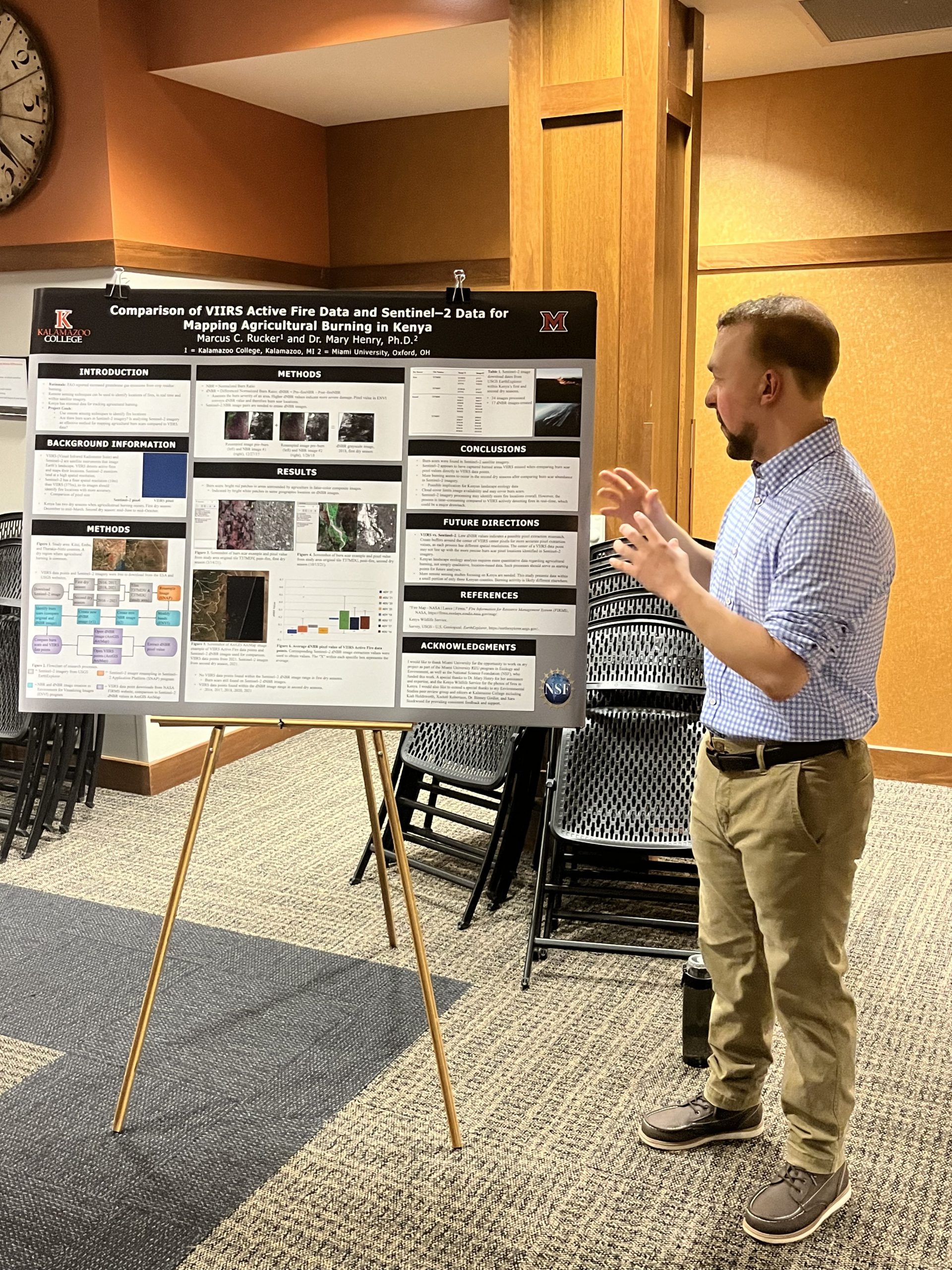
Marcus Rucker (Biology Major, Environmental Studies Concentration): Comparison of VIIRS Active Fire Data and Sentinel–2 Data for Mapping Agricultural Burning in Kenya
On April 20th and 21st, 2022, Kalamazoo College hosted the 2022 Sustainability SIP Symposium on Zoom. The event was sponsored by the Center for Environmental Stewardship, Environmental Studies and the Experiential Pathways Program.
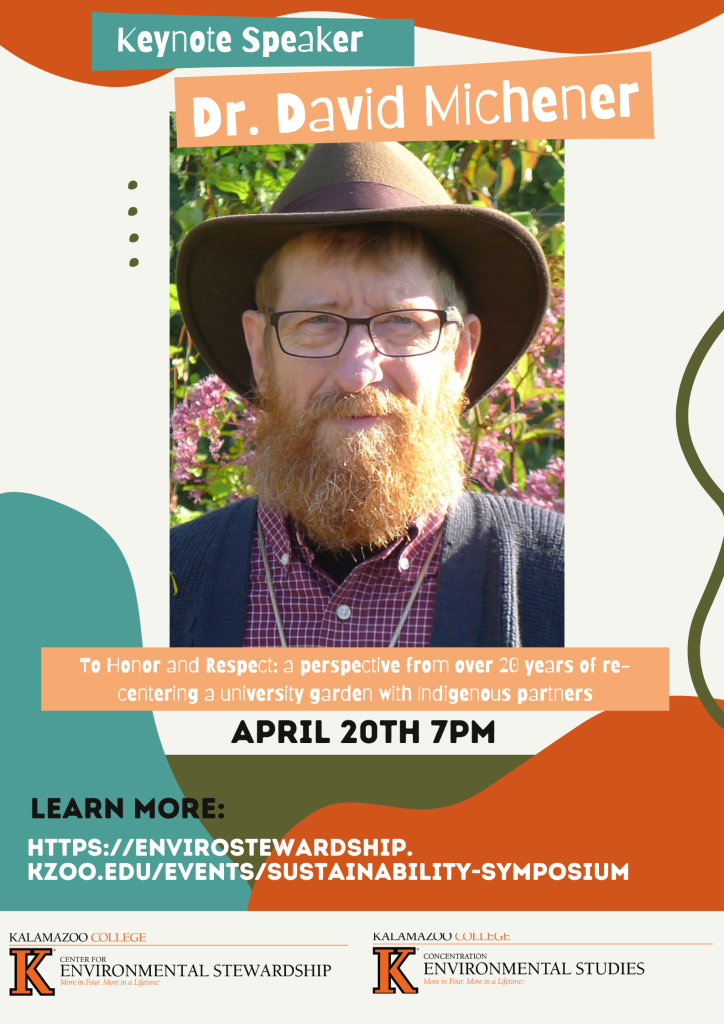
Keynote speaker Dr. David Michener, curator at University of Michigan’s Matthaei Botanical Gardens & Nichols Arboretum, shared what he had learned from over two decades of working to decolonize the University’s approach to land stewardship and to develop sustained relationships with Indigenous partners that support their work in reclaiming land, seed and food sovereignty.
The following night, Kalamazoo College seniors presented their Senior Integrated Projects (SIPs) related to the environment or sustainability. The SIPs came from various academic departments: Environmental Studies, Critical Ethnic Studies, Biology and Physics.
Check out the SIP posters on GatherTown here, and learn about these talented and driven students below.
Kayla Carlson (Economics Major, Anthropology/Sociology Minor Environmental Studies Concentration): Local Limits in A Sustainable Future: A Case Study on the City of Kalamazoo, Western Michigan University, and Kalamazoo College Climate Action Plans
Anna Fetter (Biology Major): Trail based vegetation surveys of invasive plant species on Riparian Wetland adjacent to the Paw Paw River, Southwest Michigan
Ella Knight (Biology & History Major, Classical Civilization Minor): The English West Indies: Environmental Transformation and Insect Ecology in the Early Modern Caribbean
Samuel Meyer (Physics Major, Math Minor): Sustainable Irrigation in the Developing World
Ruby Seiwerath (Critical Ethnic Studies Major): Work as Celebration: A Seating Area for Gathering in the Grove
Rina Talaba (Anthropology/Sociology & Biology Major, Environmental Studies Concentration): The spatial variation of leaf traits in Ipomopsis aggregata
On April 21st and 22nd, Kalamazoo College hosted the 2021 Sustainability SIP Symposium on Zoom. This event was sponsored by the Center for Environmental Stewardship, Environmental Studies and the Arcus Center for Social Justice Leadership.
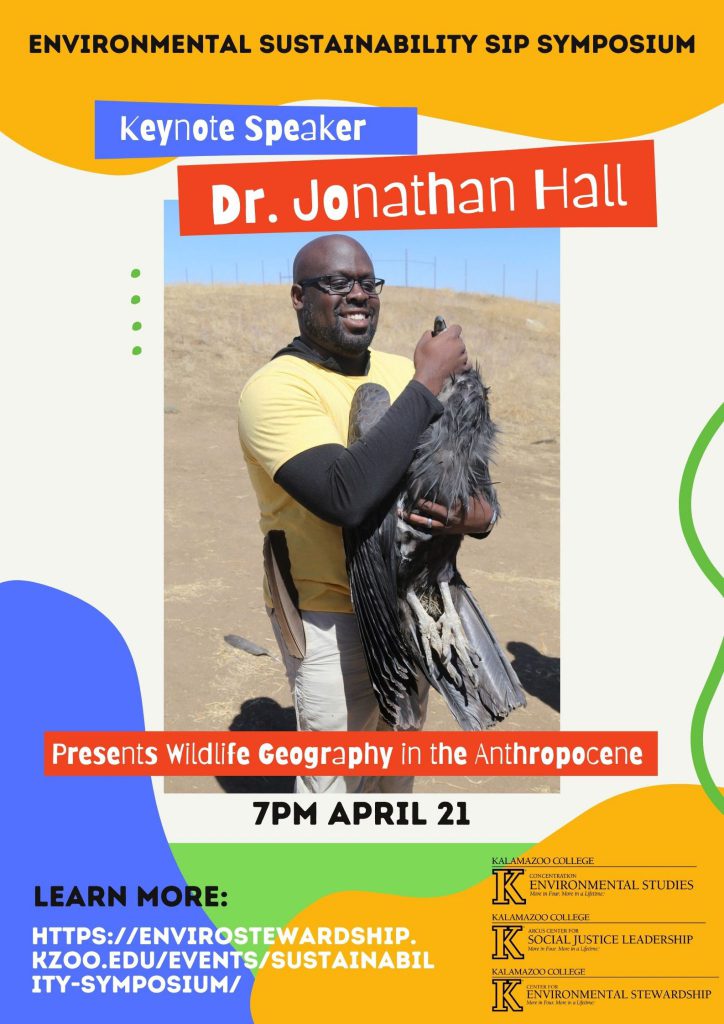
Keynote speaker Jonathan C. Hall, Assistant Professor of Geography at West Virginia University, shared his experience researching a deeper understanding of the relationships between human communities and non-human wildlife species with the ultimate goal of contributing a diversity of solutions to problems of the Anthropocene that are grounded in a praxis of coexistence and codependence with non-human relatives. Listen to his address here.
The next night, Kalamazoo College seniors presented their Senior Integrated Projects (SIPs) related to the environment or sustainability. The SIPs came from various academic departments: Psychology, Biology, Critical Ethnic Studies, English, Political Science, Chemistry and Computer Science.
Check out the SIP presentations and posters on GatherTown here, and learn about these talented and driven students below.
Alejandro Aguirre (Biology Major & History Minor): Tree Survey of Former Coal-Ash Dump Site along the Kalamazoo River and Identification of Potential Bioindicator Species
Nicki Bailey (Biology Major & Environmental Studies Concentration): Variation in Bumble Bee Foraging Preferences by Flower Characteristics in Southwest Michigan
Owen Bersot (Biology Major with Anthropology & Sociology Minor): Implementation of Psycholytic Therapy (Psychedelic-Assisted Psychotherapy) for Treatment of Climate Activist Burnout
Alexa Duma (Biology Major & Environmental Studies Concentration): An analysis of bee diversity and sampling techniques in southwestern Michigan
Riley Gabriel (English Major & History Minor): My Composting Body (poetry compilation)
Sophia Goebel (Critical Ethnic Studies & Political Science Major): On the Importance of Indigenous Language Revitalization in Sustaining Sacred Relationship with Nature in Oaxaca, Mexico
Kelly Nickleson (Biology Major with Concentrations in ENVS & CGHL): Susceptibility of Highbush Blueberry Cultivars to Infestation by Drosophila suzukii (Matsumura, 1931) (Diptera: Drosophilidae)
Niko Nickson (Biology Major with Concentrations in ENVS & CGHL): The efficacy of the Southwest Michigan Bee Watch citizen science program and the assessment of landscape in determining bumble bee diversity
Ian Nostrant (Computer Science Major): Applications of Internet of Things Devices in Greenhouse Management and Agriculture: Increasing Productivity and Control in Enclosed Growing Environments
Kelson Perez (Biology Major): Vegetation Survey of a Brownfield Site Inhabited by Unhoused People in East Kalamazoo
Hannah Pittman (Political Science Major & Environmental Studies Concentration): The Crude Truth: How U.S. fossil fuel corporations rewrote the narrative on Climate Change
Hannah Shiner (Biology Major, ANSO Minor, with Concentrations in ENVS & CGHL): Kalamazoo College Proposed Tree Enhancement Project
Kali Stanger (Chemistry Major & Environmental Studies Concentration): Propagation of native freshwater mussels for the continuation of provided ecosystem services
Cassandra Vogel (Biology Major): An Identification Booklet and Plant Survey of Species around Batts Pond of Lillian Anderson Arboretum