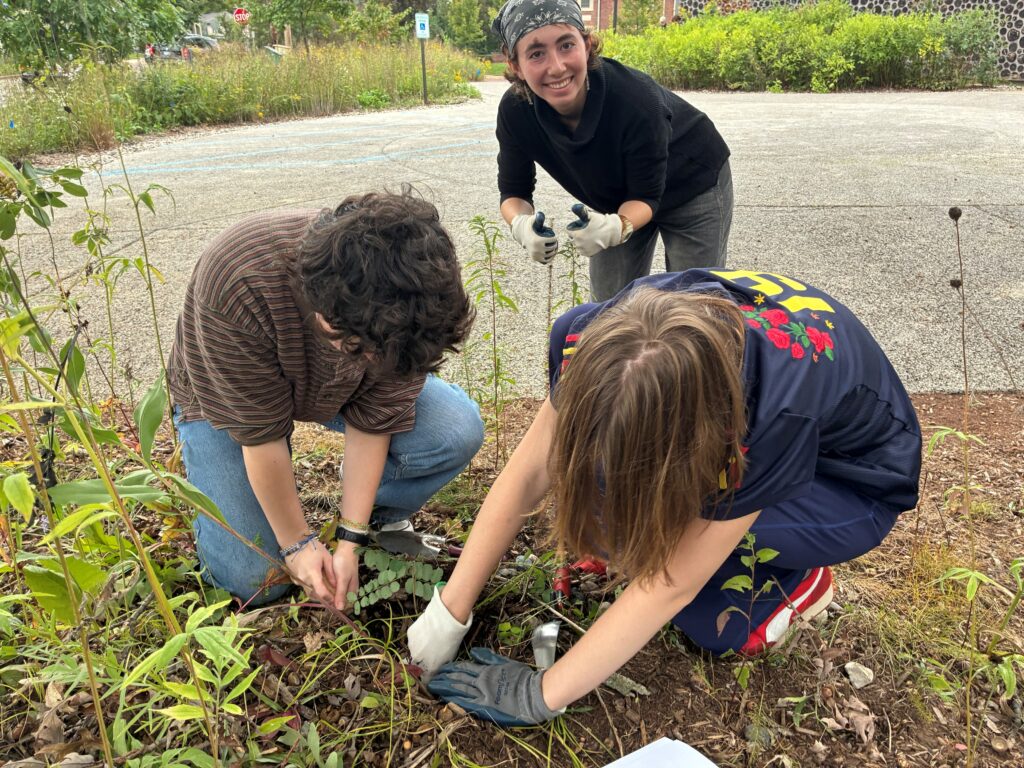
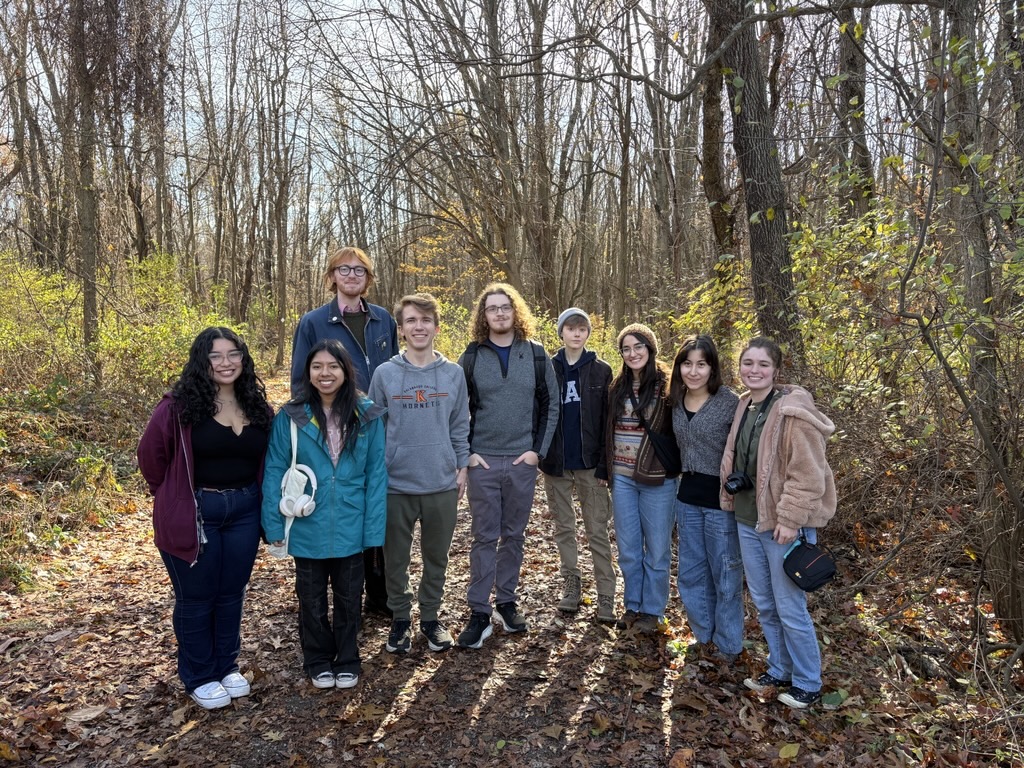
Welcome Back to K!! And for our first year and transfer students, we’re so glad you’re finally here! After a beautiful summer, we are feeling refreshed, rejuvenated, and ready to get back to work here at the Environmental Stewardship Center (ESC).
The first week can always feel a little strange. You either have a million things to do, or nothing at all. Either way, we’re here to offer you spaces where you are always welcome. Whether you’re a senior seeking refuge from your SIP, or a first year with nothing but a stack of syllabi, the ESC has a place for you.
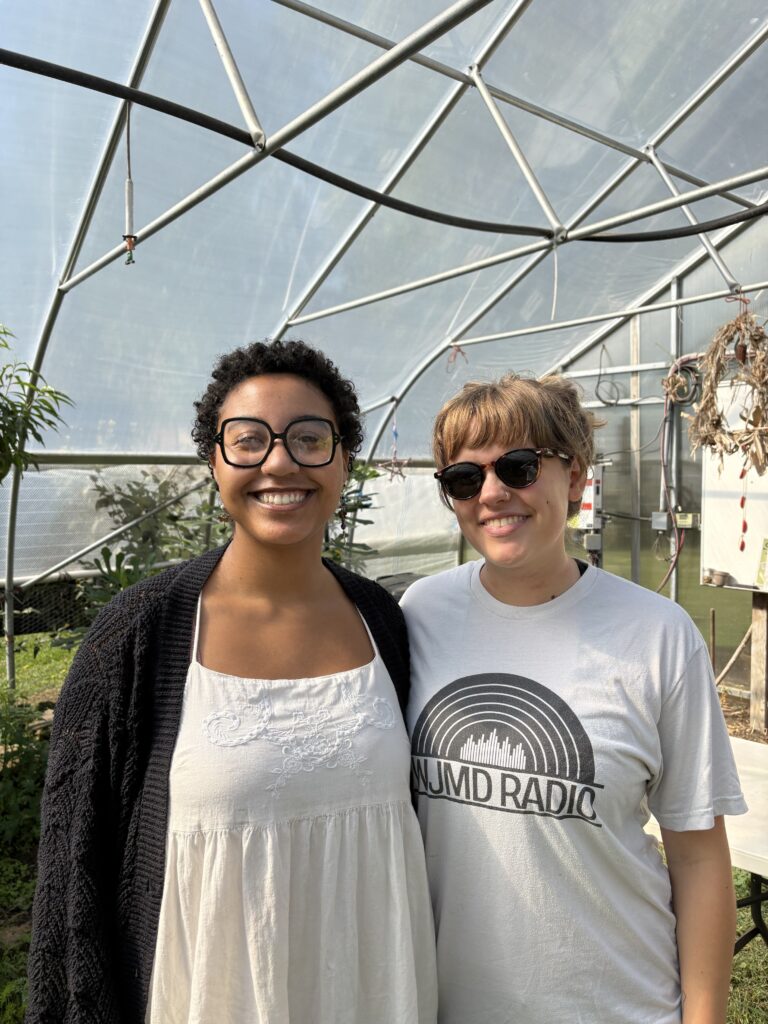
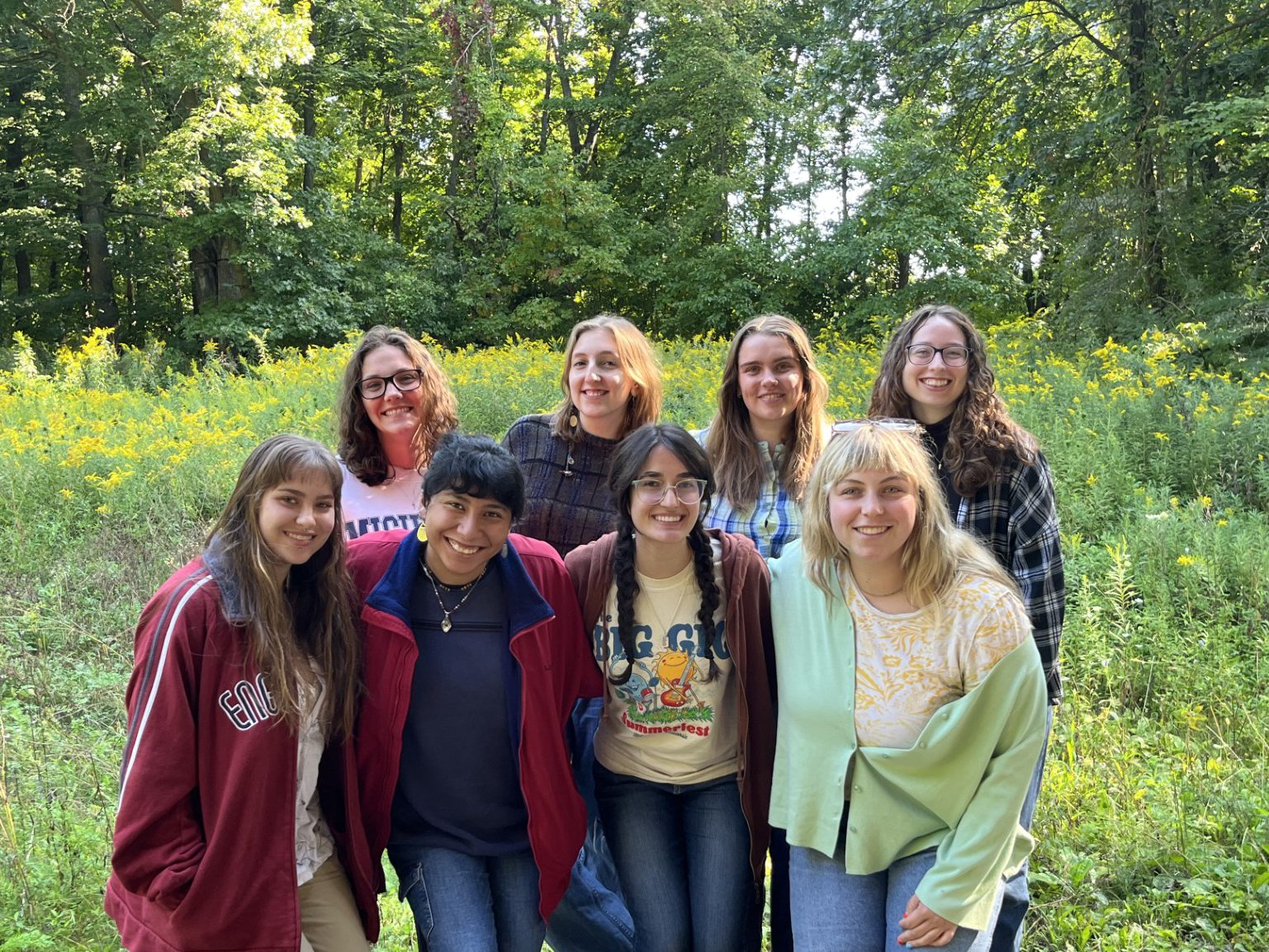
The 2026-2027 Environmental Stewardship student team
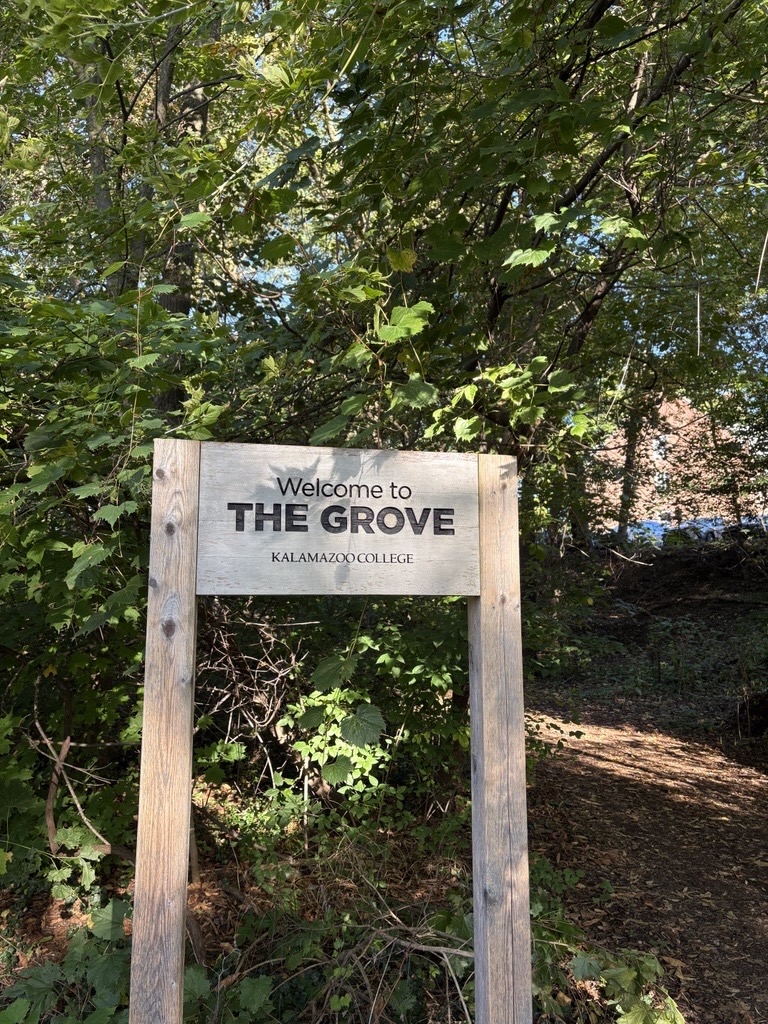
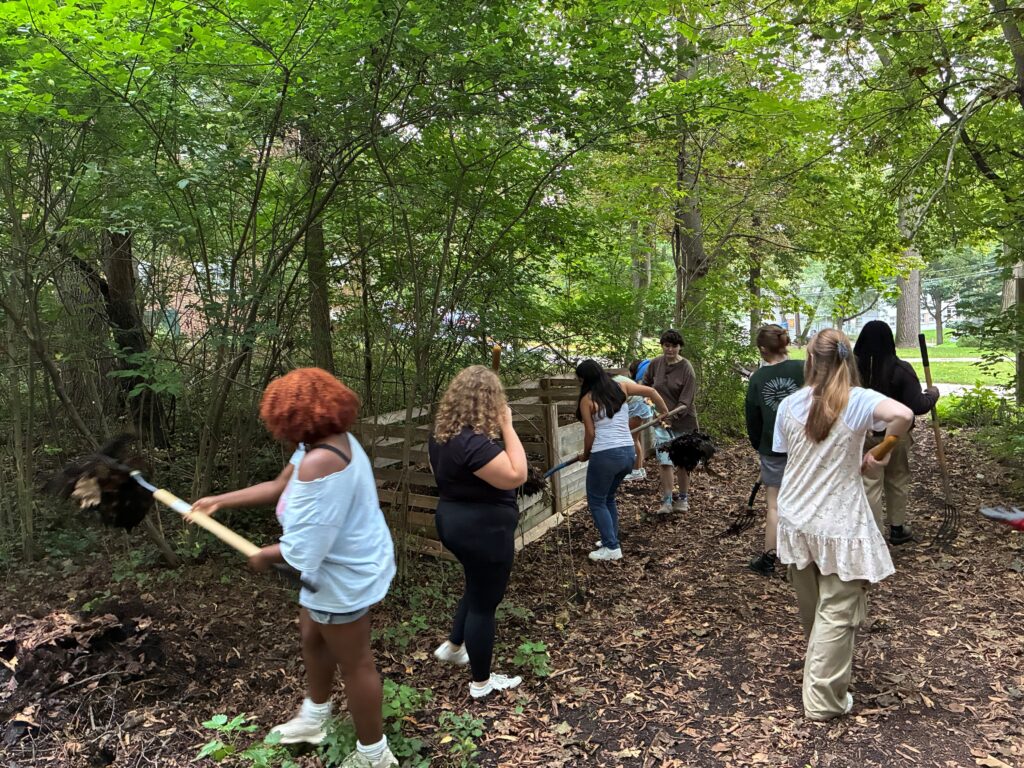
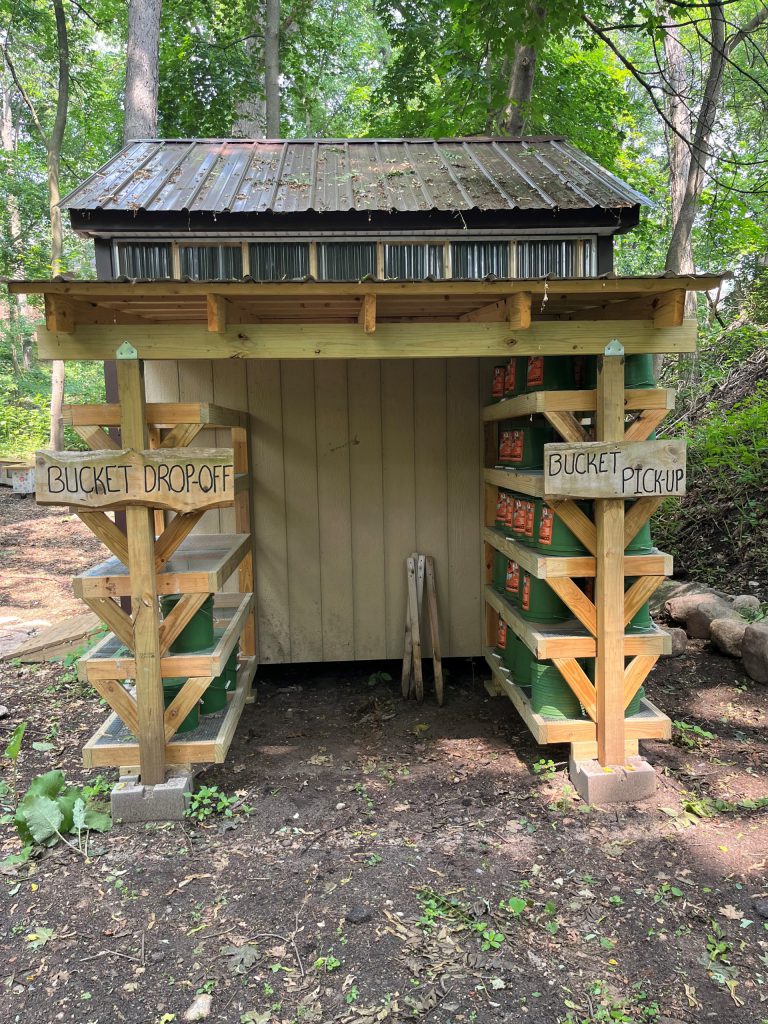
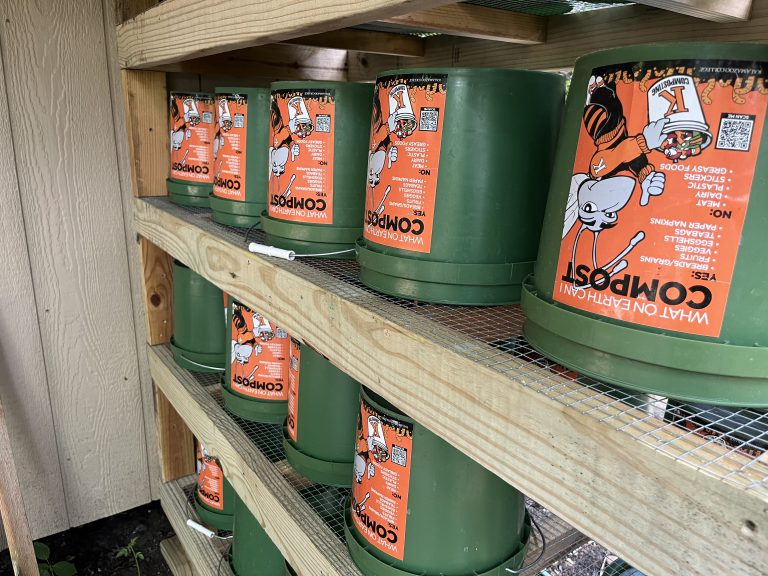
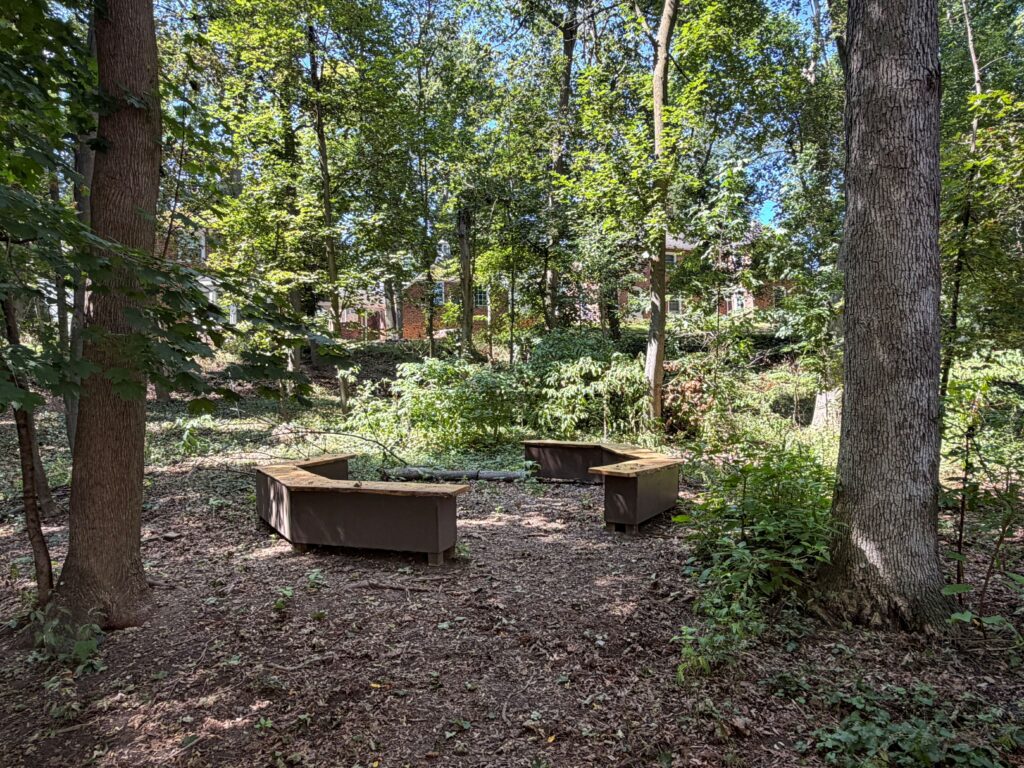
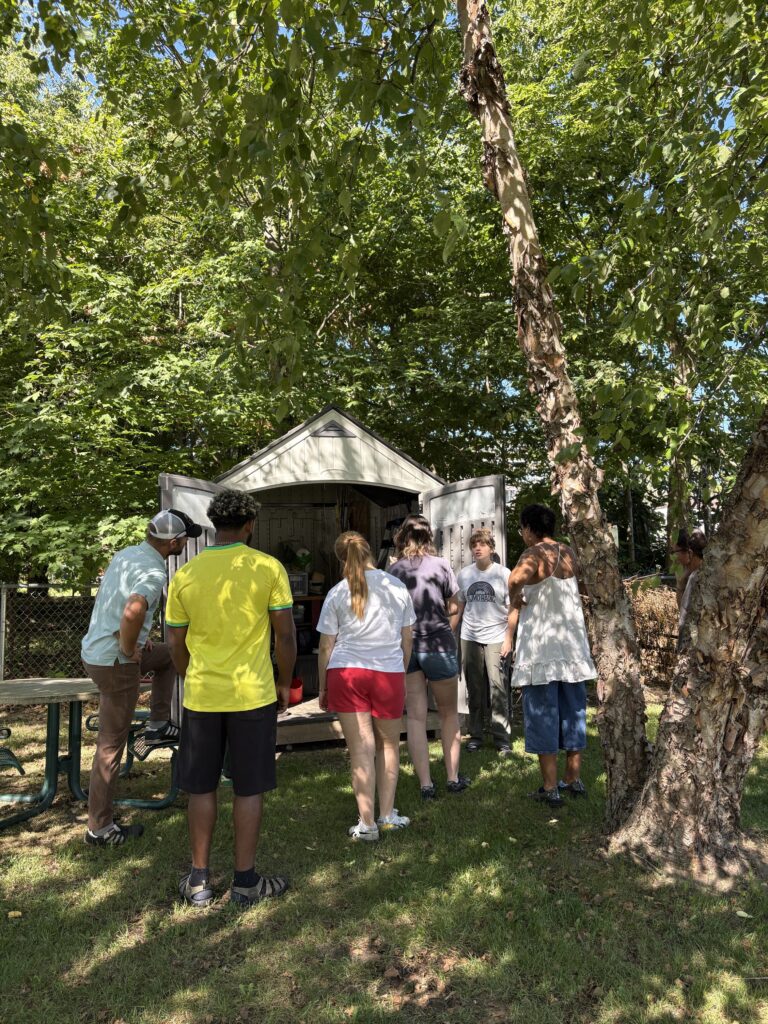
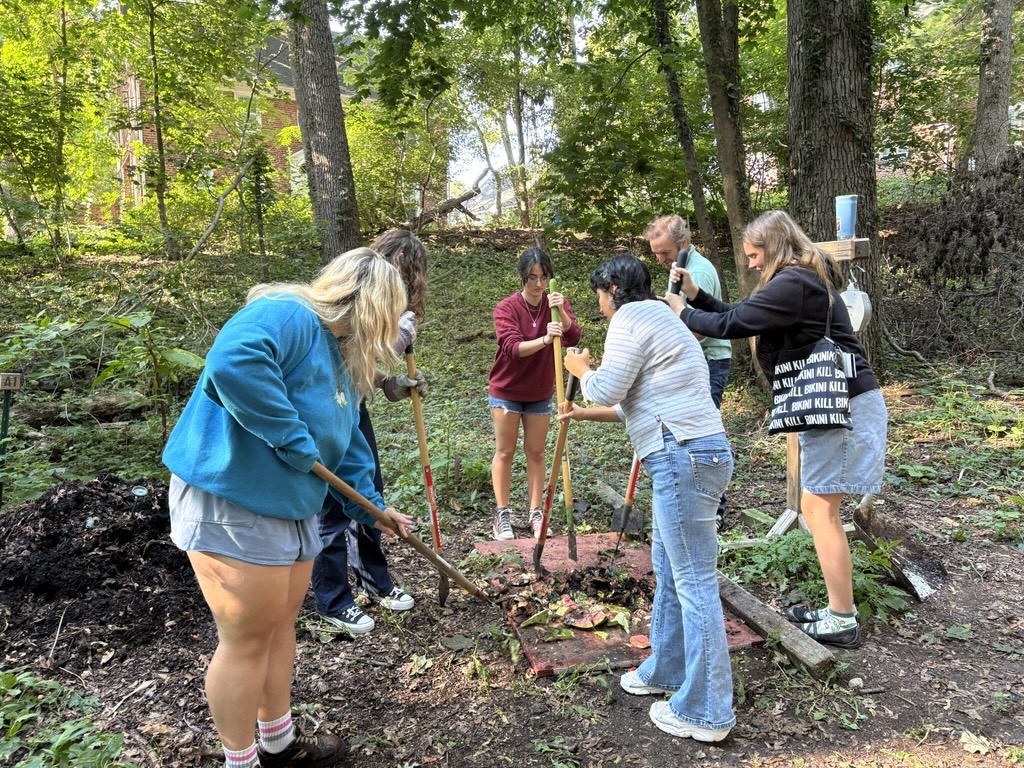
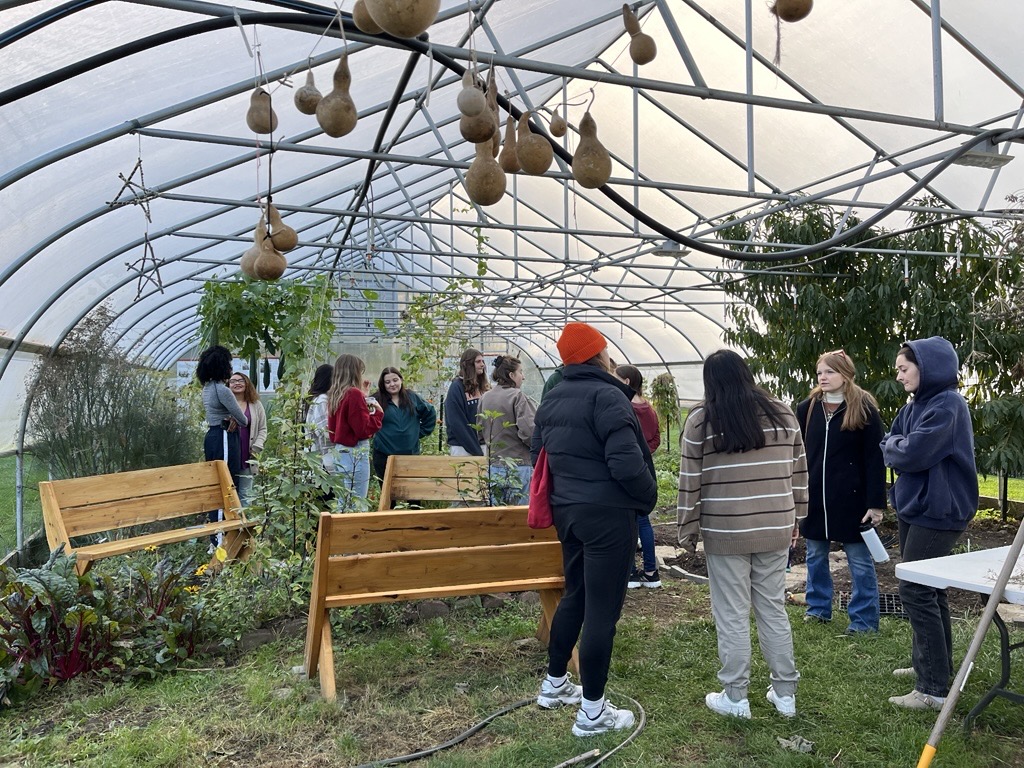
Firstly, we’d love to see all of you at our Sustainability Chats every ODD Wednesday (Weeks 1,3,5,7 and 9) at 11am in Dewing Commons. At these meetings, students, faculty, and staff come together to discuss stewardship and sustainability on campus. These conversations are open to all and, more importantly, include free snacks. You can also join us during Hoop House open hours, Monday, Wednesday, and Friday from 4:30-6pm. Our Hoop House interns would love to meet you and show off all the Hoop has to offer. You could also swing by the Grove, the small wooded area located between the brick Grove houses, DeWaters Hall and the Trowbridge parking lot. There, you’ll find our on-campus compost program (which has its own PE class open to students in the fall and spring terms).
If you can’t make it this week, feel free to drop by anytime throughout the tri, or visit the Environmental Stewardship Center (our HQ), right off Dewing Commons. We are also available via email and social media. Thank you and have a fabulous week one!!
Our Hoop House interns have been busy bees this spring between hosting awesome events, supporting the young sprouts, and spreading knowledge!
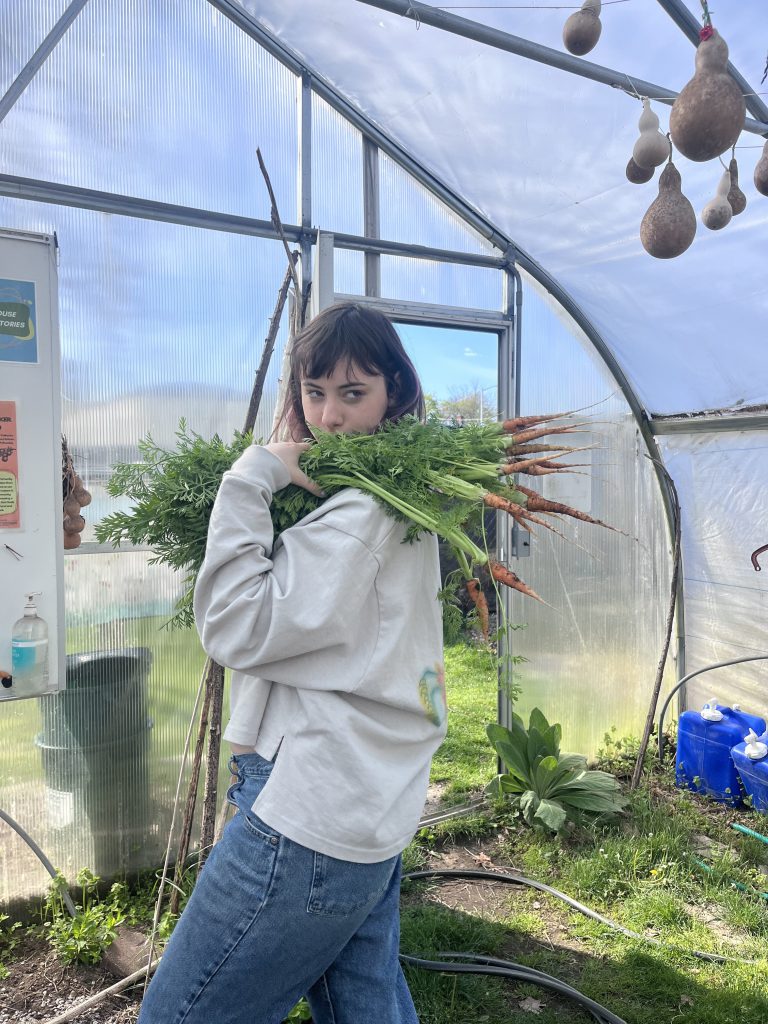
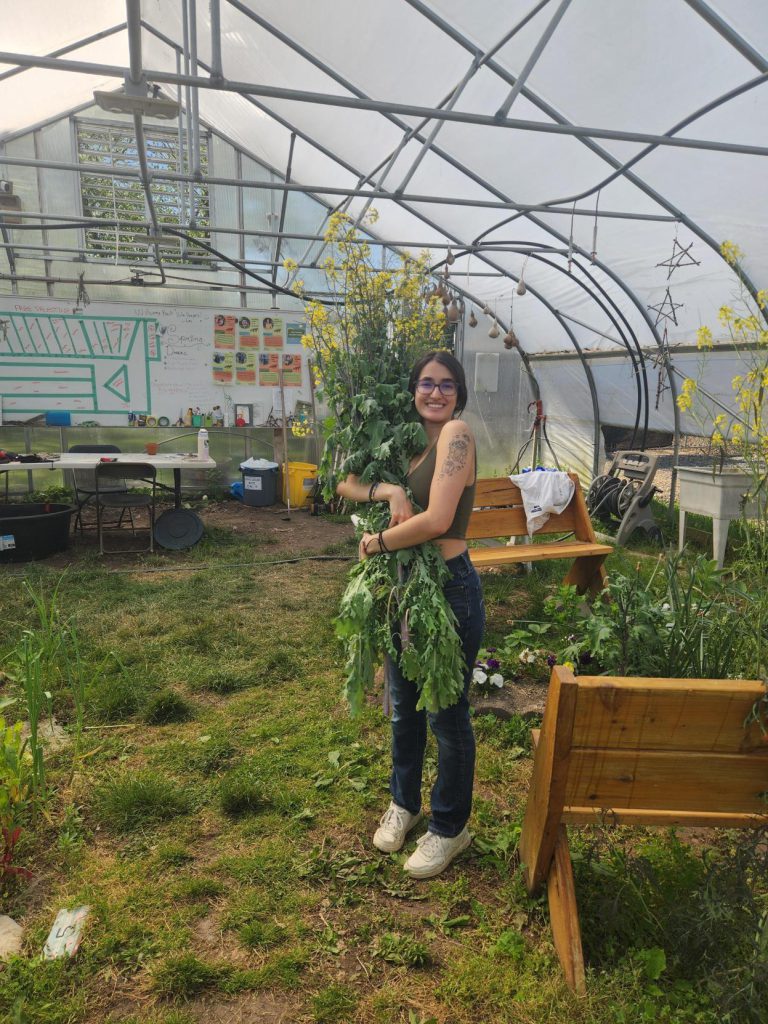
Estelle Metz ’27 holding a bundle of freshly picked carrotsVeda Shukla ’28 holding an armful of kale
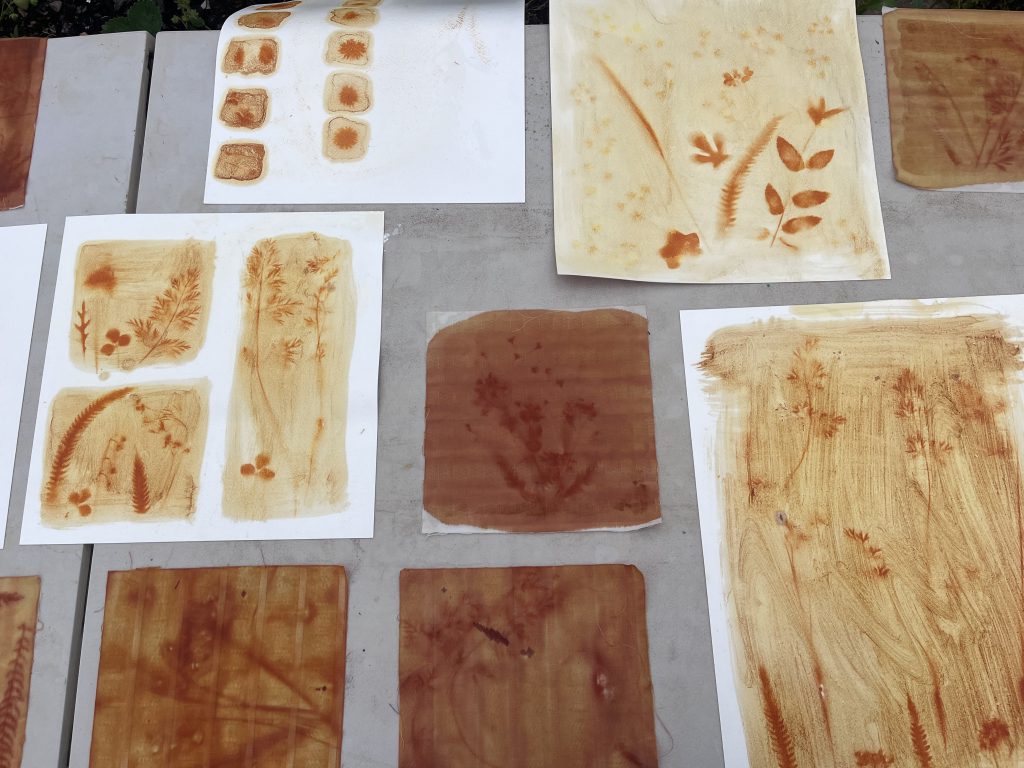
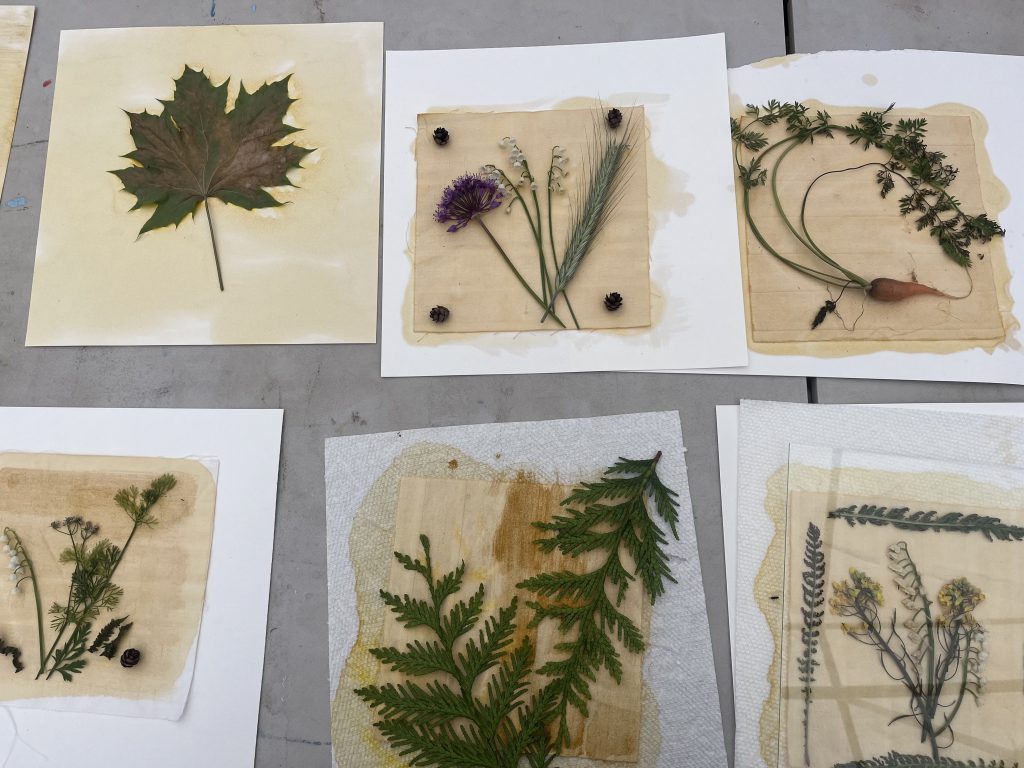
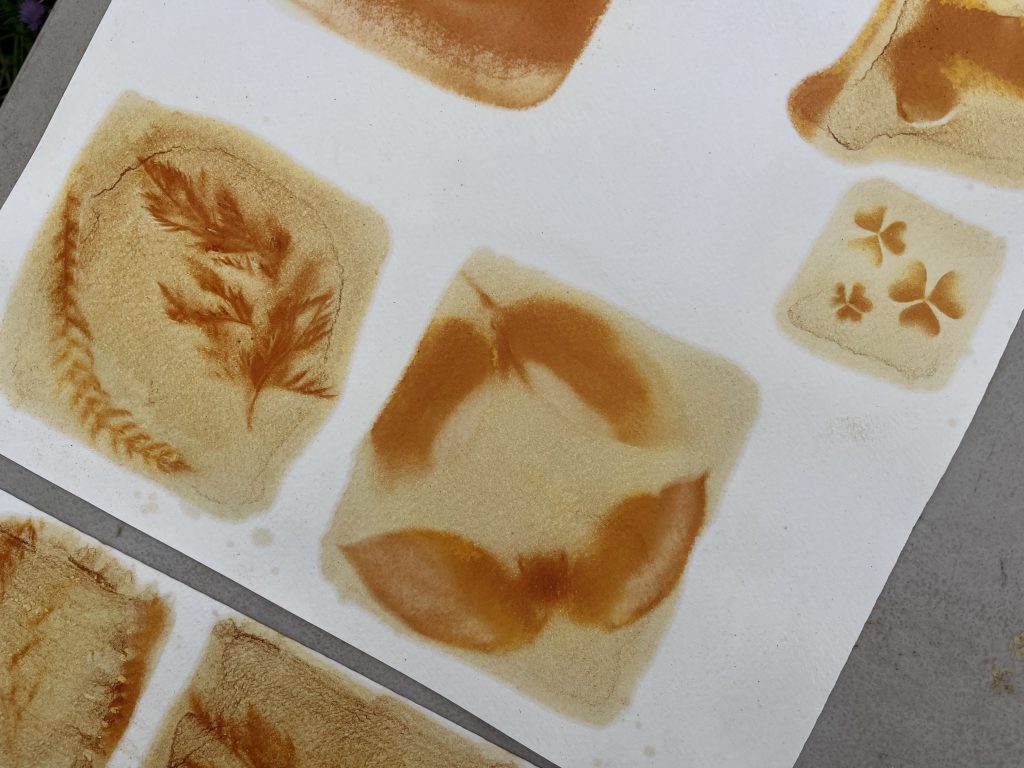
In Week 7, the Hoop House hosted an anthotype event, where sunlight is used to print images. People brought in fabric or paper they wanted to spruce up, painted it with a turmeric mix, and got creative with plants and objects from the Hoop House to design stunning prints! The prints then developed under the sun and sat for a couple days before the Hoop House interns developed them with baking soda and water to make the art come alive. The Hoop House also provided delicious yogurt bowls. Check out what people created!
Anthotypes after curing in the sunAnthotypes before curing in the sunAnthotypes after curing in the sun
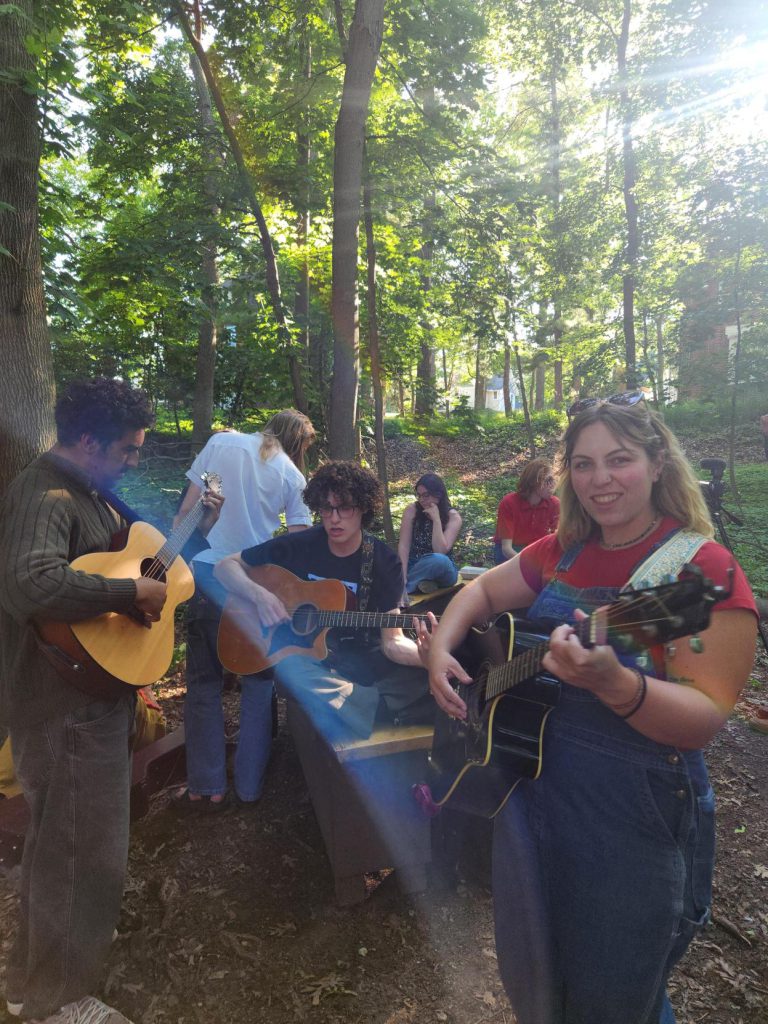
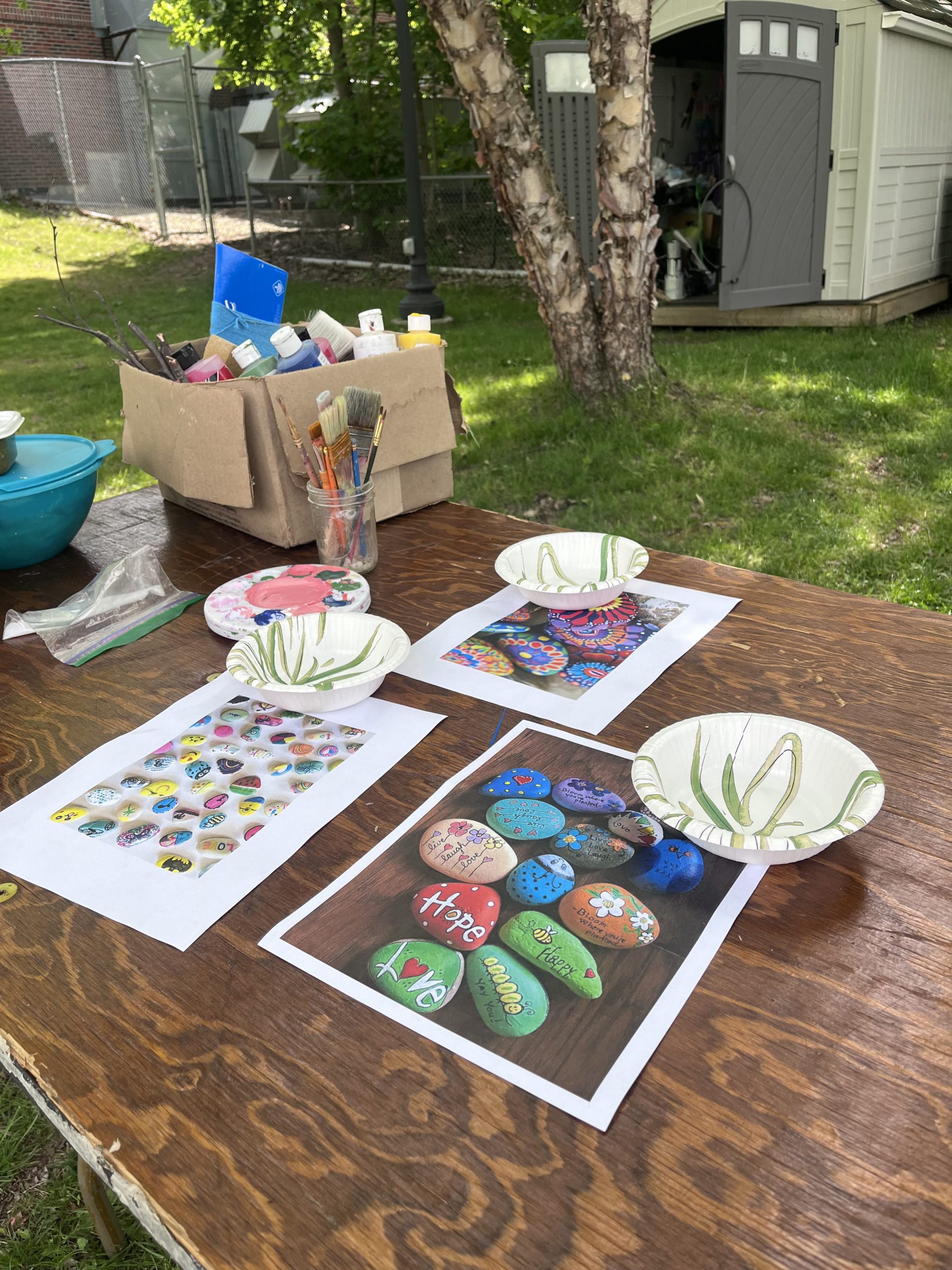
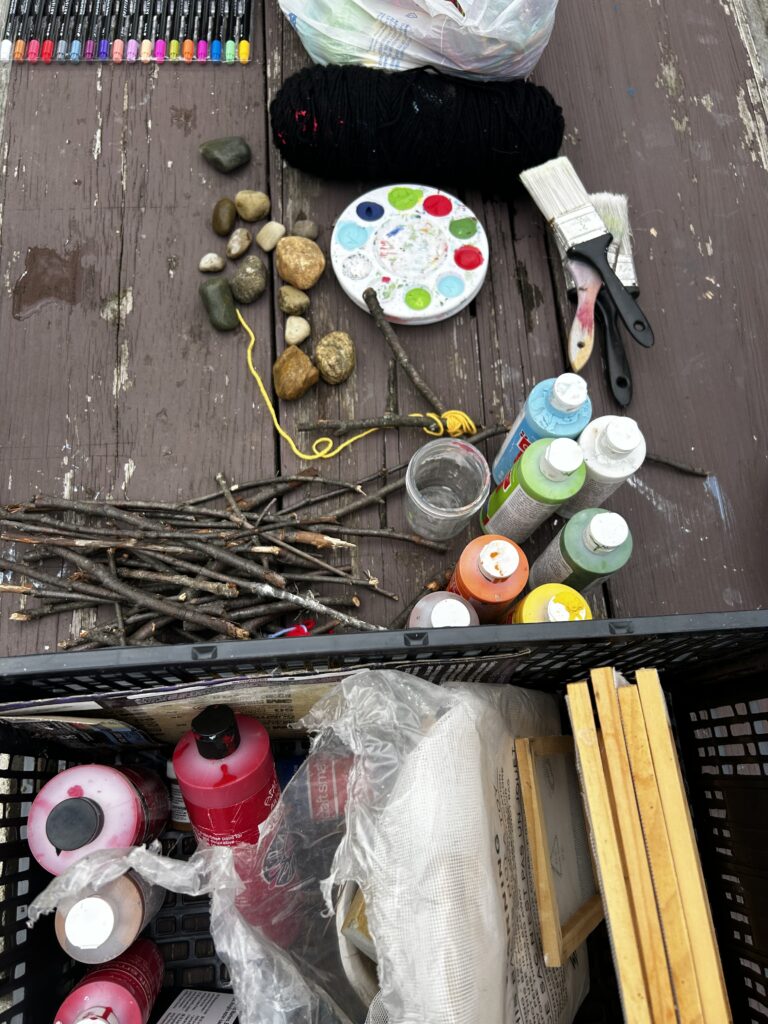
The Hoop House also did a collaboration with the Bike Co-op at K during Week 8 to visit local gardens around Kalamazoo and get active outside. Outdoor Programs generously provided bikes for people to use if they didn’t have their own, and the bikers explored K’s green spaces and community gardens. Week 8 also featured an event with SPEAK from the Health and Counseling Services Center where students came to paint rocks, do puzzles, and enjoy chips & dip. If you’re interested in collaborating with the Hoop House in the fall, please reach out to us at environmentalstewardship@kzoo.edu. The Hoop House also supported Groove Grove this week by providing craft supplies, musical talent, and of course, their smiling faces.
Zoe Wilson ’26 and other performers at Groove GroveLee teaching the Composting PE classRock painting at the SPEAK event
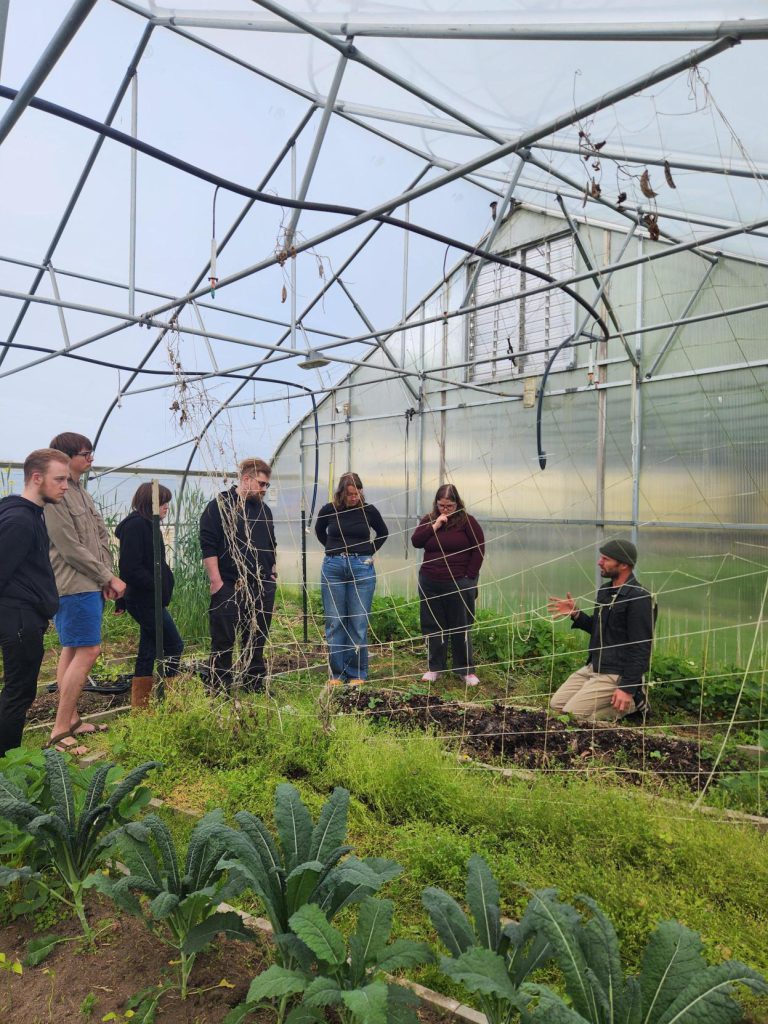
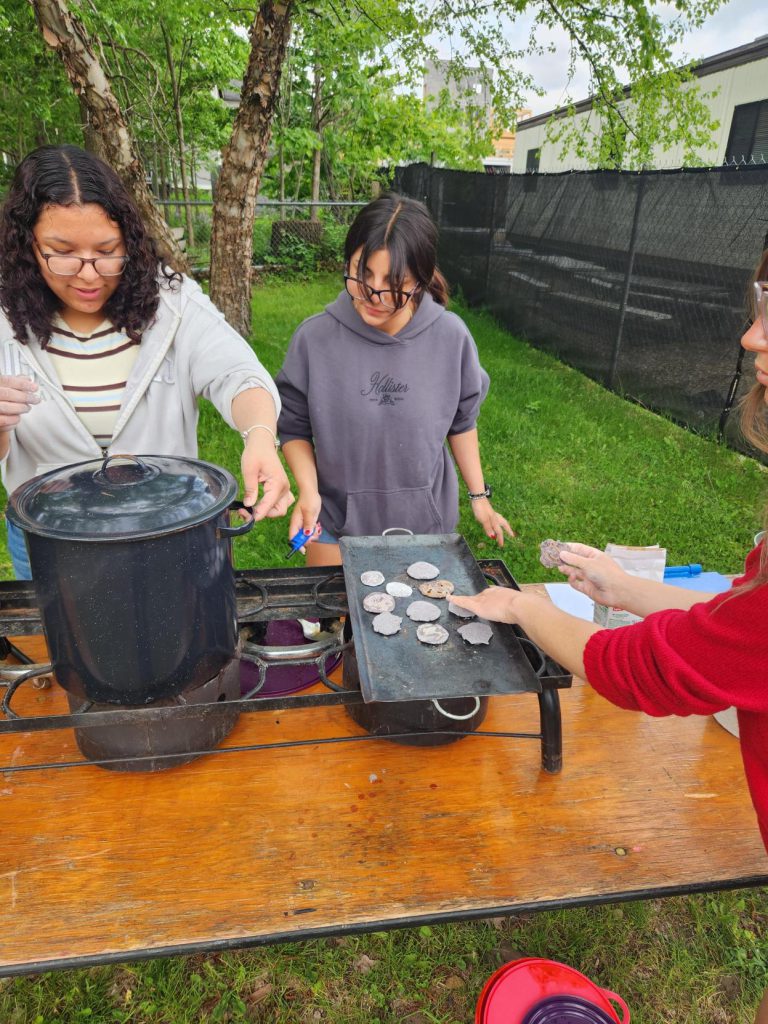
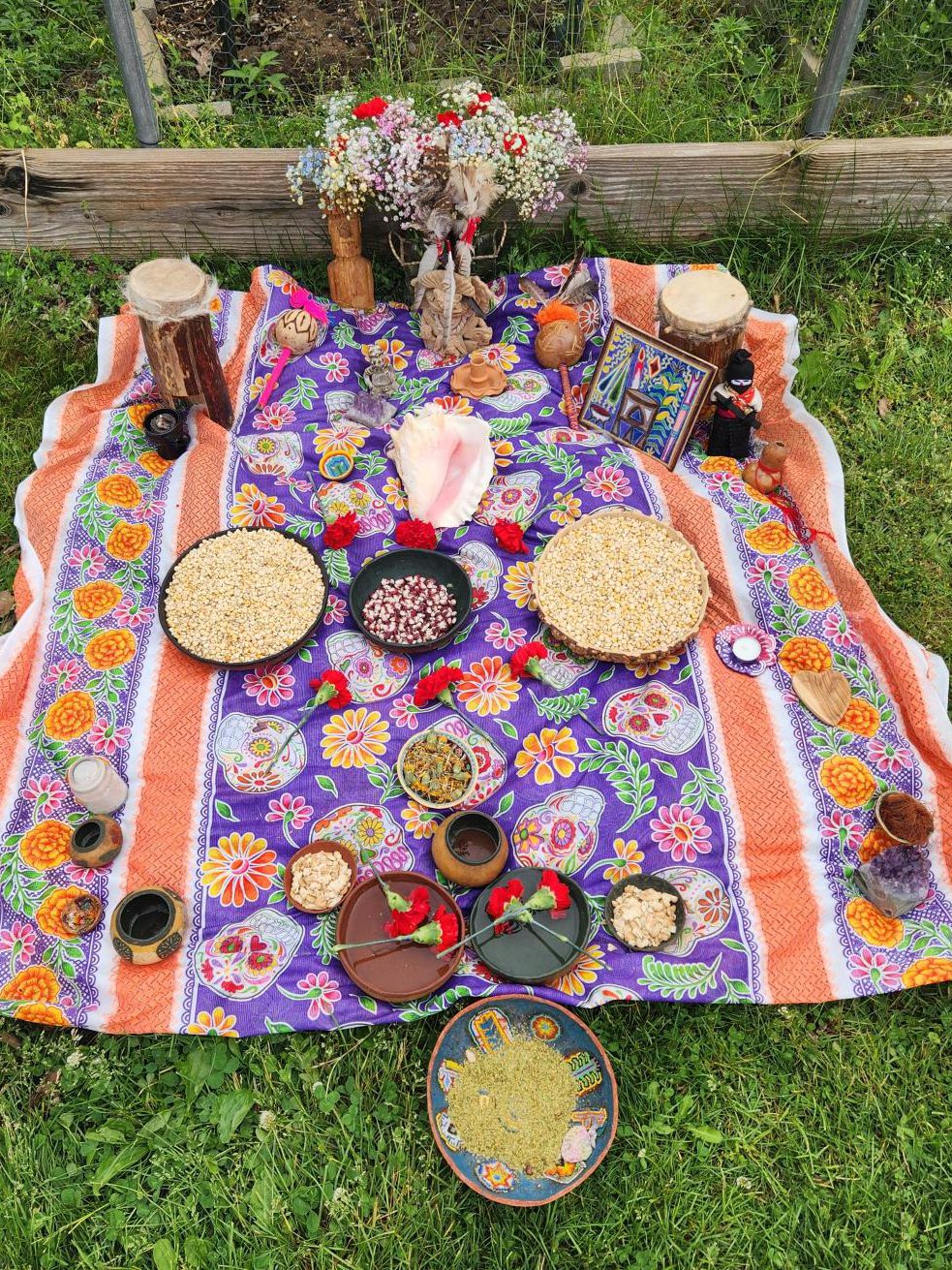
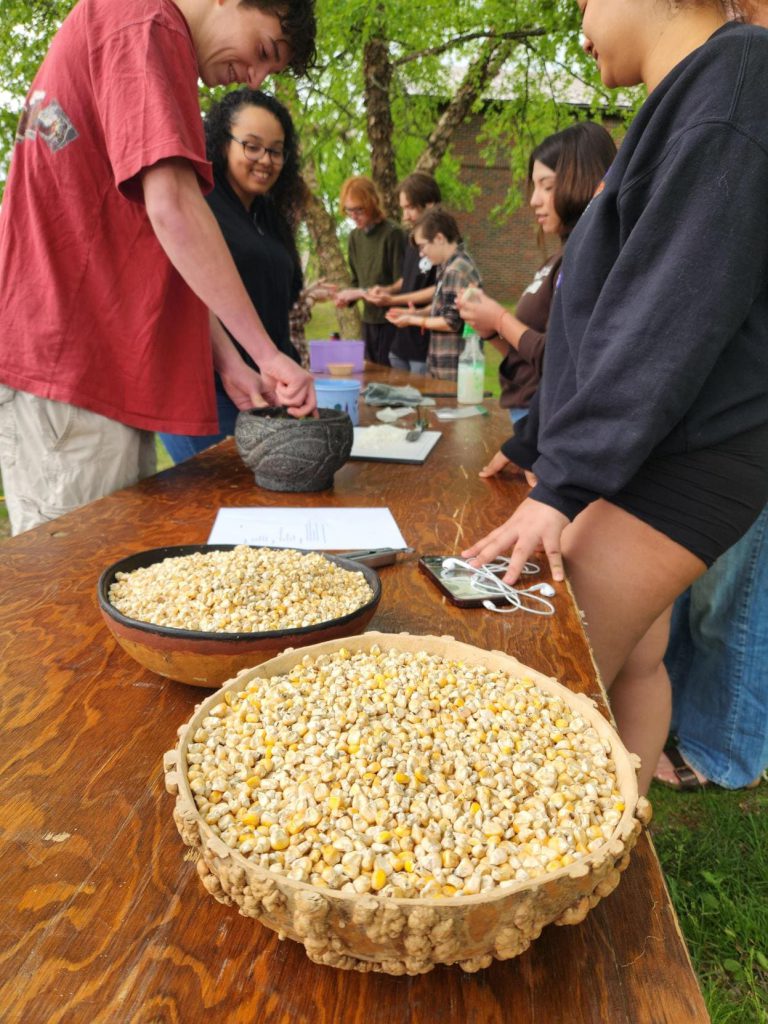
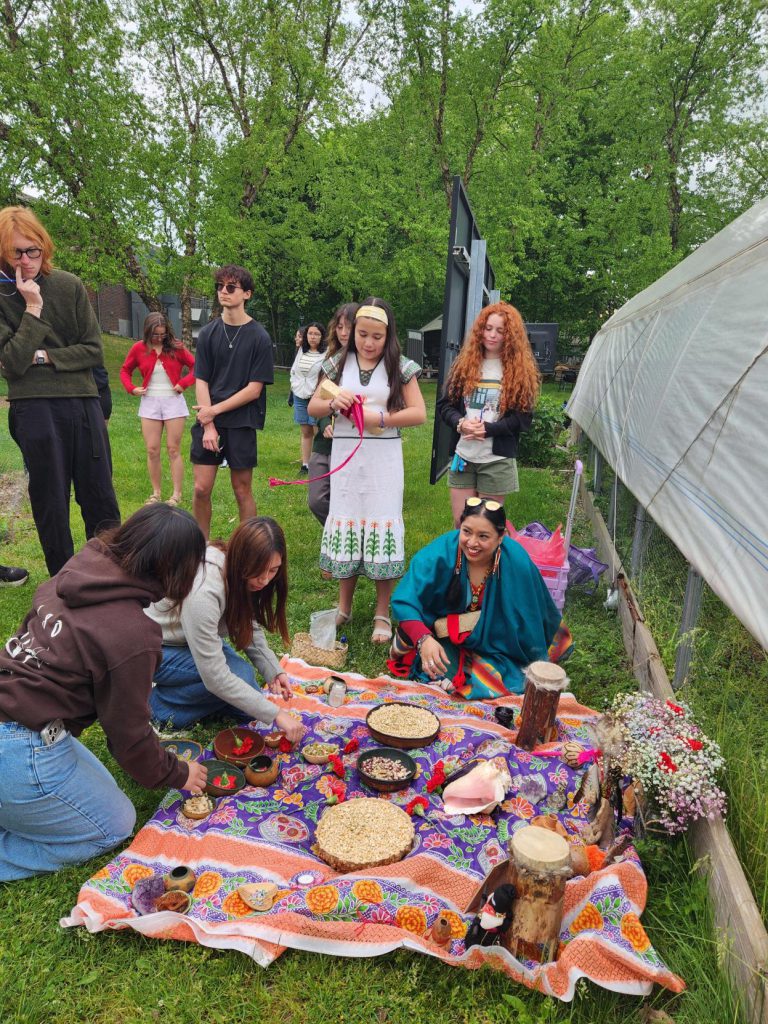
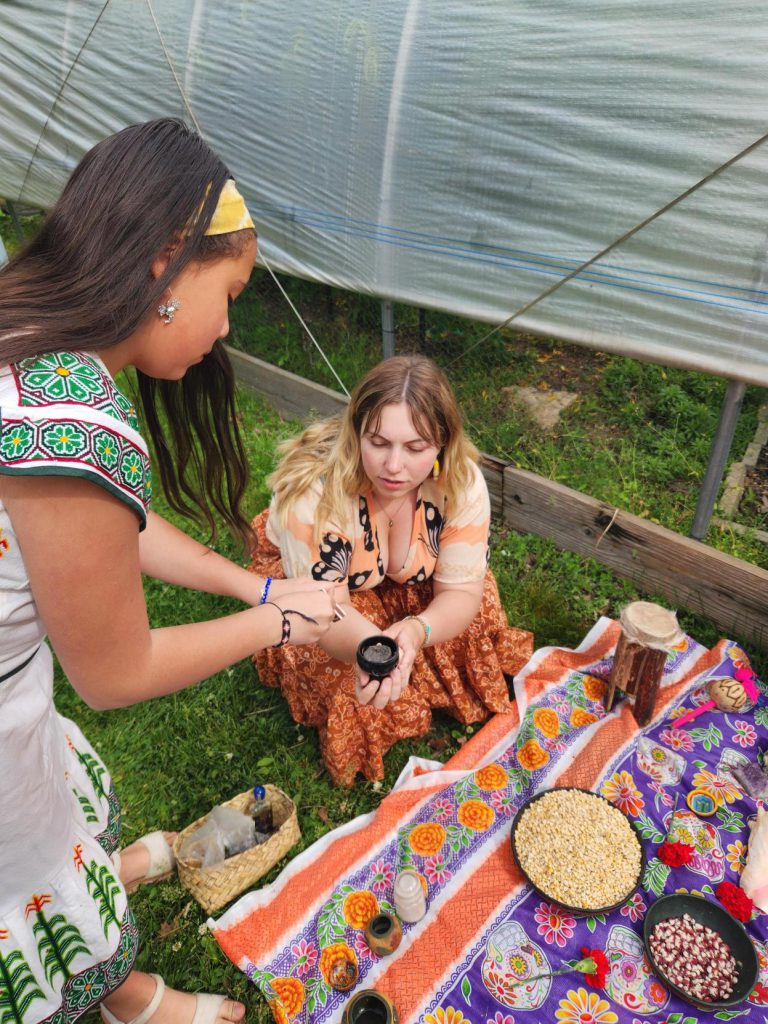
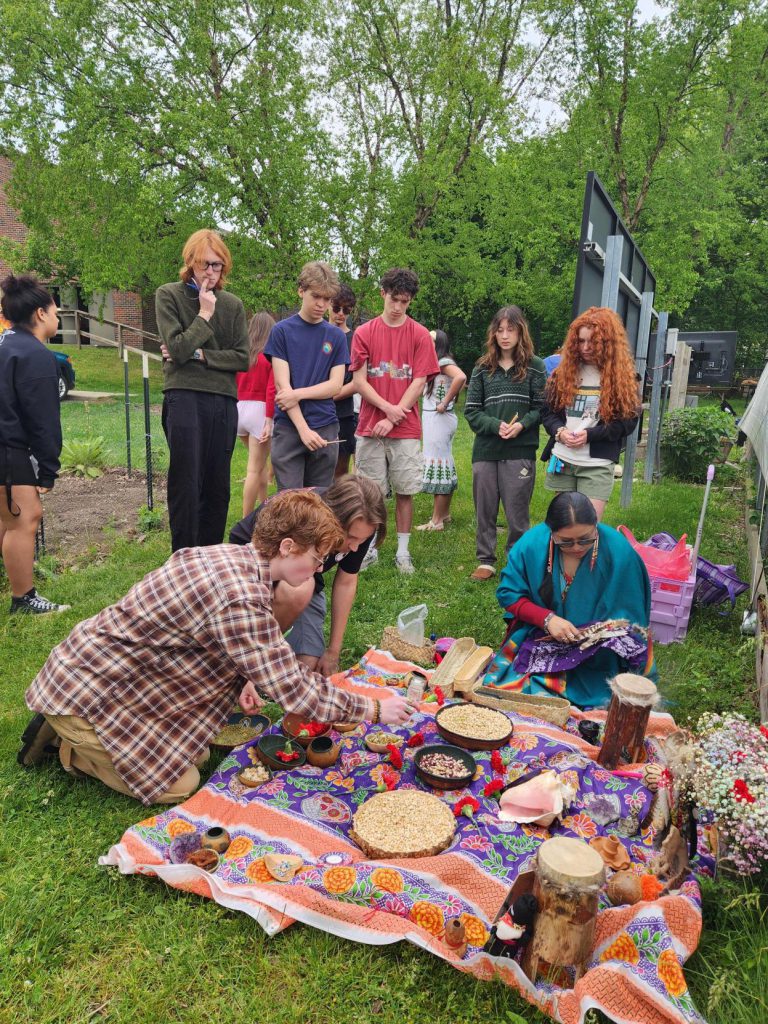
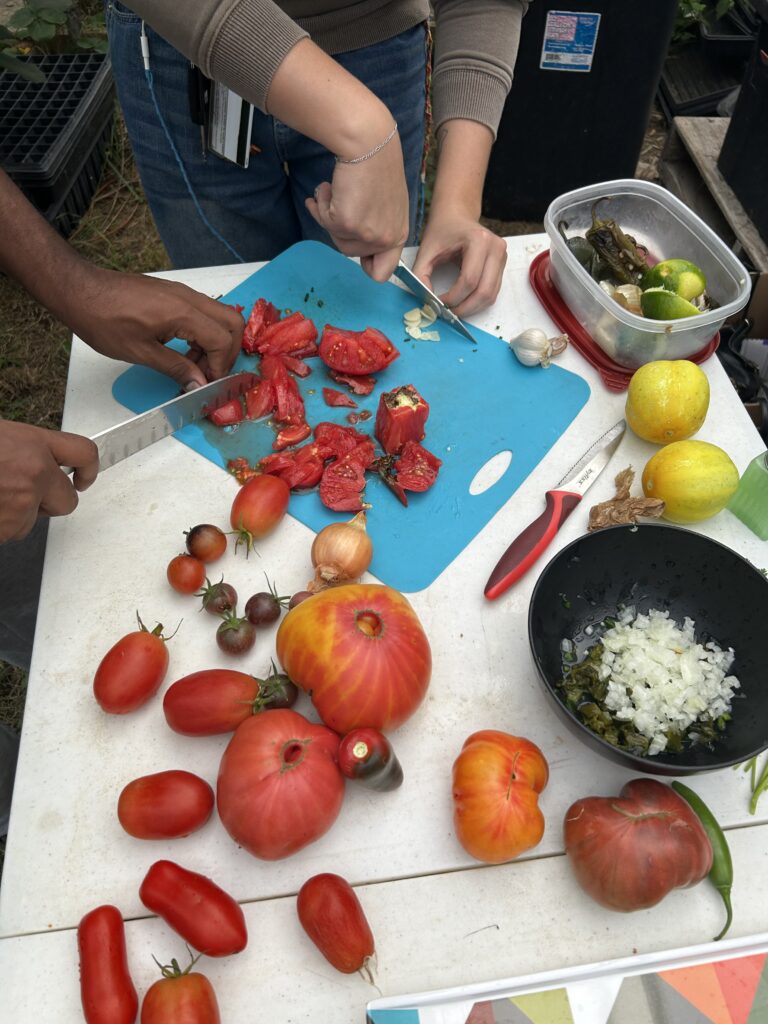
The Hoop House has also been a source of learning this spring. The Composting PE class came to hear from Lee Arbogast and the Hoop House interns about the importance of composting in the cultivating process and how the nutrient recycling sustains the land. The new CES-100 class, Traditional Ecological Knowledge (TEK), has also been spending many mornings learning from the land they are tending to and exploring themes of land and food sovereignty, ecofeminism, and Indigenous responses to climate change. Alongside the TEK class, CES-300 course, Body, Land, and Labor, helped sort seeds and prepare for the Cultivation Ceremony in Week 8. The Cultivation Ceremony was led by CES professor, Dr. Cyndy Garcia-Weyandt, and the Hoop House interns. Together with help from students, they prepared food from tomatoes, strawberries, and corn harvested from the Hoop House and set up an altar to give offerings to the Mother Corn. This ceremony is intended to give back to the land in a reciprocal and respectful way, as well as build connection with the plants that sustain us by regarding them as living relatives. Students listened to a Wixárika elder give blessings, gave offerings and wish candles to the seeds, and then ate the food they prepared together.
TEK students preparing corn tortillasCultivation Ceremony Offering AltarTEK students grinding cornTEK students giving offeringsDr. Garcia-Weyandt’s daughter, Ixchel, lighting the traditional incense for the ceremonyTEK students giving offerings
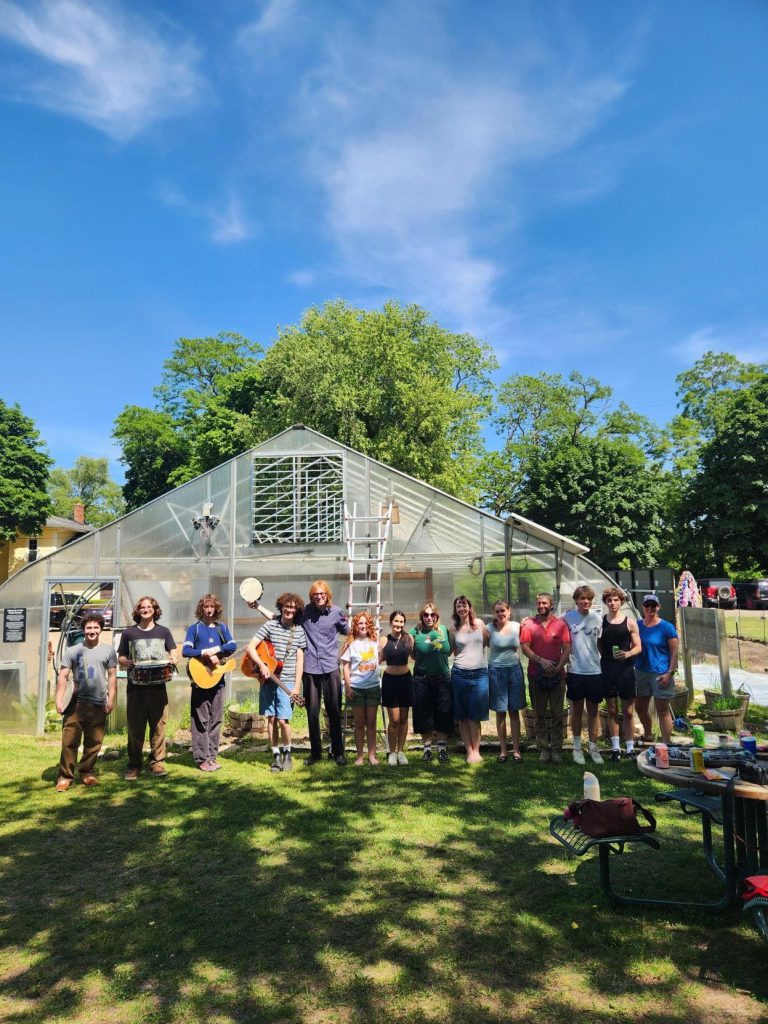
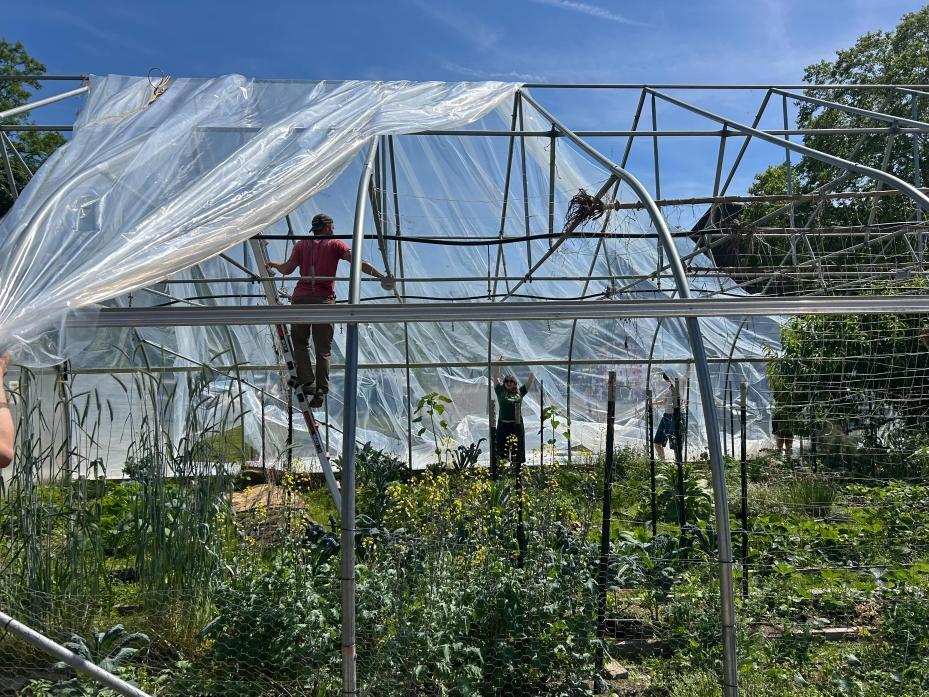
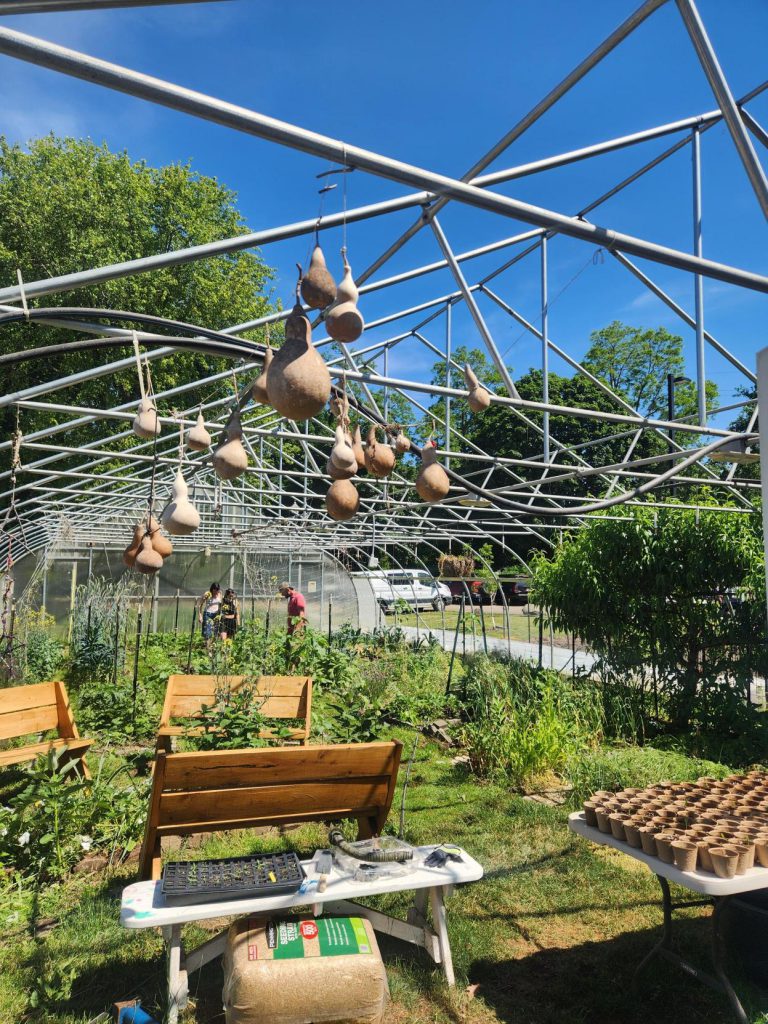
Another exciting update from the Hoop was the tarp rewrapping last Friday! The Hoop House hasn’t had a new tarp since its construction in 2018 and it ought to get rewrapped every few years in order to run optimally because the tarp that protects and regulates the Hoop gets weathered, cut up, dirty, and cloudier, which lets in less sunlight for our growing plants. The rewrapping was a celebration of the Hoop House and past students that helped it come to life and left behind something for future K students like us. It was also a gift to the future students that will come to care for this space and learn from it. Many hands made light work and we are so grateful to all the volunteers that came and made it possible! The rewrapping featured some talented K student musicians, an impromptu slip n’ slide, a circle of benedictions, and lots of laughter.
Tarp rewrapping volunteers and musiciansTarp being placed over the Hoop HouseUncovered Hoop House!
As 10th week comes to a close, we encourage you to decompress by dropping in during our open hours every Monday, Wednesday, and Friday between 4:30-6pm, which will continue until the end of finals week!
Larry J. Bell ’80 Environmental Stewardship Center
Subscribe to receive posts about the ESC, academics, student projects and events directly to your inbox!
The Lillian Anderson Arboretum is a natural preserve managed by Kalamazoo College’s Larry J. Bell ’80 Environmental Stewardship Center (ESC). The arboretum encompasses 140 acres of pines, marshes, meadows, and second-growth deciduous forests.
It serves as a valued resource for over 20,000 visitors each year who come to study, recreate, reflect, and learn, acting as a bridge between Kalamazoo College and the wider Kalamazoo community. The ESC staff, alongside a dedicated student trail crew, maintains the trails throughout the preserve. If that sounds like your ideal job, consider applying for the Arb Trail Crew next application cycle!
If Arb Trail Crew isn’t your thing, you could instead visit the Arb for P.E. credit! We encourage students to consider taking the Arboretum Stewardship course, which will be offered in Fall 2026 (transportation provided!). Through this course, students have the opportunity to learn about invasive plant management, practice the basics of trail maintenance, learn to use trail tools, and enjoy time outdoors!
With warmer weather on the horizons, now is the perfect time to visit the arboretum! The birds are coming out, flowers are blooming, and the trails have never looked as gorgeous as they do in spring. There’s never been a better time to head out and see what the arboretum has to offer – especially if you haven’t had the chance to visit yet. In fact, the ESC is happy to host any clubs or classes that need transportation. For example, the ESC is taking the Composting P.E. class to arboretum during 9th Week, and the ESC has shuttled students in the past. There are more opportunities to get to the arboretum outside of just the ESC, however. The Kalamazoo College Birdwatching Club (@birdingatk) regularly visits in order to identify and observe different bird species as a group while many of the Biology Department’s spring courses make an effort to visit the arboretum at least once during a lab session.
Additionally, if you prefer to go alone but don’t have access to a vehicle, there’s the option of taking the bus. Hop on the Route 14 bus at West Main and Catherine (Stop 605) or West Main & Monroe (Stop 603) and ride until the Oshtemo Library (Stop 1221). Enter the Oshtemo park and from there you can walk to the Arb! The Route 14 bus operates from 9:30am to 5:30pm on weekdays with services swinging by every hour.
Experiential education is core pillar of the ESC’s values. If you’re eager to have a class outdoors at the arboretum, ask your professors! Encourage them to get the class outside and connect their lessons to the broader outdoors. The ESC provides resources for this exact reason, and we want everyone who wants to get outdoors to GET OUTDOORS!
Environmental Stewardship Center
Subscribe to receive posts about the ESC, academics, student projects, and events directly to your inbox!
The Environmental Stewardship Center (ESC) is excited to welcome back all of our students, staff, and faculty back to campus for the spring trimester! We hope everyone had a relaxing break because we’re ready to hit the ground running with a host of exciting events this term. Our interns are located in Dewing Commons Monday through Thursday, and you can always stop by to ask questions and learn more about what we do! Below are all the ways the ESC is actively working to make a greener, more sustainable campus this spring:
#aab_accordion_3043eeb4_0 { }
Sustainability SIP Symposium
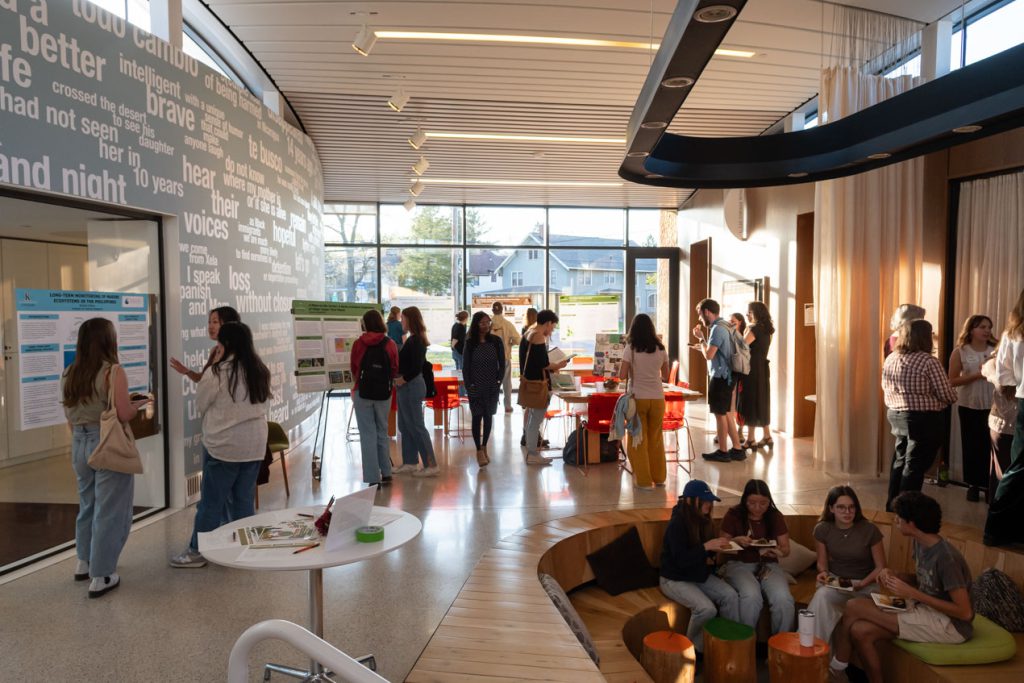
We’re so excited to announce our 2026 Sustainability SIP Symposium! Honoring the work of incredible seniors across all corners of campus who have completed Senior Integrated Projects dealing with themes of climate change, the environment, and sustainability, the Symposium will include a keynote speaker, presentations, great food, and lots to celebrate! The event is free and open to all! Come join us in the Arcus Center on Wednesday, April 22nd, from 6:30-9pm. In the meantime, keep an eye out for senior spotlights coming out soon on our Instagram!
#aab_accordion_c07063b6_1 { }
Hoop House
The Hoop House is happy to host open hours again this term! Open hours this term will be on Mondays, Wednesdays, and Fridays from 4:30-6:30pm. We’re also excited to host a number of events, including flower pressing, paper-making, herbal tea making, etc. Check our Instagram to stay updated!
#aab_accordion_89c592d8_2 { }
Composting
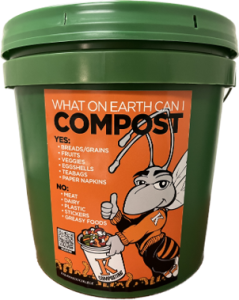
Composting is back up and running this term! In fact, our composting interns are already distributing mature compost from the fall and winter terms to the Jolly Gardens and the Hoop House. Grab a bucket to support our composting team and be a part of a sustainable local food cycle! And don’t forget to be on the look out for Groove Grove during 9th week!
#aab_accordion_09753638_3 { }
P.E. Classes
It’s spring, which means it is time for everyone’s favorite P.E. courses: composting and gardening! These courses highlight our campus’s commitment to experimental learning and developing a sense environmental responsibility, core pillars of our Climate Action Plan. If you haven’t had the chance to take one of the amazing classes yet, be on the look out next fall and spring terms!
#aab_accordion_41adffcf_4 { }
Global Climate Education Week
Every year, the World Wide Climate & Justice Education Week is an event focused on creating Climate and Justice dialogues across primary and secondary schools, colleges and universities, and the greater international community of advocates across the globe. A “Teach-in” model invites students, staff, faculty, community leaders, and faith groups to create space and participate in solutions-oriented discussions about climate change that will drive interdisciplinary perspectives and cultivate actionable solutions. This year, Kalamazoo College is happy to participate with faculty from a wide array of departments, ranging from fine arts to business to the natural sciences. The Global event occurred in March, but Kalamazoo College’s Climate Education Week takes place during Week 4 with faculty incorporating environmental and sustainability issues into their lessons, and we encourage you to ask your profs to participate!
#aab_accordion_cfebe3a3_5 { }
Climate Connection Series
The Climate Connection Series aims to not only discuss the Kalamazoo College’s Climate Action Plan goals but also to encourage students to incorporate those goals into their academic and personal lives. Two events will be held this term, one in Week 6 discussing the learning and environmental responsibility goals and the other in Week 7 discussing the resource conservation and greenhouse gas emission goals. More information coming soon!
#aab_accordion_a1148765_6 { }
Week 8 Community Reflection
The Climate Action Plan (CAP) Committee is happy to host the Week 8 Community Reflection! Committee members, which include students, faculty, and staff, will come together to discuss a basic overview of the CAP and its goals, major wins that we’ve accomplished, and where we’re headed now. Additionally, the CAP Committee aims to encourage students to get involved, stay informed, and incorporate the CAP into their own lives through this community reflection. More details coming soon!
#aab_accordion_12c9682b_7 { }
Sustainability Chats
The ESC is happy to continue hosting our biweekly Sustainability Chats! Every even week Wednesday we come together during common time (11am) to discuss on-campus environmental opportunities and news – snacks provided!
#aab_accordion_007b6a24_8 { }
Community Events
Harvest Lecture Series: The ValleyHUB Honorable Harvest Lecture Series explores ways in which we can come together to nurture and restore the Honorable Harvest in our communities and in our everyday lives. The 2026 spring series takes place on Tuesdays at 6:30-7:30 p.m. from March 10th – April 21st, and lectures occur in Classroom 223 at the Marilyn J Schlack Culinary and Allied Health Building, 418 E. Walnut St. Kalamazoo
Farmer’s Market: the PCF Farmer’s Market begins in May 2nd! It’s open on Saturdays 7am to 1pm, so get out and support local farms and businesses!
Foodways Symposium: The Kalamazoo 2026 Southeast Asian Foodways Symposium takes places April 10th – April 11th. The symposium acts as an exploration and celebration of the Southeast Asian food cultures found here in Michigan. The event includes a keynote address, cooking demos, classes, hands-on activities, community conversations, kids activities, local area vendors, food and more!
Environmental Stewardship Center
Subscribe to receive posts about the ESC, academics, student projects and events directly to your inbox!
Applications for Student Positions through the Environmental Stewardship Center open on Monday, March 9th, so we’re highlighting the experiences of our amazing ESC team! The ESC currently has five student positions, two of which are opening next week. If you’re interested in learning more about applying, check out our Student Positions page.
There are the beloved Hoop House interns, who tend to the Hoop House, organize open hours and activities, and host cultural events. Veda Shukla ’28 just joined the Hoop House in the fall and states “I have learned so much since working at the Hoop, from gardening practices and sustainability to the importance of community and reciprocity with the Earth. I carry the knowledge I have learned from my internship into all other areas of my life, and I am eternally grateful that I’ve had the opportunity to work with such an amazing group of people.” Zoe Wilson ’26, who has been a steward of the Hoop House for three years now, explains what she’s gained: “Whether I am tending to the beds, organizing an event, or enjoying a deliciously ripe strawberry, the Hoop House continues to teach me. Not only do I gain firsthand knowledge about how to care for the land, but I have also acquired knowledge in how to listen, be patient, and care for my community, humans and more-than-humans alike.”
Next, we have the adventurous Arb Trail Crew, who serve as stewards of the Lillian Anderson Arboretum and do trail maintenance and invasive species management. Six miles away from campus, the five miles of trails at the Arb keep the crew busy as they help remove fallen trees and branches, keep the Wetland Boardwalk clear, and interact with neighbors enjoying the calls of the sandhill cranes. Students like Nat Ward ’26 also help run the Arb Stewardship Practicum, which is one of the ESC’s free PE class offerings.
There is also the hard-working Composting Crew, who manage the composting on campus, teach the composting PE class, steward the Grove, and encourage sustainable waste management from students, staff, and faculty around Kalamazoo College. Mo Silcott ’27 is returning to Composting Crew after their study abroad and they spoke about their experience, saying: “In my time working on the Crew, I’ve gained a wealth of wisdom when it comes to an aspect of the nature cycle that is often avoided: death. In many ways, as composters, we give organic material such as fruits and vegetables new life by turning them into cured compost to use as nutrients for future produce, plants, and other types of gardens. Teaching composting has also been a journey, allowing another layer of understanding. I not only have to apply what I know but understand it at a deeper level in order for others to learn.” Miyani Sonera ’27 just joined the Composting Crew last spring and remarked, “Composting in the grove has given me the chance to not only interact with our environment here at K, but to learn from it! The grove is truly such a special place that has given me so much and has been amazing to work in!”
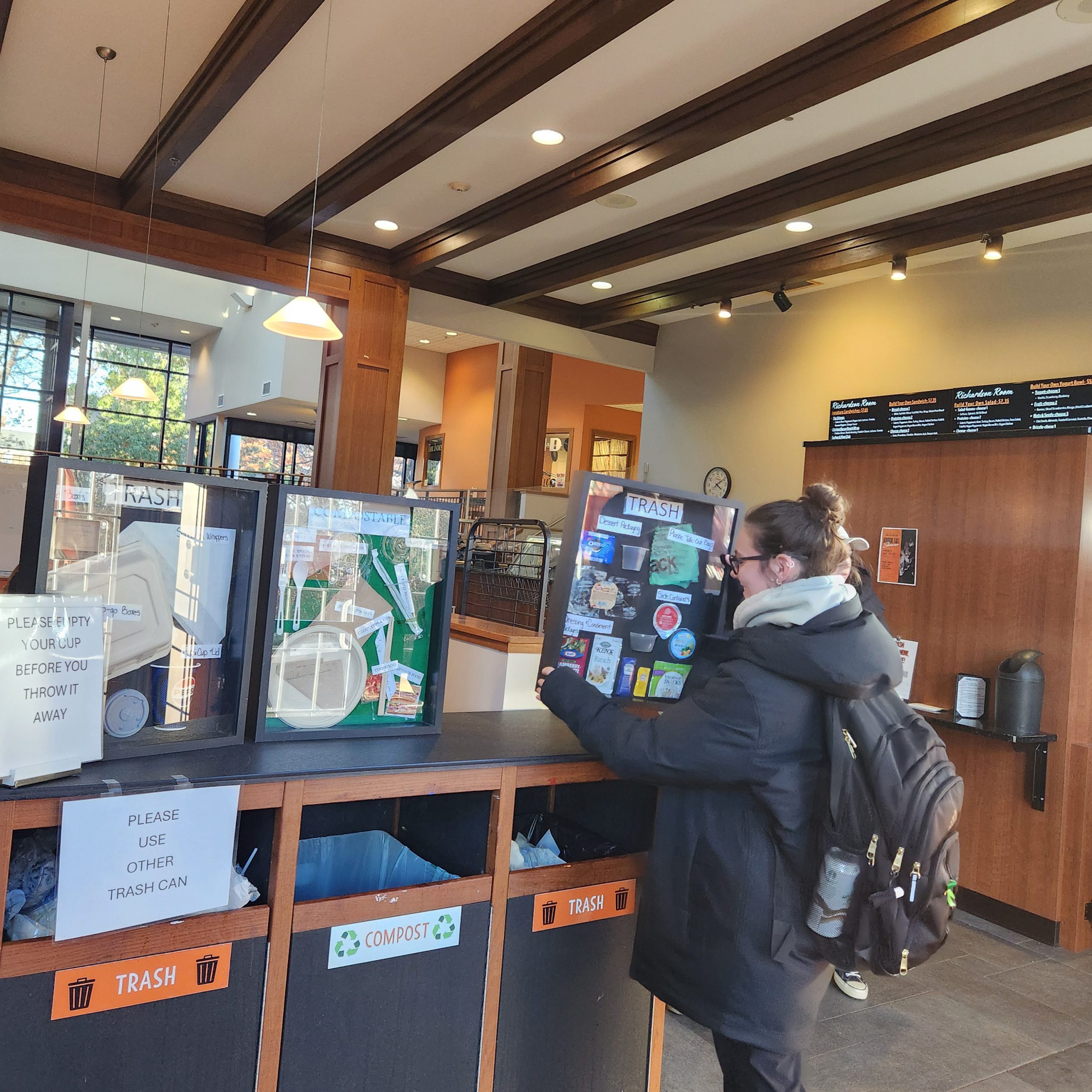
A new position at the ESC is the remarkable Dining Sustainability Intern, who works with the K’s dining partner, Parkhurst, to promote sustainability in dining locations. Madi Magda ’26 has helped to improve waste stream education, like recycling and composting, for staff and students alike through clear signage, hosting tabling events, and intercepting compostable items that would otherwise hit the landfill. One way she has encouraged our campus to take sustainable practices into their own hands is the Double Punch program at the Book Club – bring your own mug, get two punches towards a free drink!
Lastly, there are the ESC Interns. They help put on every ESC event such as the Sustainability SIP Symposium, biweekly Sustainability Chats, and the Climate Connection Series, the last of which is informed by their representation on the Climate Action Plan Committee. They work to increase students’ involvement with campus sustainability and the Climate Action Plan through the First-Year Forums, ESC’s social media, and these blog posts you’re reading! Crucial to the ESC function, they help connect all the different intern roles and help the different teams collaborate throughout the year. Mia Pierce ’26 has been an ESC Intern for three years now and states, “I’ve loved working at the ESC because it’s forced me out of my comfort zone and given a lot of opportunities to develop professional skills. For example, I used to be really anxious about public speaking, but working at the ESC has given the space to work on that. Now, I regularly present to my peers at the Climate Connections Series and also lead the FYE sustainability tour. Additionally, I’ve gained experience in working in a large group to plan a major event, the Sustainability SIP Symposium, which requires constant communication and coordination to make happen.” Josie Belsky ’28 began her role as an ESC intern last spring and comments, “I’ve learned so much about how things run behind the scenes through the ESC, and the most rewarding part is realizing that I’m capable of doing things I’ve never tried before and learning skills through that process. Working as the ESC intern has taught me better communication skills with students and staff, organizational skills and flexibility when working with lots of dynamic tasks simultaneously, and creative skills for engaging with the K community.”
You can meet our entire 2025-2026 ESC team on our About Us page! If you’re interested in applying to be the next Hoop House or ESC intern, keep an eye out for applications on March 9th!
Environmental Stewardship Center
Subscribe to receive posts about the ESC, academics, student projects and events directly to your inbox!
This past Friday featured a Community Reflection about gardening and the cultivation of something bigger than flowers and vegetables.
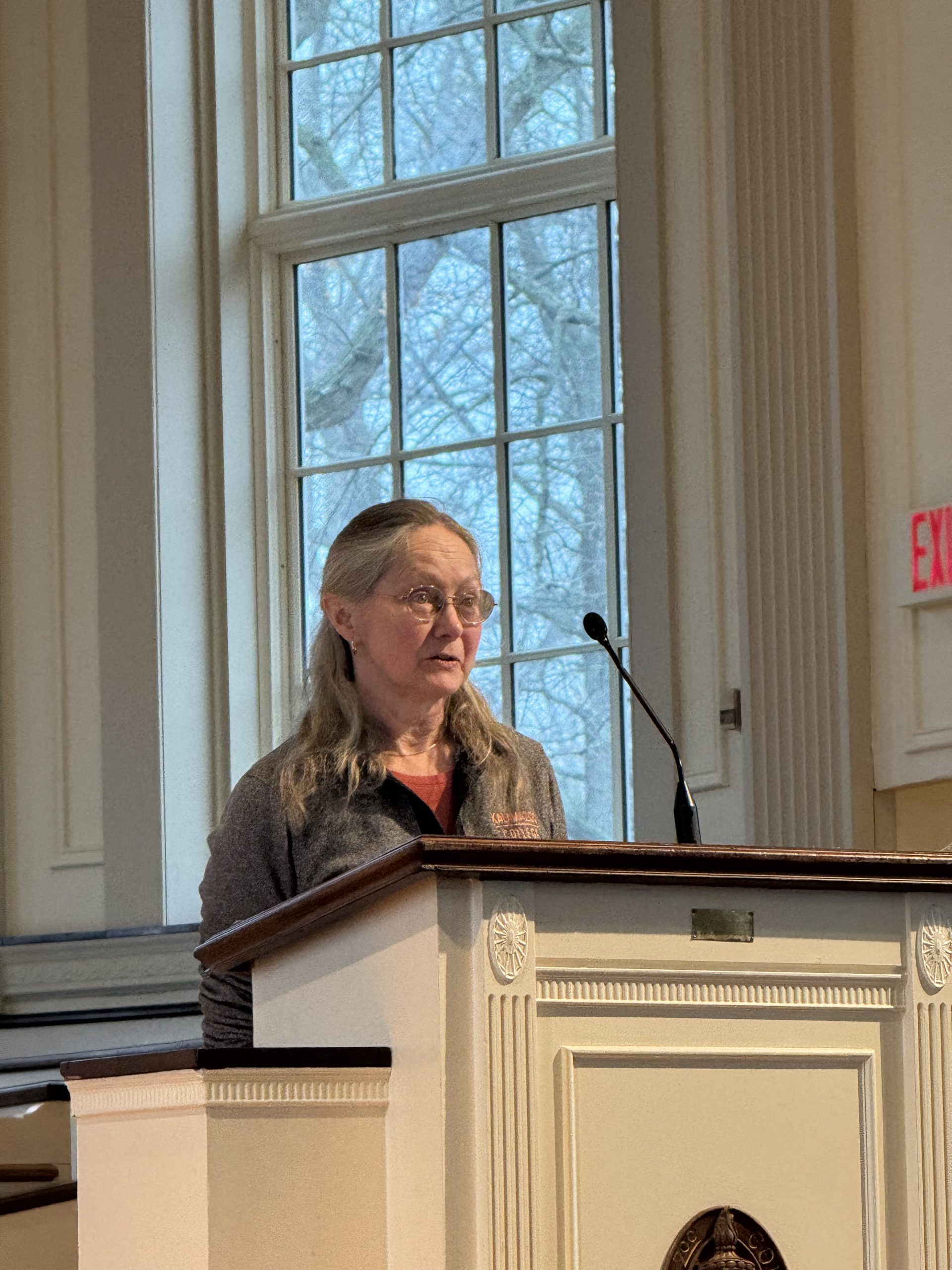
The Community Reflection, Lessons from the Garden, was hosted by Jane Hoinville and sprung from the Spanish proverb “more grows in the garden than the gardener sows”. Hoinville has worked at K in the Advancement Division since 2008, and she has volunteered as a Master Gardener at the Jolly Garden since 2010. In 2019, she took over as the Gardening instructor for the gardening PE class. The class runs spring and fall, and in the summer, she works with volunteers to keep the garden watered, weeded and harvested. The focus on gardening and what working in the garden has taught its stewards serves as a testament to reciprocity and the idea that as we engage with the land, we are actively learning and being shaped by it.
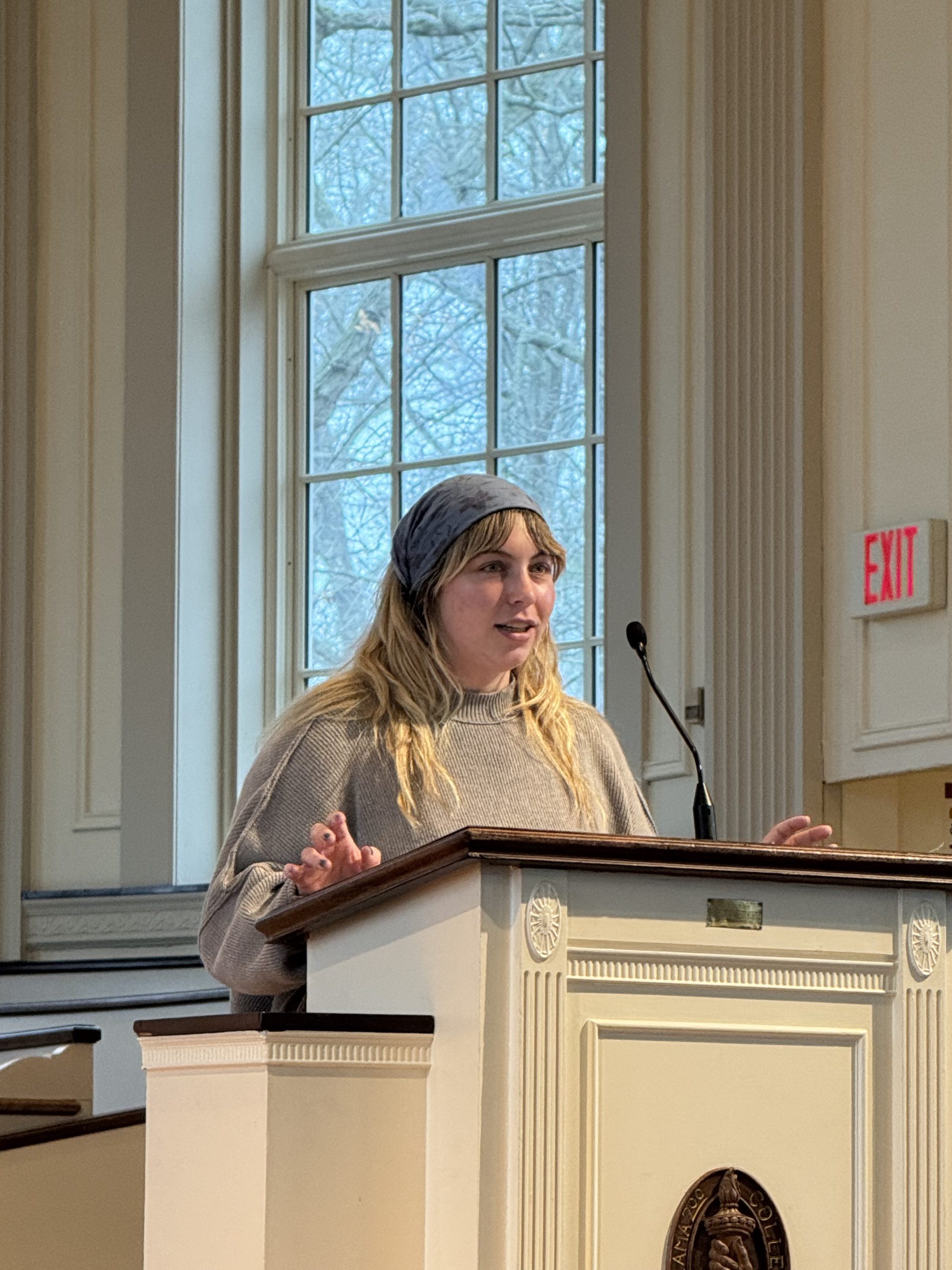
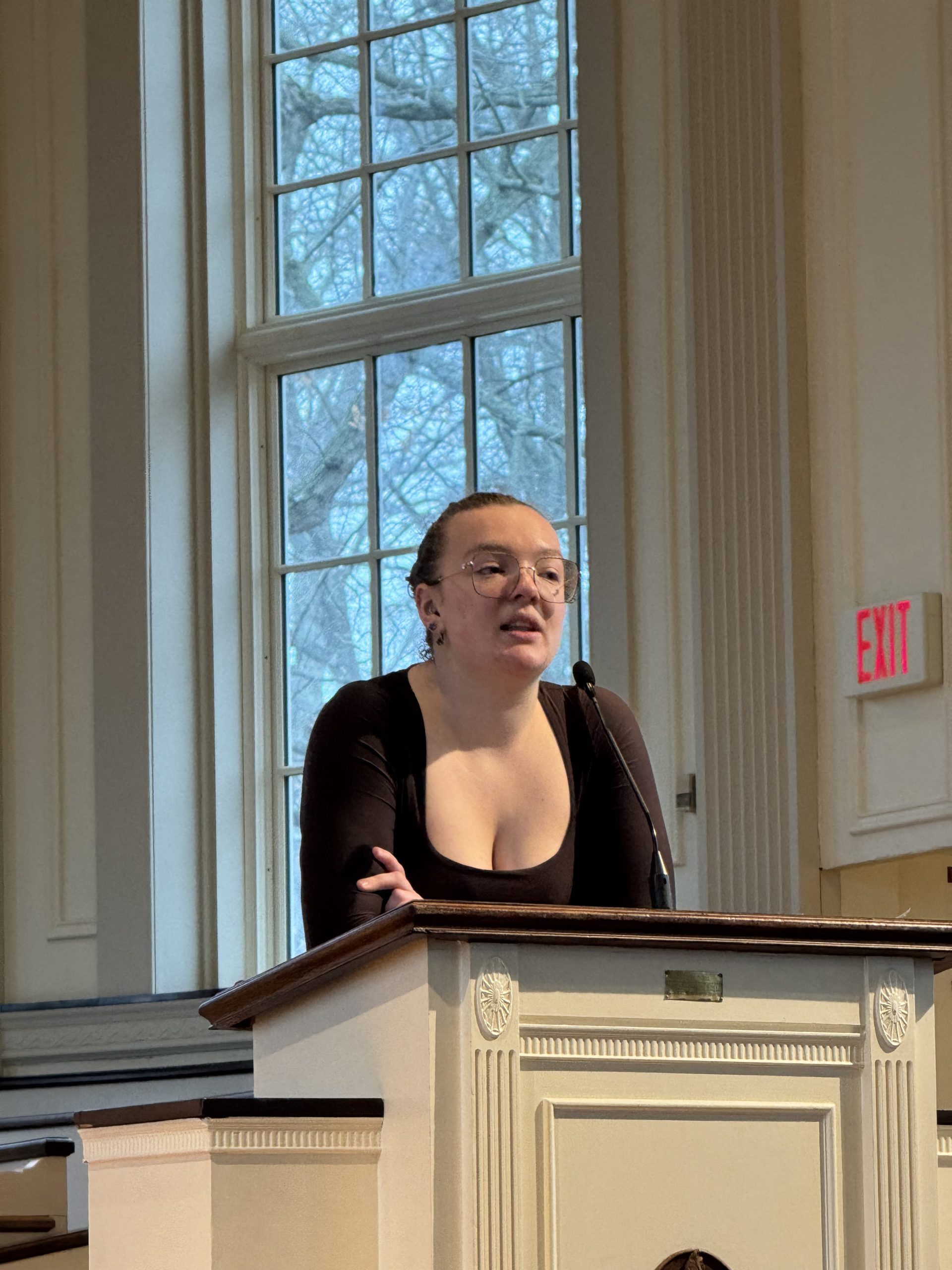
Jane shared about the history of green spaces on Kalamazoo College’s campus and what lessons she has learned throughout her time at the Jolly Garden. She also welcomed five other speakers to the stage to share their experiences interacting with gardens and what lessons and stories it has provided them.
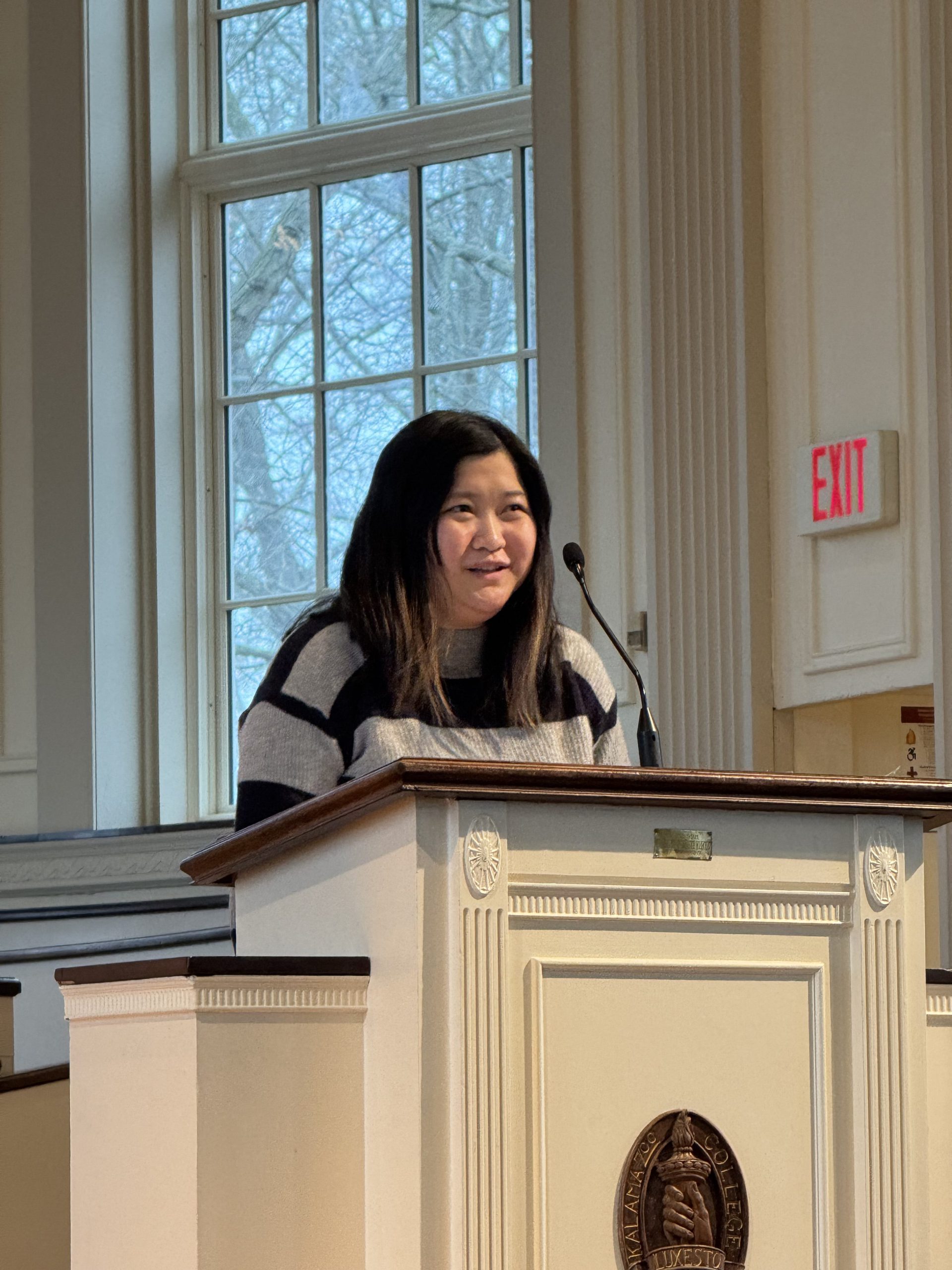
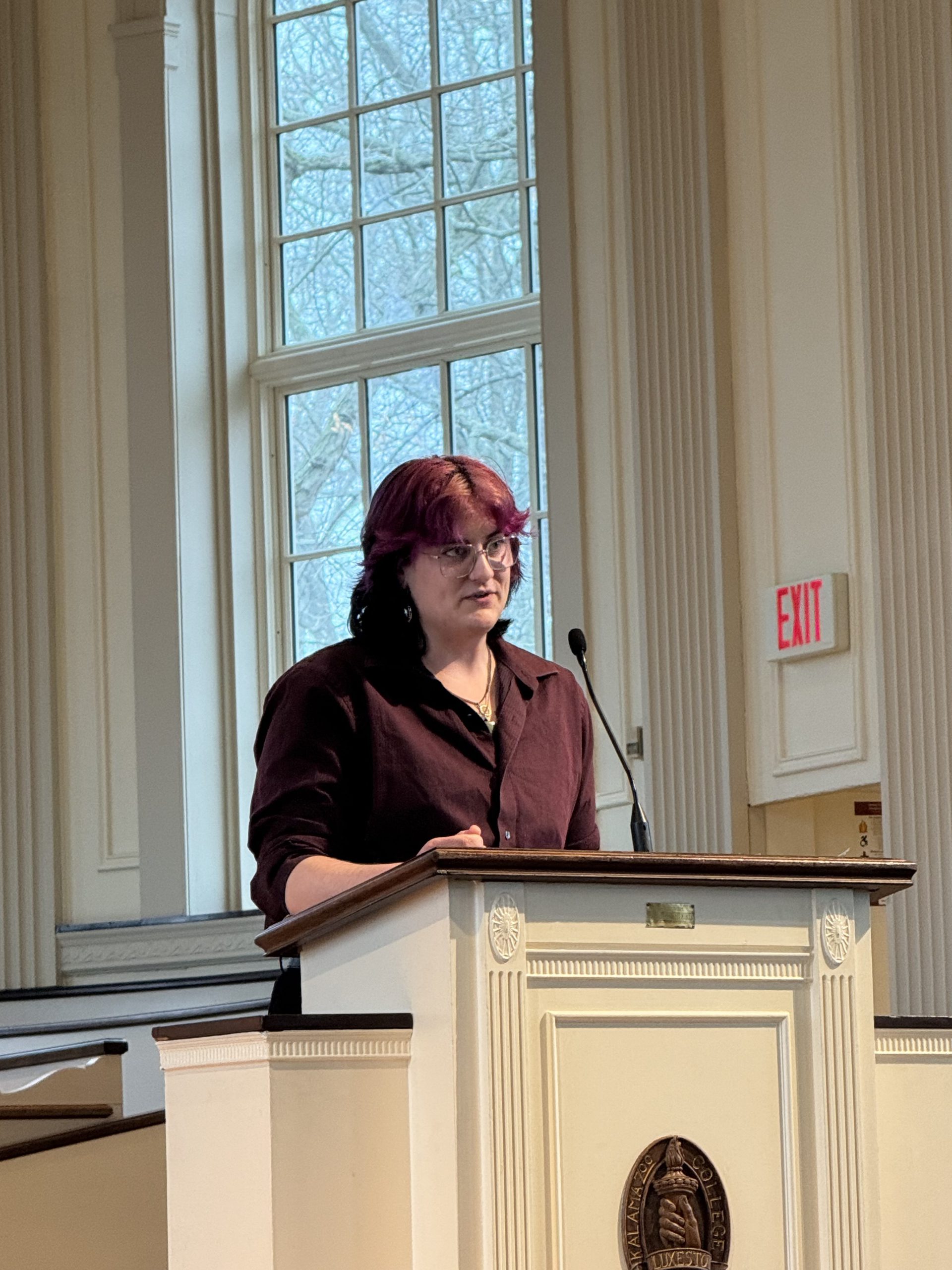
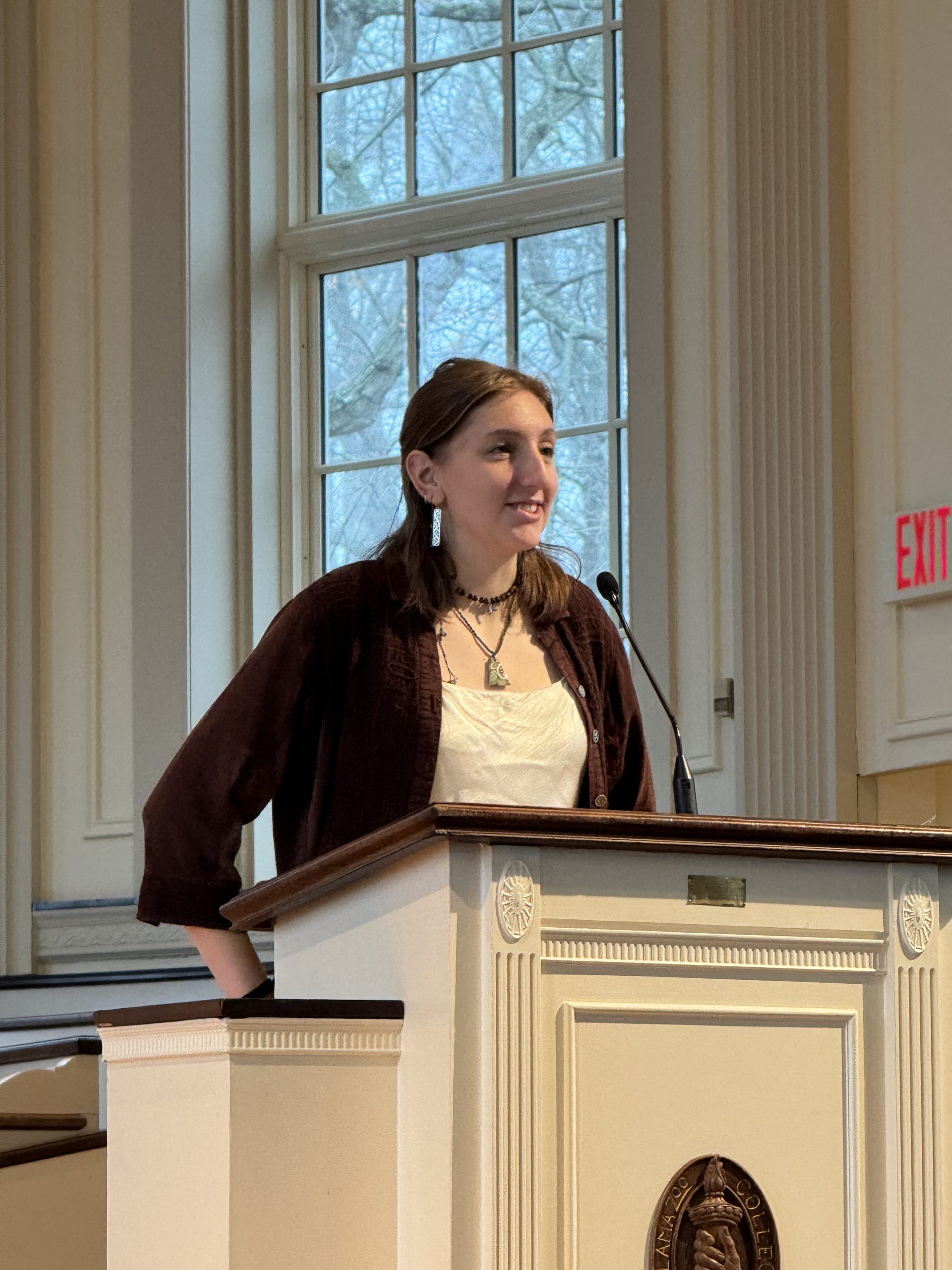
Zoe Wilson ’26 spoke about her Senior-Integrated Project on community gardening and gardens as decolonial spaces that teach essential lessons from nature like resilience, patience, resurgence, and community. Madeleine Moss ’26 also talked about her SIP on Michigan’s food systems, the struggles of modern-day agriculture and the importance of fostering community-rooted food systems. Lily Nestich ’28 shared about her experience gardening with her mom when she was younger and how those memories shaped her love of gardening. Josephine Belsky ’28, talked about her love for the Grove as a steward of that sanctuary and the lessons about regrowth and nature’s cycles that she has learned from her role in Composting Crew. Lastly, Oakley Gabriel ’21 shared their poem about nature and gardens and how they’ve been inspired by the land around them.
This Community Reflection on K’s garden spaces came right as the campus is starting to thaw and students are hoping for greenery to start blooming around campus with the sun coming out. It also came right in time for course registration, and the upcoming Gardening, Composting, and Arboretum Stewardship PE classes. These are great examples of ways to connect with the outdoors and the value of K’s experiential education.
Environmental Stewardship Center
Subscribe to receive posts about the ESC, academics, student projects and events directly to your inbox!
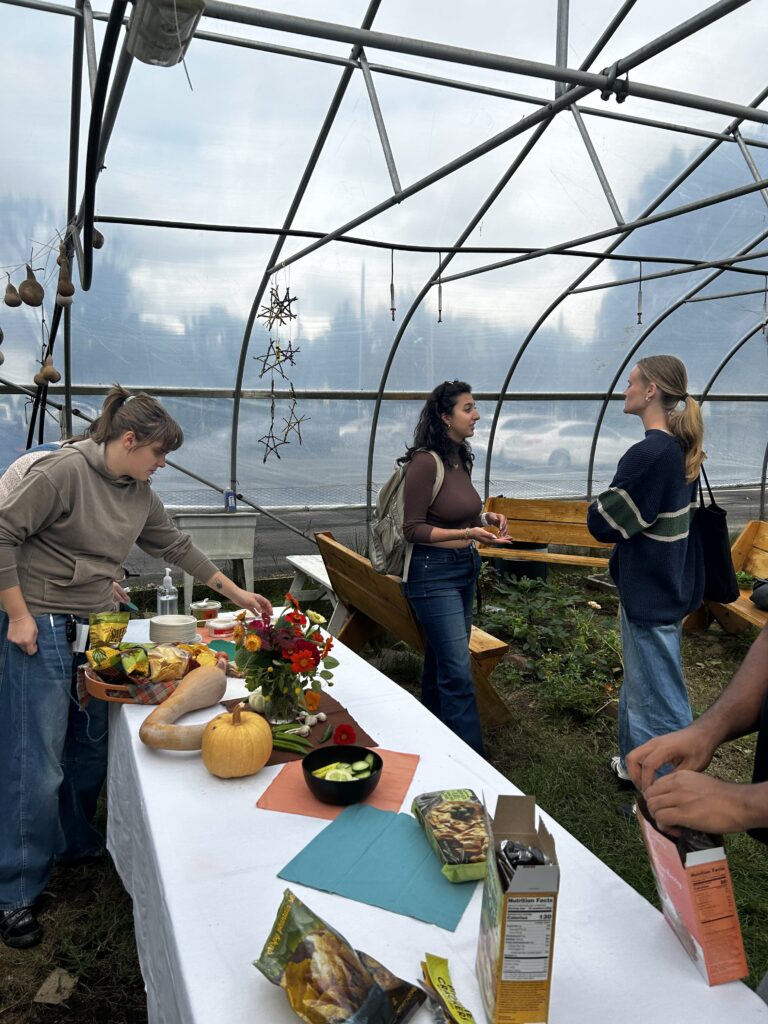
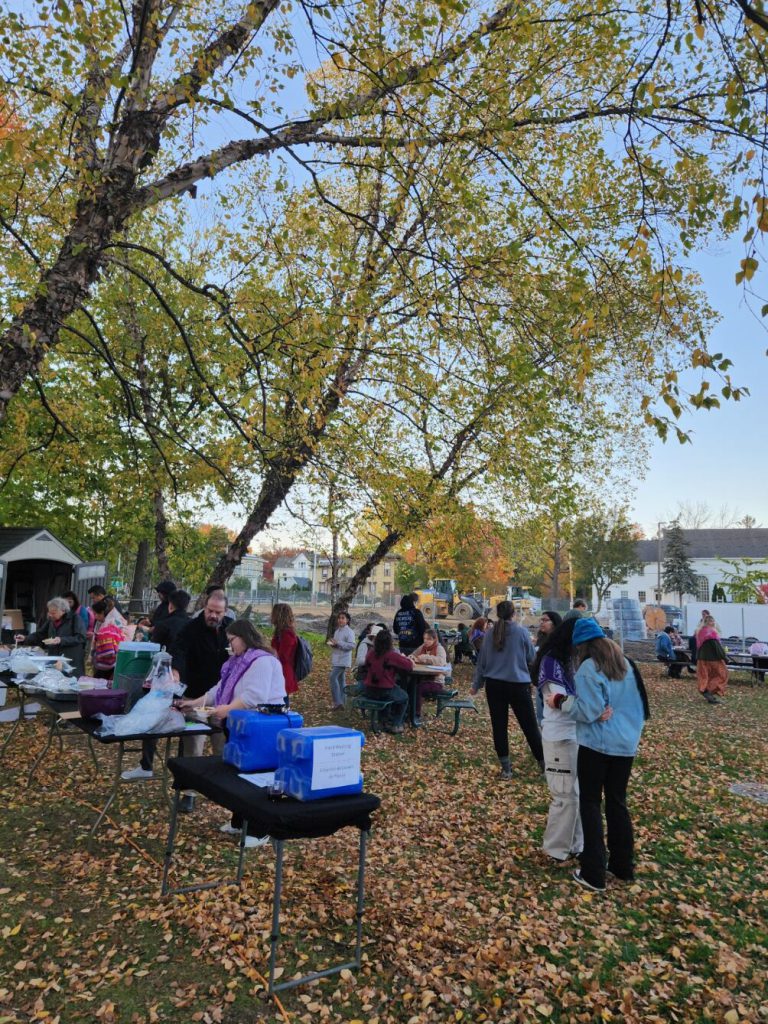
This past Tuesday, October 28th, the Hoop House hosted its fifth annual Harvest Festival in collaboration with the Religion, Spanish, and Critical Ethnic Studies departments, the Environmental Stewardship Center, and the Center for Civic Engagement to celebrate and give offerings to Our Mother Corn, or Tatéi Niwetsika. Brought to Kalamazoo College from Mexico and stewarded by K’s very own Dr. Cyndy García-Weyandt, Our Mother Corn teaches us about resistance and tending to ancestral relations through the land. It shows us the need coexistence and solidarity when fostering reciprocal relationships.
Every year, the Harvest Festival aims to offer gratitude to Our Mother Corn for all the learning, nourishment, and beauty that it has provided us this past growing season. It’s a chance for students to honor the kinship that we have with something outside of ourselves: the land. One student, Amelie Sack (K’27), was happy to see a celebration of the successful cultivation and stewardship of the land on K’s very own campus. She emphasized that not only does the Harvest Festival bring people together and foster community, but “it’s also just really fun!”
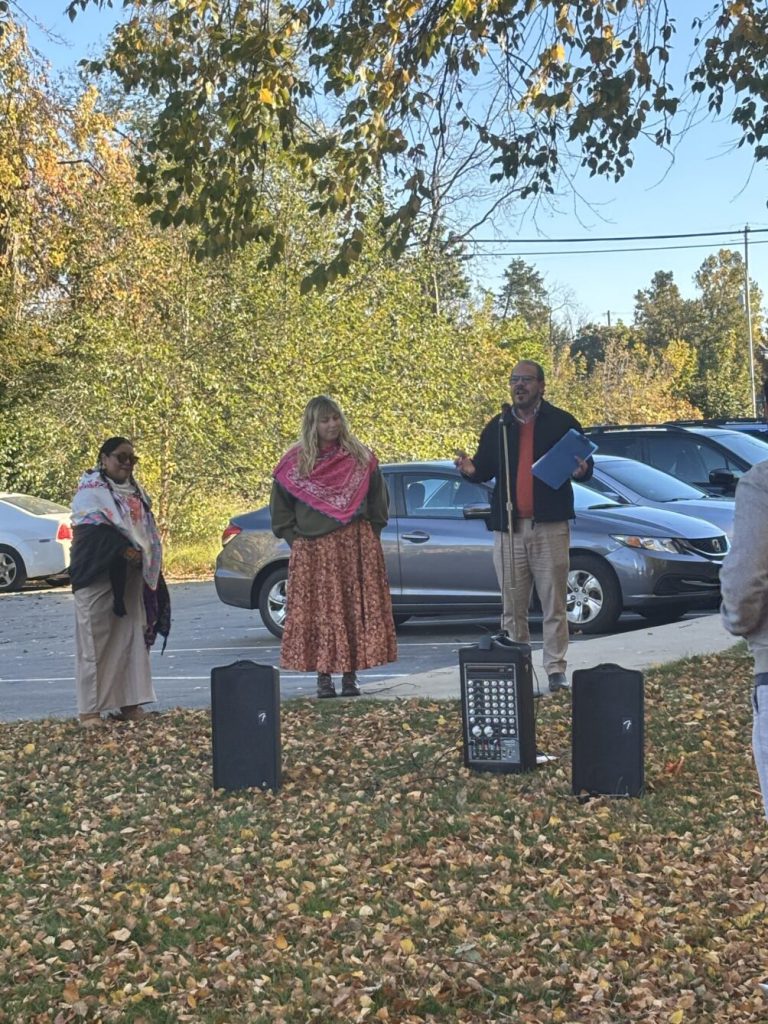
To kick off the festival, a blessing circle led by Elder Rosalía Lemus and Felipa Rivera from the Wixárika community Y+rata was held. Students, staff, alumni, and community members came together to give gratitude to Our Mother Corn, light a candle, and make an offering to the corn. Meghan London (K’26) shared that one aspect she loved about the festival was that it gives students “the space to engage with Indigenous practices, which is something we talk a lot about, but don’t have a lot of opportunity to do.”
Once everyone had made their offering, guests were invited to enjoy performances by Danza Folklorico, “Corazón y alma,” from El Concilio. Then, Dr. García-Weyandt offered a personal reading of a poem about her relationship with Our Mother Corn. After that, guests were free to mingle, share food together, make crafts, and purchase jewelry and beadwork made by the Wixárika community. Recent alum Ava Loncharte (K’25) spoke about the how important this event was because “there’s not a lot of things like this on-campus that combine gardening with spiritualism” and that it “reminds us of the reciprocal relationships we have with the land.”
Thank you so much to everyone who joined us on Tuesday, and we hope to see you next year!
Environmental Stewardship Center
Subscribe to receive posts about the ESC, academics, student projects and events directly to your inbox!
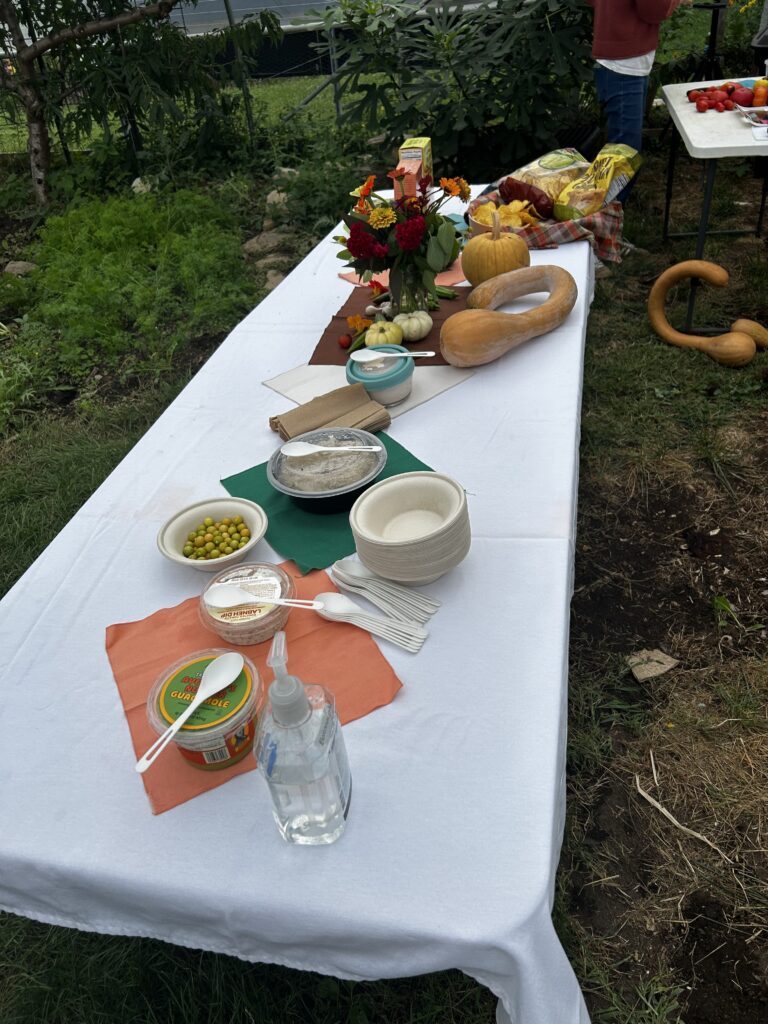
This blog post is part of the ESC Summer Fellowship 2025 series. These fellowships provided funding for research projects related to the environment, sustainability and/or the Climate Action Plan. This post was written by Zoe Wilson, one the fellows of this past summer cycle.
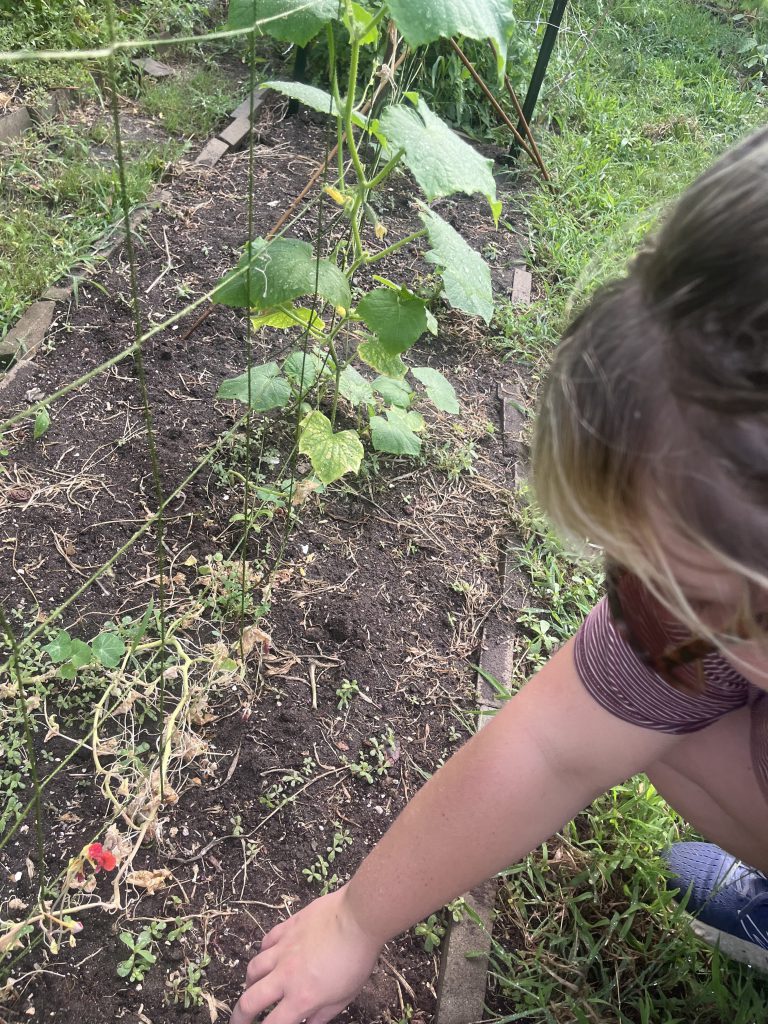
Hello everyone! My name is Zoe Wilson and I am here to tell you about my summer in the wonderful company of the Hoop House (HH). I was granted a fellowship with the Environmental Stewardship Center to work at the Hoop House and complete my SIP about community gardening. My days began early, slowly waking up during the joyride on my bike to the HH, quickly followed by a duel with the bugs that eagerly greet me when I enter the garden. My work often involved rehoming weeds to the ever-inviting compost piles, planting new life in the form of vegetable seeds, and living out my interior decorator dreams as I organized the garden and shed in a way that maximized floor space and highlighted my color scheme of dirt brown and lush green. The summer got off to a rocky start with the sweltering heat that triggered my survival instincts as the amount of sweat that erupted from my skin led me to believe I was under water. Nevertheless, as sure as the dirt under my fingernails, I too was ever-present and hard to get rid of.
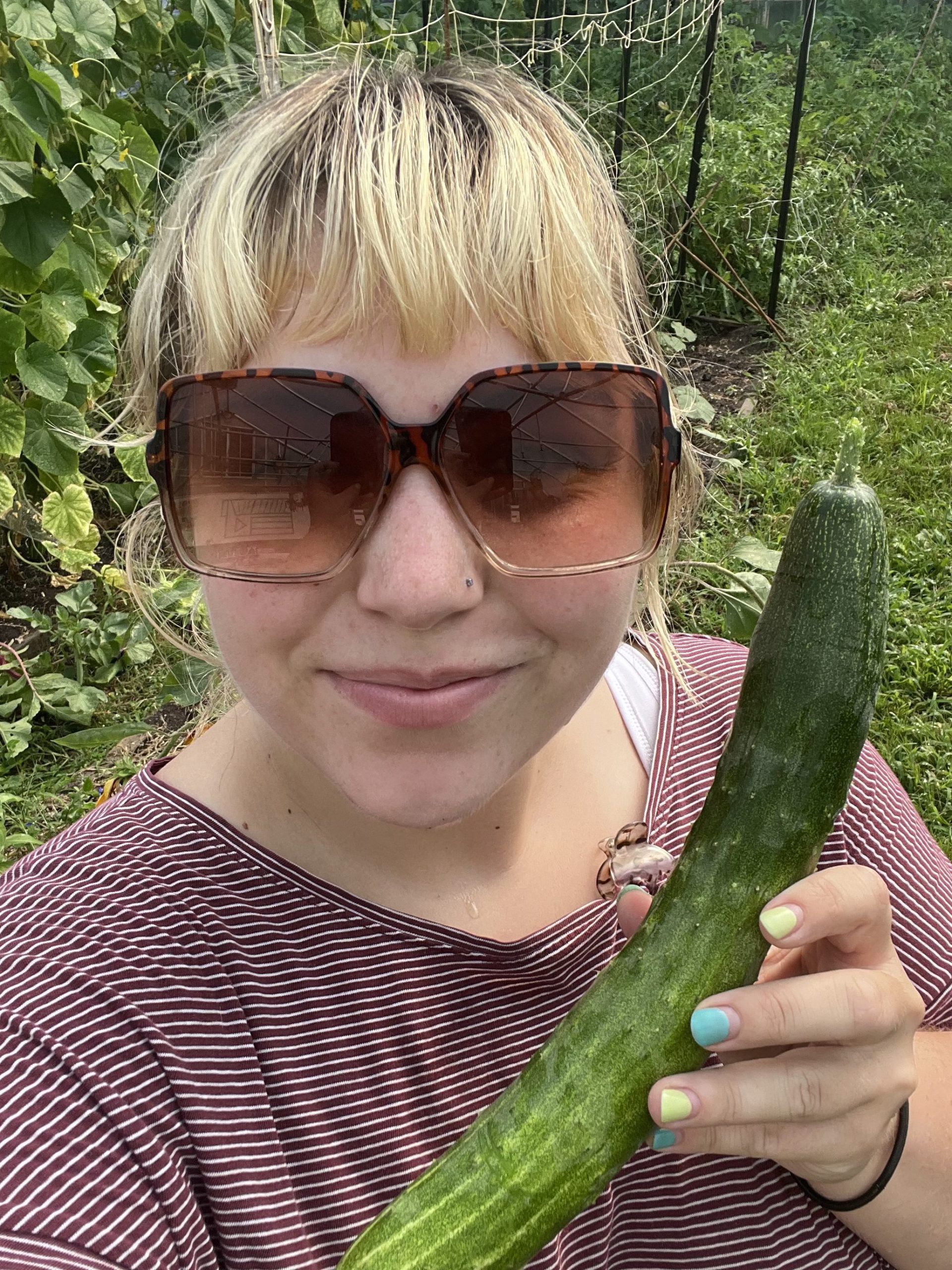
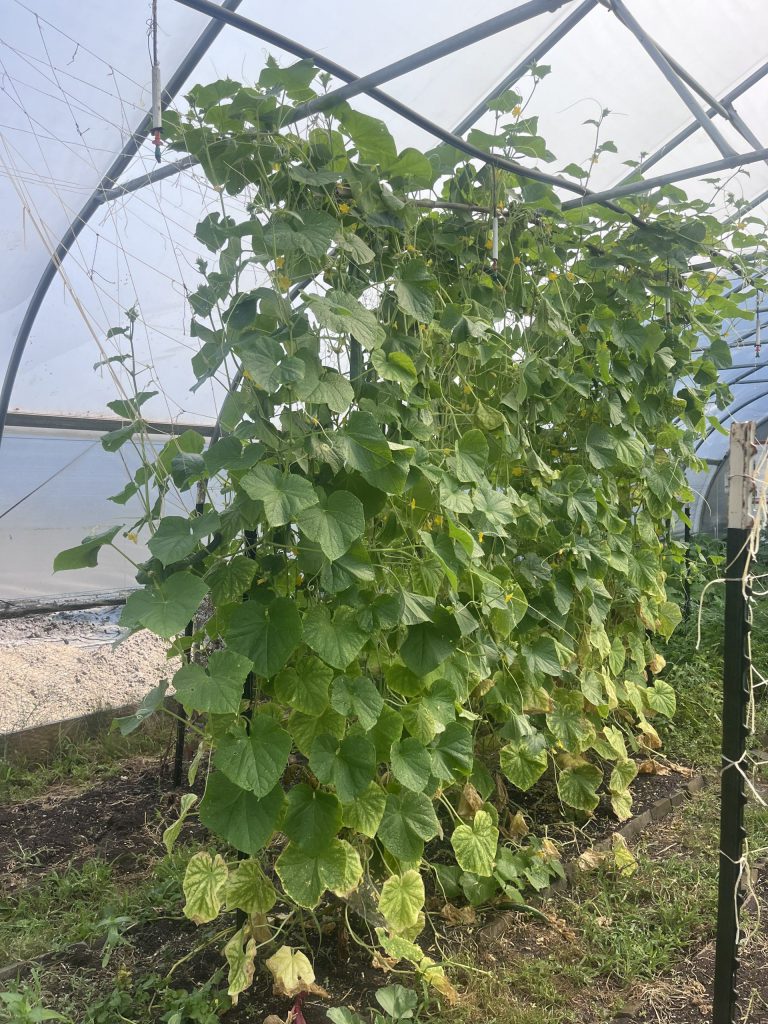
Alongside my gardening work, I was working on my SIP, titled “Sowing sovereignty: Decolonial approaches to community gardening and environmental justice.” Through scholarly review, personal reflections, and practical application, I explored how gardens can be powerful spaces for healing, care, resistance, and liberation within communities. I drew from works in decolonial theory, Indigenous studies, feminist theory, and environmental justice scholarship to analyze how land-based practices resist settler colonial paradigms and create space for community self-determination. Being immersed in the garden allowed to observe firsthand how theoretical frameworks are embodied in physical labor and community interactions. Working in this space, I learned accountability, knowing that not just people but the plants were relying on me, as well as the importance of forming a relationship to the land and acknowledging nature, not as a resource, but as the basis of all life. The simple act of sharing the bounty of the Hoop House with my friends and community taught me of the subtle yet vital ways people take care of one another and how a cucumber is more than a cucumber; it is a symbol of life, resilience, and love.
The garden taught me that resistance does not have to be loud. Sometimes, it looks like growing food where concrete once stood or eating a tomato that you held as a seed. Sometimes, it looks like showing up, again and again, to tend to something fragile.
This fellowship was more than just a summer job or reserach opportunity—it was a reminder that change can start small, in a seed, in a patch of earth, in community.
I want to thank everyone who helped me this summer: my friends, my family, my work-family—Lee, Greta, Sara, and Chloe, the Larry Bell ’80 Environmental Stewardship Center, and of course, the land that allowed me to build this wonderful relationship and create this beautiful life.
Environmental Stewardship Center
Subscribe to receive posts about the ESC, academics, student projects and events directly to your inbox!
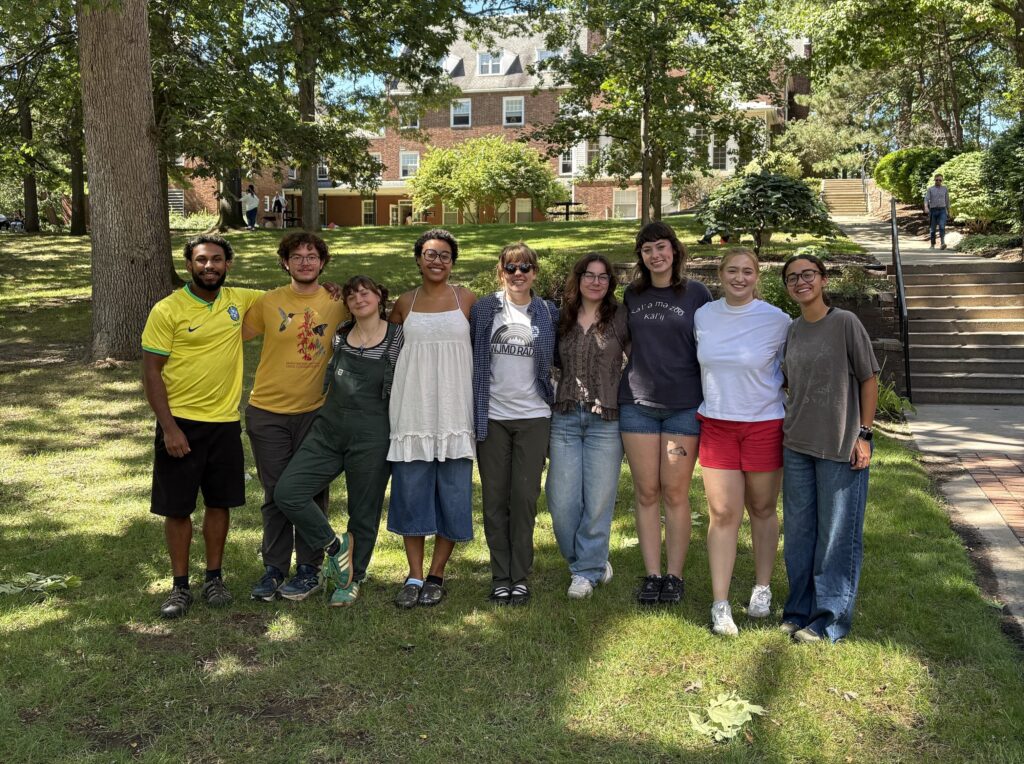
This blog post is part of the ESC Summer Fellowship 2025 series. These fellowships provided funding for research projects related to the environment, sustainability and/or the Climate Action Plan. This post was written by Madi Magda, one the fellows of this past summer cycle.
Hey everyone, I’m Madi Magda! Since June, I have been working at the Lillian Anderson Arboretum, completing a variety of different tasks, including general trail maintenance, determining a potential reroute of Not So Magnificent Pines, replacing and putting in steps along the trails, and much more. Everything I did throughout the summer at the Arboretum only increased my interest in working in the ecology field post-graduation.
I had a lot of fun working with the rest of the Arb Crew this summer. One of my favorite shifts was with Tara and Tilly, where we were assigned to move bridge materials. It was a hilarious time moving these materials, but it was also a very rewarding shift at the end of the day because we managed to complete it despite facing issues along the way. One of my favorite parts of this job was telling people my job was to hug trees all day and see the pretty plants and animals. This was a great experience that I recommend to everyone, even if they are not in the biology field. It is a rewarding job that also allows you to be outside and work in nature.
Not only did I learn a lot and have a lot of fun with my fellow Arb Crew, but I also learned a lot about trail management that I had not known previously. This was very beneficial for me, as I am a senior and my Senior Integrated Project consists of using tread management to combat against trail erosion. There are a lot of different aspects of trails that I had not realized were used for erosion reasons or for structural reasons, and it allowed me to do my own research on this topic as well as teach people about it when they asked me.
When telling people what I do at the Arb and why I do it, seeing their reactions was rewarding on its own. They may not have understood what I do or why, but they knew that I was passionate about my job and that was what mattered to me.
Environmental Stewardship Center
Subscribe to receive posts about the ESC, academics, student projects and events directly to your inbox!
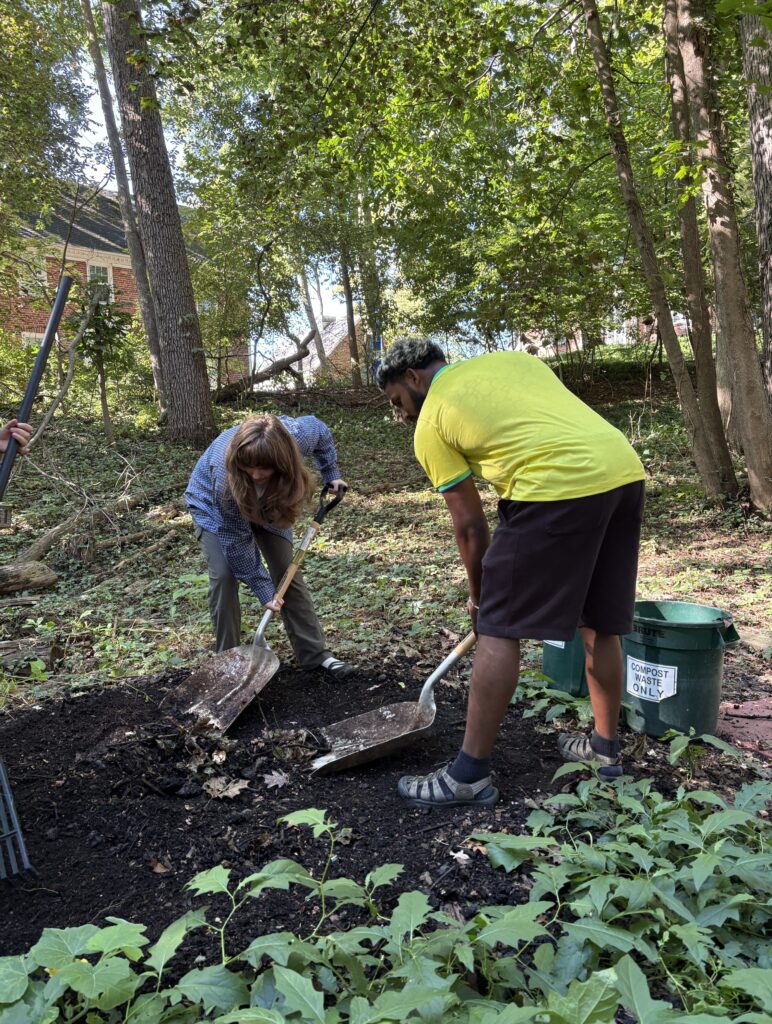
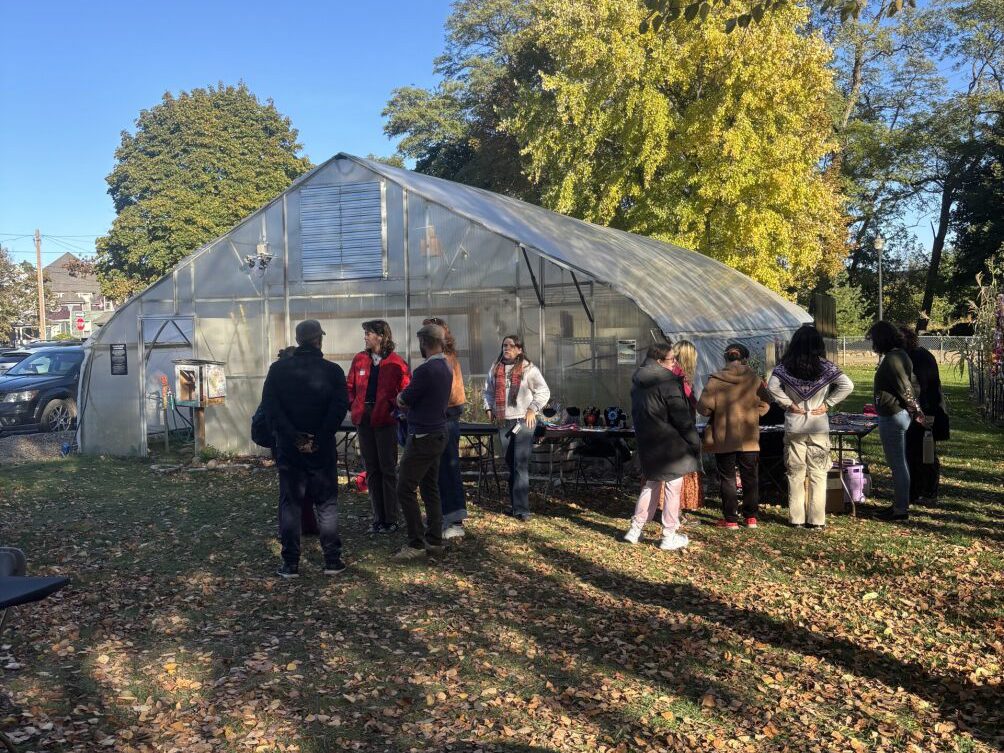
This past Friday, October 3rd, we celebrated Kalamazoo College’s Homecoming at the Hoop House! We welcomed staff, faculty, students, and alums, coming together to share cookies, cider, and of course, fresh produce from the Hoop House!
Connection in the Garden
The October weather was perfect for a gathering outside our campus’s Hoop House. Friends and families came to visit and enjoy fresh cookies, conversation, and memories. Students had the chance to converse with their peers and pick their way through the fall harvest, staff caught up with old friends over cider under the fall leaves, and alums got a chance to read through the Hoop House highlights from the past few years. It was an afternoon of laughter and new connections.
A Legacy Passed Down
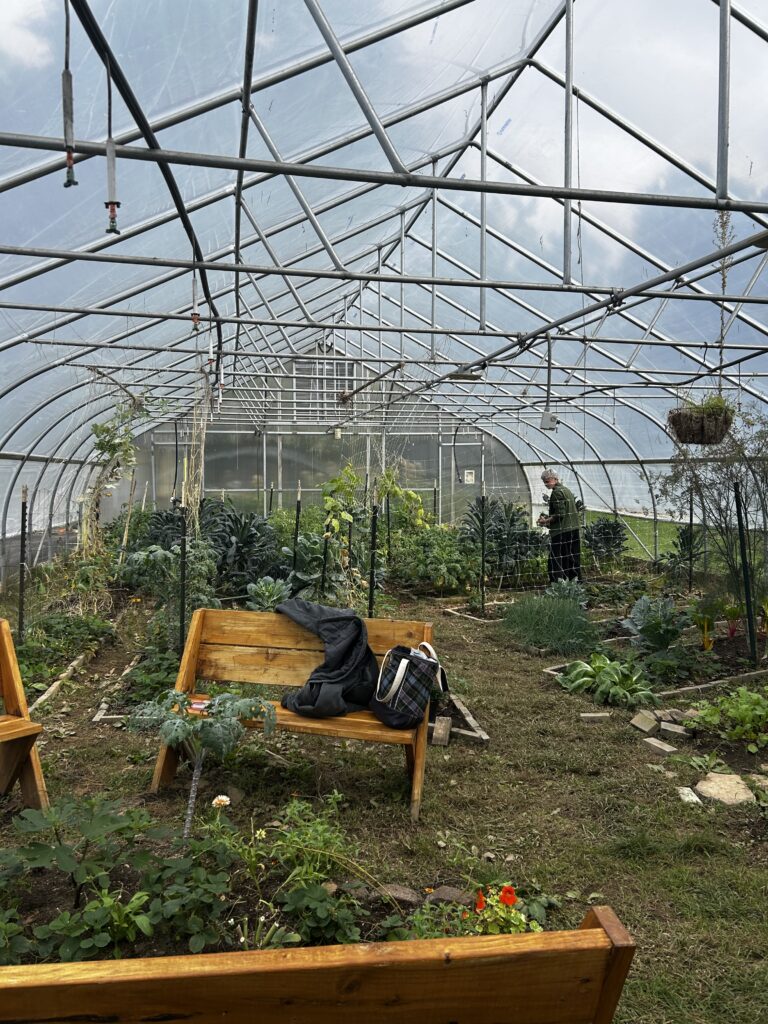
As Kalamazoo was buzzing with alums returning to town for Homecoming, the Hoop House welcomed back some familiar faces, joining together caretakers of the Hoop House from years past and present. The idea of having an on-campus hoop house was first voiced in 2016, and that idea culminated in an official proposal in 2017 through a Senior Integrated Project, a dream started by K students who would graduate before they saw it built. The Hoop House itself came to life from the hands of many students on September 21st of 2018, and the Hoop House Grand Opening was held in October of the same year. This Homecoming, alums and current students alike celebrated the determination and effort that multiple years of students put into this community space as well as thank the staff and faculty that funded and supported the process.
See You Next Year!
We are so grateful to everyone that came to see how the Hoop House and all its various projects are doing and to everyone that came to say hello to us at the Environmental Stewardship Center! We hope you enjoyed some mingling in the beautiful fall weather, and we can’t wait to see all of you again next year.
Environmental Stewardship Center
Subscribe to receive posts about the ESC, academics, student projects and events directly to your inbox!